
John 20:12 is about the resurrection of Jesus and the significance of the orderly arrangement of the burial cloths in the empty tomb as a symbol of his victory over death and the completion of his earthly mission.
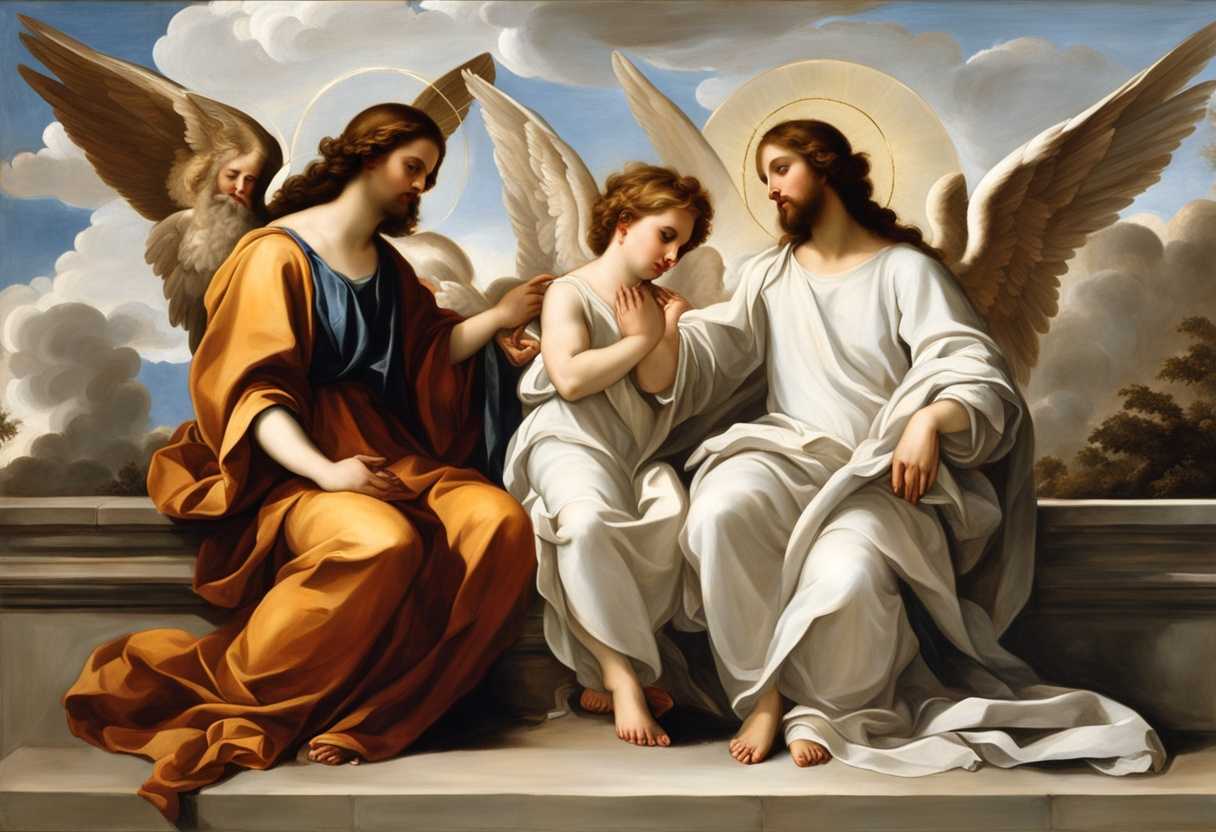
12 And she saw two angels in white, sitting where the body of Jesus had lain, one at the head and one at the feet.
Setting the Scene for John 20:12
In John chapter 20, we find Mary Magdalene standing outside the tomb of Jesus, weeping. She had come to the tomb early in the morning, while it was still dark, to anoint the body of Jesus with spices. However, upon reaching the tomb, she found the stone rolled away and the body of Jesus missing. Distraught and confused, Mary Magdalene was convinced that someone had taken the body of her beloved teacher.
As she stood there weeping, Mary Magdalene peered into the tomb and saw two angels in white sitting where the body of Jesus had been laid. They asked her why she was crying, to which she replied about her concern for the missing body of Jesus. Turning around, she saw a man whom she thought was the gardener. Little did she know that this man was actually Jesus himself, risen from the dead. It was in this moment, in the midst of her grief and confusion, that Jesus revealed himself to Mary Magdalene, calling her by name and bringing her immense joy and comfort.
The scene is set in the early hours of the morning, outside the tomb where Jesus had been buried. The air is cool and the surroundings are quiet, with the first light of dawn beginning to break through the darkness. Mary Magdalene is the central figure in this scene, her emotions raw and her heart heavy with sorrow. The appearance of the angels and Jesus himself adds a supernatural element to the setting, as the miraculous events of Jesus’ resurrection begin to unfold before her eyes.
What is John 20:12 about?
The author of the Gospel of John describes the scene after Jesus’ resurrection in this verse. The linen cloths that had been wrapped around Jesus’ body are seen lying there, but the face cloth is folded up separately. This seemingly small detail holds deep significance and symbolism. The careful folding of the face cloth indicates that what had been inside it (Jesus’ face) was not thrown aside haphazardly or in chaos, but rather in a deliberate and purposeful manner.
Think about the act of folding a garment – it implies intention, respect, and a sense of order. The folded face cloth in this context signifies that Jesus’ resurrection was not a chaotic event but a carefully orchestrated plan of God. It symbolizes Jesus’ victory over death and the beginning of a new order in the world. It invites us to reflect on the meticulous care and intentionality with which God works in our lives, even in the midst of seemingly chaotic or hopeless situations. God’s plans for us are precise and purposeful, even when we may not fully understand them in the moment, just as He neatly folded the face cloth. God’s hand is at work in our lives, even in the most unexpected ways as we ponder this verse. Just like the face cloth that seemed insignificant at first glance but held profound meaning, may we trust that God is at work in the details of our lives, folding them with care and love. We should seek out the deeper layers of meaning in our own experiences, trusting that God is bringing order and purpose out of what may seem like chaos or confusion.
Understanding what John 20:12 really means
In the Gospel of John, amidst the resurrection narrative, we find a poignant moment where Mary Magdalene encounters two angels in white at the empty tomb. The scene is set early in the morning on the first day of the week, symbolizing a new beginning and the dawn of a new era in Christian faith. The presence of the angels, often seen as messengers from God, signifies the divine intervention and purity surrounding the pivotal event of Christ’s resurrection.
As Mary Magdalene beholds the two angels, she sees them sitting, one at the head and one at the feet, reminiscent of the cherubim facing each other over the mercy seat on the Ark of the Covenant. This positioning symbolizes the presence of God, emphasizing the sacredness and significance of the moment. The imagery evokes a sense of reverence and awe, underscoring the divine nature of the resurrection event.
Parallel passages in Luke 24:4 and Hebrews 1:14 further illuminate the role of angels as messengers and ministering spirits in God’s plan. The reference to Exodus 25:18-20 deepens our understanding of the cherubim on the Ark of the Covenant, shedding light on the symbolic importance of the angels’ positions in John 20:12. These connections enrich the narrative, emphasizing the continuity of God’s divine work throughout Scripture.
The verse holds timeless relevance for believers today, reaffirming the reality of the resurrection as a cornerstone of Christian faith. It offers hope and assurance of life after death, reminding us of God’s active presence and intervention in human history. In moments of doubt or despair, the encounter of Mary Magdalene with the angels serves as a beacon of comfort and encouragement, pointing to the enduring truth of God’s promises.
Consider a scenario where someone grappling with grief finds solace in the story of Mary Magdalene at the empty tomb, realizing that death is not the final chapter and that God’s messengers are present even in the darkest moments. Similarly, a modern-day miracle of healing can evoke a sense of divine intervention and hope, mirroring the profound experience Mary Magdalene had upon encountering the angels.
In conclusion, John 20:12 invites us to ponder the mystery of the resurrection and the profound assurance it brings. It calls us to trust in God’s promises and acknowledge His active presence in our lives, even when His workings may not be immediately apparent. May this verse inspire us to embrace faith, hope, and the reality of God’s abiding presence in every season of our lives.
How can we perceive Jesus in our midst today?
We can perceive Jesus in our midst today through recognizing His presence in our lives and in the world around us. We may often overlook the ways in which Jesus is present in our daily experiences, just as Mary Magdalene saw Jesus standing beside her but initially did not recognize Him. Whether it be through acts of love, compassion, or grace, Jesus continues to reveal Himself to us in various forms and situations. We can develop a deeper awareness of how Jesus is actively working in our lives by reflecting on the events of the Bible and understanding the significance of moments like Mary Magdalene encountering Jesus after His resurrection. This awareness allows us to have eyes to see and ears to hear the ways in which Jesus is present among us, guiding us, comforting us, and leading us on the path of righteousness. We too can have our spiritual eyes opened to recognize and encounter Jesus in the people we meet, the events that unfold, and the blessings we receive each day, just as Mary Magdalene’s eyes were opened to see Jesus in her midst. With faith and a receptive heart, we can perceive Jesus in our midst through the love and light He continues to shine upon us, offering us hope, redemption, and eternal life.
Application
Imagine walking into your office to find a big project completed, a task you thought was impossible. Mary Magdalene felt that same shock and awe at the empty tomb of Jesus. This wasn’t just a project delivered ahead of schedule; it was the ultimate victory over death. Let this moment push you to strengthen your faith, just as you strive for excellence at work and at home. Share this hope and triumph with your friends and family. Are you ready to let Christ’s victory energize every corner of your life today?

Reverend Michael Johnson is an experienced Church Minister with a profound expertise in spirituality and guidance. With a serene presence and a compassionate heart, he has faithfully served his congregation for over 20 years, leading them on a spiritual journey towards inner peace and enlightenment. Reverend Johnson’s extensive knowledge of religious philosophies and profound understanding of human nature have made him a trusted confidant and mentor to many, as he seamlessly weaves his profound wisdom into life teachings. Reverend Johnson’s calming demeanor and empathetic nature continue to uplift and heal souls, nurturing a sense of unity and tranquility within his community.