
John 20:17-18 is about Jesus telling Mary Magdalene not to cling to him as he has not yet ascended to the Father, but to go and tell his disciples that he is ascending to his Father and their Father, his God and their God.
17 Jesus said to her, “Do not cling to me, for I have not yet ascended to the Father; but go to my brothers and say to them, ‘I am ascending to my Father and your Father, to my God and your God.’”
18 Mary Magdalene went and announced to the disciples, “I have seen the Lord”—and that he had said these things to her.
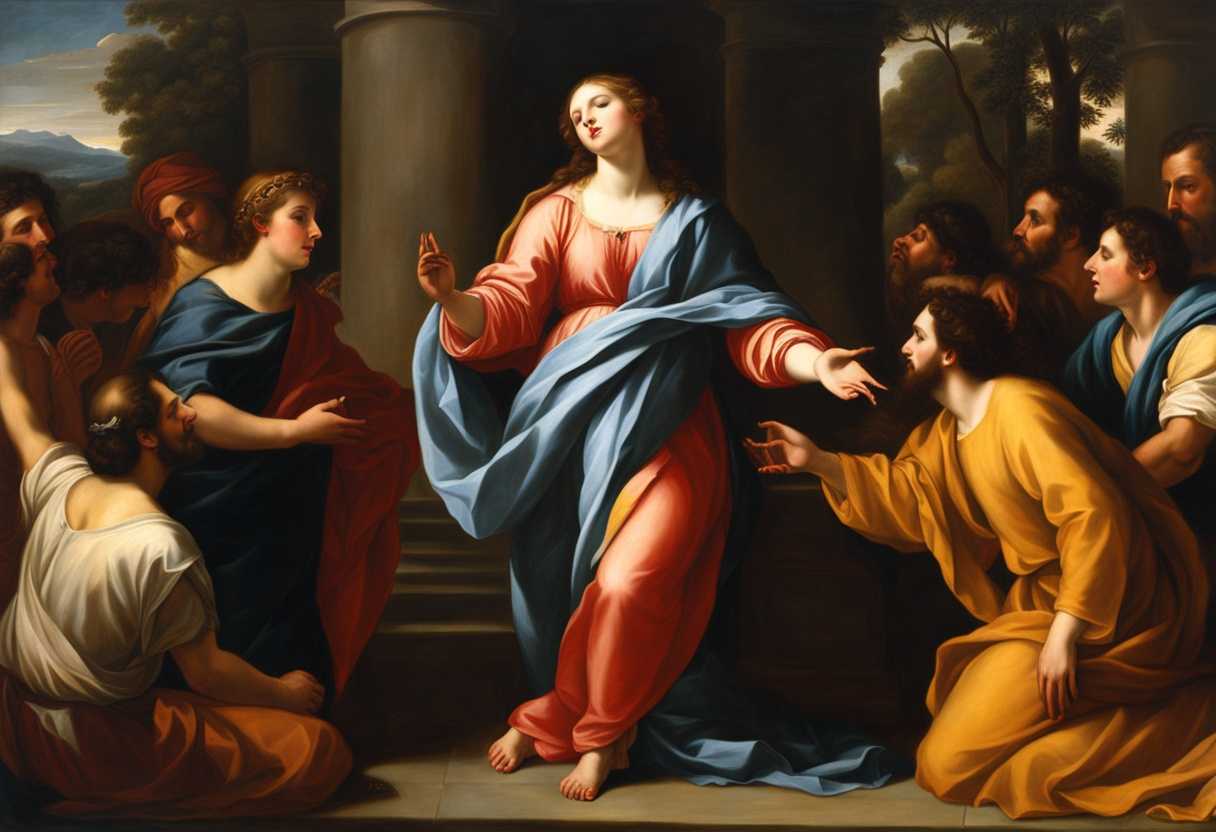
Setting the Scene for John 20:17-18
In John chapter 20, we find Mary Magdalene standing outside the tomb of Jesus, weeping. She had come to the tomb early in the morning, while it was still dark, to anoint the body of Jesus with spices. However, upon reaching the tomb, she found the stone rolled away and the body of Jesus missing. Distraught and confused, Mary lingered near the tomb, unable to comprehend what had happened.
As Mary stood there weeping, she encountered two angels sitting where Jesus’ body had been laid. They asked her why she was crying, to which she replied about her concern for the missing body of her Lord. Turning around, Mary saw Jesus standing there, but she did not recognize Him at first. Jesus asked her the same question as the angels, and it was only when He called her by name that Mary realized it was indeed her beloved teacher and friend. Overjoyed, Mary Magdalene exclaimed, “Rabboni!” which means Teacher in Hebrew, and she clung to Him in a moment of profound relief and awe.
The scene is set in the early hours of the morning, with the first light of dawn breaking over the horizon. The tomb is carved into the rock, with a large stone rolled to the entrance. The atmosphere is filled with a mix of sorrow, confusion, and a glimmer of hope as Mary Magdalene encounters the risen Christ. The presence of the angels adds a mystical element to the moment, as Mary’s grief is transformed into joy upon seeing her beloved Teacher alive once more.
What is John 20:17-18 about?
This verse, from the Gospel of John, captures a pivotal moment when Jesus is met by Mary Magdalene after His resurrection. Jesus is emphasizing the importance of mission and spreading His message by instructing Mary not to cling to Him but to go and share the news of His resurrection with others. Jesus is redirecting Mary’s focus from solely seeking personal solace and validation from their reunion to prioritizing the greater purpose of proclaiming the good news of His resurrection.
Think about it – why would Jesus prevent Mary from clinging to Him, a natural and understandable reaction after His return from the dead? Jesus is emphasizing the significance of sharing the message of salvation and hope with others by redirecting her towards spreading the news of His resurrection. This moment highlights the transformative power of encountering the risen Christ and the call to actively participate in sharing His love and grace with the world. Jesus’s words to Mary are a gentle reminder for us to not only encounter Him in our personal lives but also to extend that encounter to others, spreading the hope and joy of His resurrection.
Understanding what John 20:17-18 really means
In John 20:17-18, we witness a profound moment following Jesus’ resurrection, where He appears to Mary Magdalene. This encounter holds immense significance as it marks the first appearance of the risen Christ and His instructions to Mary, setting the stage for pivotal events to come.
As Jesus tells Mary, “Do not hold on to me,” He is signaling a shift in His relationship with His followers. No longer bound by physical presence, He is preparing to ascend to the Father, emphasizing a transition to a new way of relating to Him.
The statement, “I am ascending to my Father and your Father, to my God and your God,” underscores the shared relationship believers now have with God through Jesus. This declaration highlights the intimate familial bond that believers have with God, mirroring the relationship Jesus himself has with the Father.
Mary Magdalene’s pivotal role as the first evangelist, rushing to share the news of Jesus’ resurrection with the disciples, showcases the importance of women in the early church. Her actions serve as a powerful example of faith, courage, and obedience in spreading the good news.
Drawing connections to related Bible passages such as Matthew 28:10, Hebrews 2:11, and Romans 8:15-17 further illuminates the depth of our relationship with God. These verses emphasize the familial bond believers share with Jesus, portraying a picture of adoption into God’s family and the privilege of calling Him “Abba, Father.”
Today, these verses continue to offer reassurance to believers, affirming their personal relationship with God. They remind us of the profound truth that God is not only Jesus’ Father but also our Father, inviting us into a deep and intimate connection with Him.
In a world where mission and evangelism are paramount, Mary Magdalene’s example serves as a reminder of our call to share the good news with others. Just as she was commissioned to spread the message of Christ’s resurrection, believers today are entrusted with the same mission to proclaim the gospel to all.
Consider the impact of these verses on someone grappling with loss and isolation. Through this passage, they can find solace in the knowledge that they are not alone; they have a loving Father in heaven who deeply cares for them. Like Mary Magdalene, they too can discover purpose and hope in their relationship with God, even amidst grief and uncertainty.
In conclusion, John 20:17-18 offers timeless truths that resonate with believers today, shedding light on the nature of our relationship with God, the significant role of women in the early church, and the imperative of sharing the gospel. These verses continue to inspire and encourage, pointing us towards a deeper understanding of our identity as children of God and our mission to spread the message of salvation.
How can we fully surrender to God’s will?
To fully surrender to God’s will means to completely trust in His plan and submit our own desires and intentions to Him. It involves acknowledging that God’s ways are higher than our ways and ultimately believing that His will for our lives is the best possible path for us. Surrendering to God’s will requires a deep level of faith and obedience, where we let go of our own control and allow Him to guide our steps.
True surrender also involves a continual surrendering of our will to God, not just a one-time decision. It is an ongoing process of seeking God’s direction, listening to His voice through prayer and scripture, and being willing to follow wherever He leads us. This surrender is not always easy, as it may require stepping out of our comfort zone or facing challenges, but in the end, it leads to a deeper relationship with God and a sense of peace knowing that we are in His perfect will. We ultimately make a choice daily to trust in God’s will, relinquish control, and walk in obedience. It is a recognition that His plans for us are far greater than we could ever imagine, and it is an act of humility to acknowledge that He is the true author of our lives. Through surrendering to God’s will, we open ourselves up to experiencing His love, grace, and blessings in ways we never thought possible.
Application
In the hustle of work and the embrace of family, remember the moment Mary Magdalene encountered the risen Jesus. This was a love that transformed her life. Hold onto that joy and let it fuel your daily actions. Share this hope with colleagues, friends, and family. Don’t just keep the faith—live it out boldly. Will you step up and be a light in a world that needs it?

Reverend Michael Johnson is an experienced Church Minister with a profound expertise in spirituality and guidance. With a serene presence and a compassionate heart, he has faithfully served his congregation for over 20 years, leading them on a spiritual journey towards inner peace and enlightenment. Reverend Johnson’s extensive knowledge of religious philosophies and profound understanding of human nature have made him a trusted confidant and mentor to many, as he seamlessly weaves his profound wisdom into life teachings. Reverend Johnson’s calming demeanor and empathetic nature continue to uplift and heal souls, nurturing a sense of unity and tranquility within his community.