
Luke 20:9-26 is about Jesus using the parable of the tenants to teach the religious leaders about the rejection of God’s messengers, the consequences of rejecting His authority, and the call to give to God what belongs to Him.
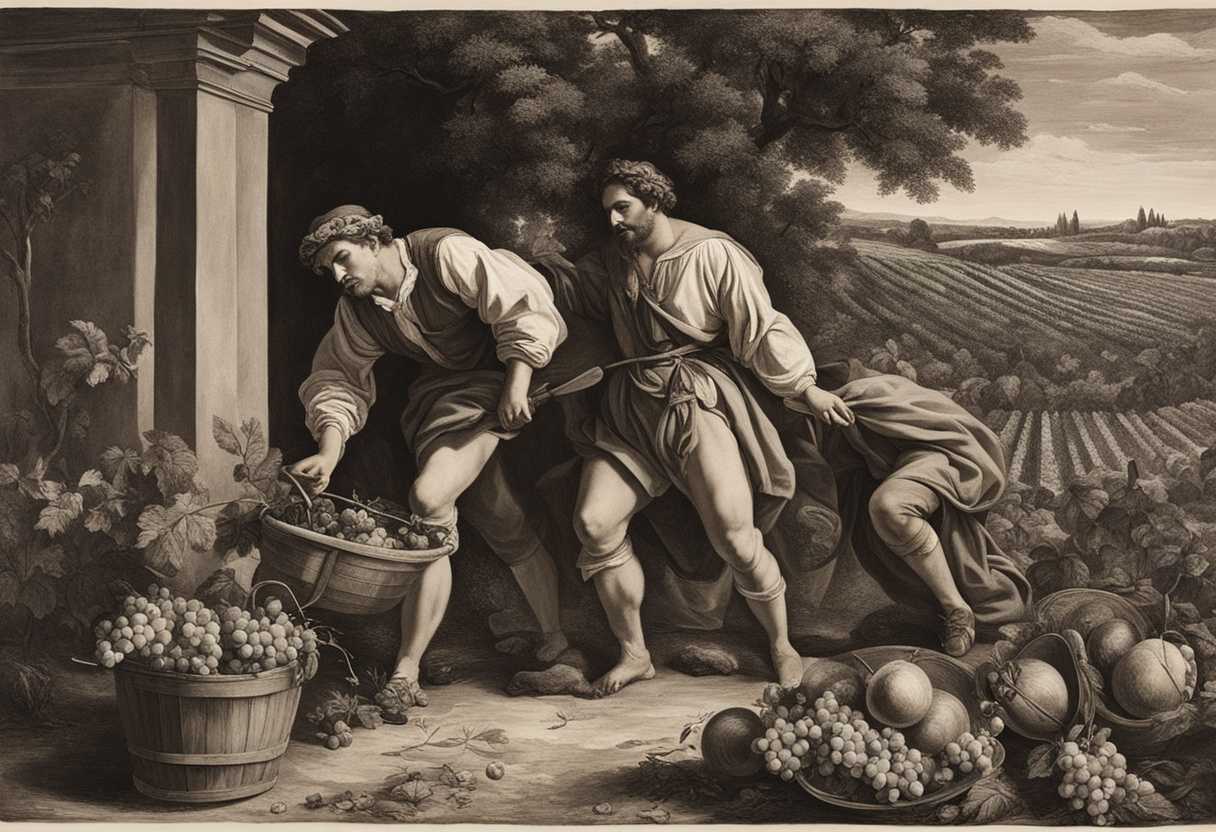
9 And he began to tell the people this parable: “A man planted a vineyard and let it out to tenants and went into another country for a long while.
10 When the time came, he sent a servant to the tenants, so that they would give him some of the fruit of the vineyard. But the tenants beat him and sent him away empty-handed.
11 He sent yet another, and they wounded him and cast him out.
12 And he sent yet a third. This one also they wounded and cast out.
13 Then the owner of the vineyard said, ‘What shall I do? I will send my beloved son; perhaps they will respect him.’
14 But when the tenants saw him, they said to themselves, ‘This is the heir. Let us kill him, so that the inheritance may be ours.’
15 So they cast him out of the vineyard and killed him. What then will the owner of the vineyard do to them?
16 He will come and destroy those tenants and give the vineyard to others.” When they heard this, they said, “Surely not!”
17 But he looked directly at them and said, “What then is this that is written: “‘The stone that the builders rejected has become the cornerstone’?
18 Everyone who falls on that stone will be broken to pieces, and when it falls on anyone, it will crush him.”
19 The scribes and the chief priests sought to lay hands on him at that very hour, for they perceived that he had told this parable against them, but they feared the people.
20 So they watched him and sent spies, who pretended to be sincere, that they might catch him in something he said, so as to deliver him up to the authority and jurisdiction of the governor.
21 So they asked him, “Teacher, we know that you speak and teach rightly, and show no partiality, but truly teach the way of God.
22 Is it lawful for us to give tribute to Caesar, or not?”
23 But he perceived their craftiness, and said to them,
24 “Show me a denarius. Whose likeness and inscription does it have?” They said, “Caesar’s.”
25 He said to them, “Then render to Caesar the things that are Caesar’s, and to God the things that are God’s.”
26 So they were unable to catch him in what he said before the people, and marveling at his answer, they became silent.
Setting the Scene for Luke 20:9-26
In Luke chapter 20, Jesus is teaching in the temple in Jerusalem during the final week of his earthly ministry. The scene is bustling with people from all walks of life – Pharisees, Sadducees, scribes, and ordinary citizens have gathered to listen to Jesus speak. The temple courtyard is filled with the sound of voices, the smell of incense, and the sight of people coming and going.
As Jesus is teaching, a group of religious leaders approaches him, challenging his authority and trying to trap him with their questions. They are hoping to discredit him in front of the crowd and undermine his influence. Jesus, in his wisdom, responds to their questions with parables and profound teachings, exposing their hypocrisy and revealing the truth of God’s kingdom.
Among the crowd are also Jesus’ disciples, who are watching and learning from their teacher. They are amazed by his wisdom and courage in the face of opposition. The tension in the air is palpable as Jesus navigates the tricky political and religious landscape of first-century Jerusalem, all while staying true to his mission to bring salvation to all who believe in him.
What is Luke 20:9-26 about?
Jesus is highlighting the concept of dual allegiance and responsibilities that individuals have in this verse – one towards the state or worldly authorities (Caesar) and the other towards God. Jesus acknowledges the importance of obeying civil laws, paying taxes, and fulfilling civic duties required by the governing authorities by stating “render to Caesar what is Caesar’s.” This teaches us the importance of being responsible citizens and contributing to society in a lawful and respectful manner.
On the other hand, when Jesus says “and to God what is God’s,” he emphasizes the higher allegiance and duty that we owe to God. This implies that while we must obey the laws of the land, we should never compromise our faith, values, or devotion to God. It reminds us of our spiritual responsibilities, such as loving others, practicing justice, and living a life that reflects our faith and connection to God. Jesus challenges us to navigate the tensions between our earthly and heavenly obligations by balancing these two responsibilities. This verse prompts us to reflect on how we can honor both our civic duties and our spiritual beliefs in a way that is harmonious and pleasing to both God and society.
Understanding what Luke 20:9-26 really means
In the passage from Luke 20:9-26, we find Jesus teaching in the temple courts, engaging with the chief priests, teachers of the law, and elders. He begins by sharing the Parable of the Wicked Tenants, where a man plants a vineyard, symbolizing God’s establishment of Israel, and rents it to farmers. The sending of servants and ultimately the man’s son, whom the tenants reject and kill, foreshadows the rejection and crucifixion of Jesus. This narrative highlights themes of stewardship, rejection of God’s messengers, and the distinction between earthly and divine responsibilities.
The imagery of the vineyard in the parable echoes the Song of the Vineyard in Isaiah 5:1-7, emphasizing God’s care for Israel and His disappointment in their unfaithfulness. The sending of the son mirrors Hebrews 1:1-2, where God speaks through His Son, emphasizing Jesus’ unique role in redemption. Additionally, the call to “Give back to Caesar what is Caesar’s, and to God what is God’s” in Luke 20:25 resonates with Paul’s teaching in Romans 13:1-7 on submitting to governing authorities while honoring God.
Today, we can draw parallels between the tenants’ responsibilities in the parable and our own stewardship of the gifts and responsibilities entrusted to us by God. The rejection of the prophets and Jesus serves as a cautionary tale, urging us to heed God’s messengers and accept His Son. Furthermore, the lesson on paying taxes prompts us to consider how we balance our civic duties with our spiritual obligations, recognizing the importance of fulfilling both aspects of our lives faithfully.
To illustrate the significance of faithfulness and respect for authority, consider a scenario where a business owner entrusts his company to managers who exploit it for personal gain and mistreat his representatives. When the owner sends his son to rectify the situation, the managers plot to kill him. This narrative mirrors the parable, emphasizing the consequences of unfaithfulness and rebellion against rightful authority.
As we delve into the phrases of the parable, we uncover layers of meaning that deepen our understanding of God’s care for His people, His persistent outreach through prophets, and the sacrificial love displayed in sending Jesus. The call to render to Caesar and to God what is due to each underscores the importance of fulfilling our obligations in both the earthly and spiritual realms. By reflecting on these themes and phrases, we can cultivate a more profound awareness of our responsibilities, the significance of accepting God’s messengers, and the balance between our earthly and divine duties.
How does one properly honor authority in society?
Honoring authority in society involves recognizing the roles and responsibilities that leaders hold. It means acknowledging their position and giving them the respect and obedience that is due to them. This respect can be shown through our words and actions, and by following the laws and guidelines they have put in place.
Furthermore, honoring authority in society entails understanding that those in positions of authority are ultimately accountable to a higher authority, which is God. This perspective can help us maintain a humble and respectful attitude towards authority figures, knowing that they too are subject to God’s judgment. By upholding authority in this manner, a more peaceful and orderly society is created where trust and cooperation can thrive.
Application
Reflect on being faithful stewards of God’s blessings. Use your time and talents generously for His glory. Make tangible changes to honor Him in all aspects of your life. Let the passage inspire you to action. What steps will you take to fulfill God’s calling today?

Reverend Michael Johnson is an experienced Church Minister with a profound expertise in spirituality and guidance. With a serene presence and a compassionate heart, he has faithfully served his congregation for over 20 years, leading them on a spiritual journey towards inner peace and enlightenment. Reverend Johnson’s extensive knowledge of religious philosophies and profound understanding of human nature have made him a trusted confidant and mentor to many, as he seamlessly weaves his profound wisdom into life teachings. Reverend Johnson’s calming demeanor and empathetic nature continue to uplift and heal souls, nurturing a sense of unity and tranquility within his community.