
John 20:24-25 is about Thomas, one of the disciples, who doubted the resurrection of Jesus until he physically saw the wounds in Jesus’ hands and side, highlighting the importance of faith and the confirmation of belief through direct experience and evidence.
24 Now Thomas, one of the twelve, called the Twin, was not with them when Jesus came.
25 So the other disciples told him, “We have seen the Lord.” But he said to them, “Unless I see in his hands the mark of the nails, and place my finger into the mark of the nails, and place my hand into his side, I will never believe.”
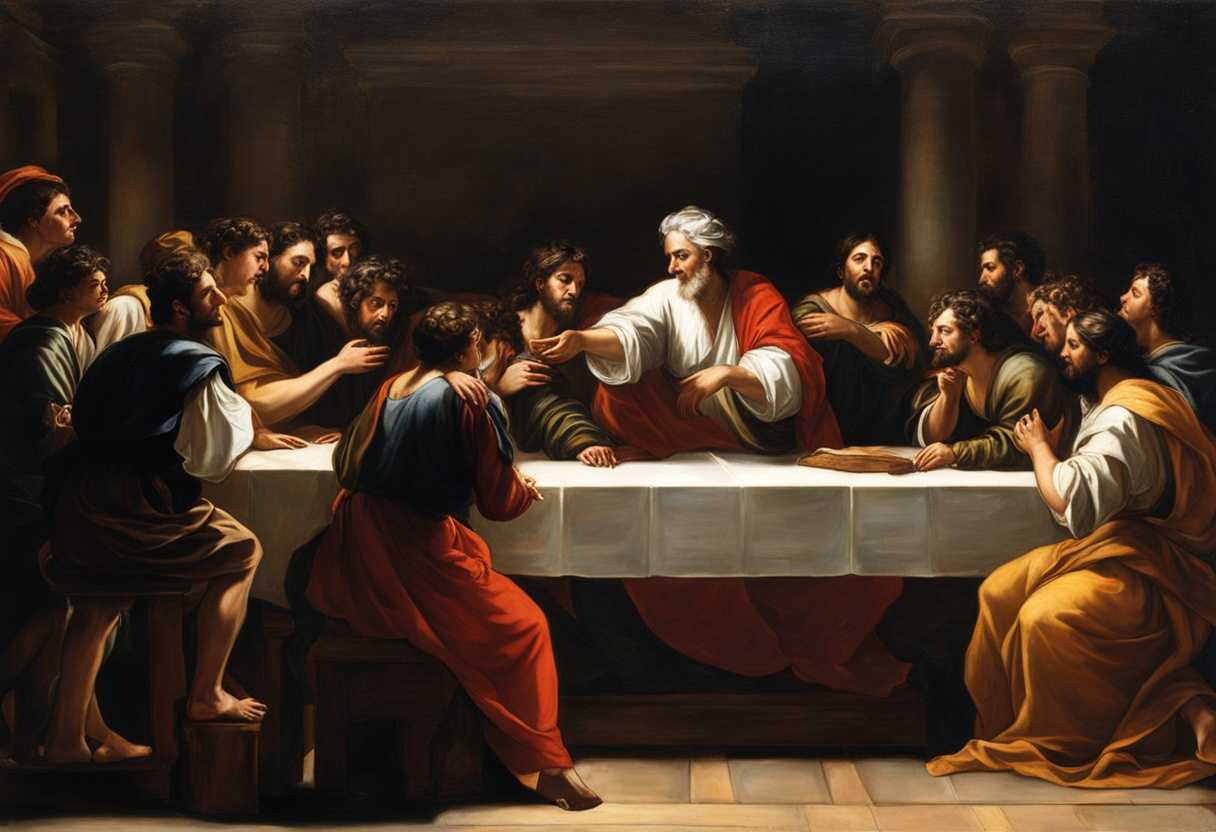
Setting the Scene for John 20:24-25
The scene in John chapter 20:24-25 takes place in a room where the disciples had gathered after the resurrection of Jesus. The disciples were still reeling from the events of the crucifixion and the reports of Jesus being alive. Thomas, one of the disciples, was not present when Jesus first appeared to them, and when he returned, the others excitedly told him that they had seen the Lord.
Thomas, known as “Doubting Thomas,” expressed skepticism and declared that he would not believe unless he saw the nail marks in Jesus’ hands and put his finger in the wounds. The room was likely dimly lit, filled with a mix of emotions ranging from disbelief to hope and anticipation. The disciples were huddled together, processing the miraculous events they had witnessed, while Thomas struggled with his doubts.
The atmosphere in the room was charged with a sense of anticipation and uncertainty as the disciples awaited Jesus’ next appearance. The scene captures a moment of vulnerability and human frailty as Thomas grappled with his doubts, highlighting the complexity of faith and the need for tangible proof for some to believe.
What is John 20:24-25 about?
The story of Doubting Thomas challenges us to reflect on the nature of faith and doubt in this verse. Thomas, one of Jesus’ disciples, struggles to believe in the resurrection until he sees and touches the wounds of Jesus. This moment highlights the human tendency to question and seek tangible proof before fully embracing something as profound as a resurrection. Are we also like Thomas, hesitant to believe in miracles until we have concrete evidence in front of us?
This verse invites us to ponder the role of doubt in our faith journey. Doubt is not necessarily a sign of weakness but can be a natural part of our spiritual growth. It prompts us to seek understanding and deepen our convictions. The narrative of Thomas serves as a reminder that even the most devoted followers may experience moments of uncertainty. How do we navigate our doubts and turn them into opportunities for strengthening our faith, just as Thomas did in the end by acknowledging Jesus as “My Lord and my God”? This verse ultimately encourages us to embrace our doubts and questions, for they can lead us to a deeper faith and a more profound relationship with the Divine. We may also seek understanding and encounter God in our moments of doubt, just as Jesus met Thomas where he was and offered him the proof he needed. Let us embrace our doubts as stepping stones toward a more robust and authentic faith, learning from Thomas’s journey.
Understanding what John 20:24-25 really means
In John 20:24-25, we encounter the account of Thomas, one of the twelve disciples, who famously expressed doubt regarding Jesus’ resurrection. Thomas, who was not present when Jesus first appeared to the other disciples, insisted on physical proof of Jesus’ wounds before he would believe. This episode highlights the human tendency to rely on tangible evidence rather than faith, even among those who had walked closely with Jesus during His ministry.
The phrase “One of the Twelve” underscores Thomas’s intimate relationship with Jesus and his significant role as a disciple. His doubt serves as a poignant reminder that even those who have witnessed miracles firsthand may still struggle with belief when faced with extraordinary claims. Thomas’s demand to see and touch Jesus’ wounds before believing reflects a conditional faith that hinges on personal experience and empirical evidence, a mindset that resonates with many in today’s society.
In John 20:27-29, we witness Jesus’ compassionate response to Thomas’s doubt. By inviting Thomas to touch His wounds, Jesus meets Thomas at his point of need, leading to Thomas’s profound declaration of faith, “My Lord and my God!” This interaction exemplifies Jesus’ understanding of human doubt and His willingness to provide the evidence needed for belief. Hebrews 11:1 contrasts Thomas’s need for physical proof with the biblical definition of faith as confidence in the unseen, highlighting the tension between empirical evidence and spiritual conviction.
The relevance of Thomas’s story extends to contemporary struggles with faith and doubt. In an era marked by skepticism and a reliance on scientific inquiry, many individuals grapple with the need for tangible evidence before accepting spiritual truths. Thomas’s journey reminds us that doubt is a natural part of the faith experience and that Jesus meets us in our uncertainty, offering the reassurance and proof we need to believe.
Consider a scenario where someone grappling with the loss of a loved one seeks a sign of their well-being in the afterlife. Similar to Thomas’s insistence on physical proof, this individual may say, “I need to see a sign to believe they are in a better place.” Just as Jesus provided Thomas with the evidence he sought, God often reveals Himself through signs and experiences that strengthen our faith during times of doubt.
In conclusion, Thomas’s story serves as a profound illustration of the coexistence of faith and doubt. Rather than condemning Thomas for his skepticism, Jesus meets him in his uncertainty, demonstrating patience and understanding. This narrative encourages us to embrace our questions, seek understanding, and trust that God will meet us in our doubts, providing the evidence we need to believe.
How do our doubts hinder our spiritual growth?
Our doubts can hinder our spiritual growth by causing us to waver in our faith and trust in God. When we doubt God’s presence, power, or love, we may become hesitant to fully surrender ourselves to Him and rely on Him completely. This can lead to a lack of spiritual growth as we hold back from fully experiencing the transformative work of the Holy Spirit in our lives.
Additionally, doubts can create a barrier between us and God, preventing us from developing a deep and intimate relationship with Him. When we are consumed by skepticism and uncertainty, we may distance ourselves from God instead of drawing near to Him in prayer, worship, and study of His Word. This separation can stunt our spiritual growth and prevent us from experiencing the peace, joy, and fulfillment that come from walking closely with God. Our doubts can ultimately hinder our spiritual growth by limiting our ability to fully embrace and live out the truths of the Bible. When we allow our uncertainties to overshadow the promises and teachings of Scripture, we may struggle to apply God’s Word to our lives and allow it to shape our thoughts, attitudes, and actions. We can overcome these hindrances and continue to grow spiritually in our relationship with God by addressing our doubts with faith and seeking understanding through prayer and study.
Application
Imagine your faith as a project at work or a commitment to your family. Just like Thomas, we sometimes need to see to believe. But what if we could strengthen our trust without always needing proof? Every doubt is a hurdle that holds us back from true belief in God’s promises. Will you push past these obstacles to deepen your faith in His word today?

Reverend Michael Johnson is an experienced Church Minister with a profound expertise in spirituality and guidance. With a serene presence and a compassionate heart, he has faithfully served his congregation for over 20 years, leading them on a spiritual journey towards inner peace and enlightenment. Reverend Johnson’s extensive knowledge of religious philosophies and profound understanding of human nature have made him a trusted confidant and mentor to many, as he seamlessly weaves his profound wisdom into life teachings. Reverend Johnson’s calming demeanor and empathetic nature continue to uplift and heal souls, nurturing a sense of unity and tranquility within his community.