
John 20:26-28 is about Thomas encountering the resurrected Jesus, prompting him to acknowledge Jesus as his Lord and God, illustrating the importance of faith in recognizing the divinity of Christ.
26 Eight days later, his disciples were inside again, and Thomas was with them. Although the doors were locked, Jesus came and stood among them and said, “Peace be with you.”
27 Then he said to Thomas, “Put your finger here, and see my hands; and put out your hand, and place it in my side. Do not disbelieve, but believe.”
28 Thomas answered him, “My Lord and my God!”
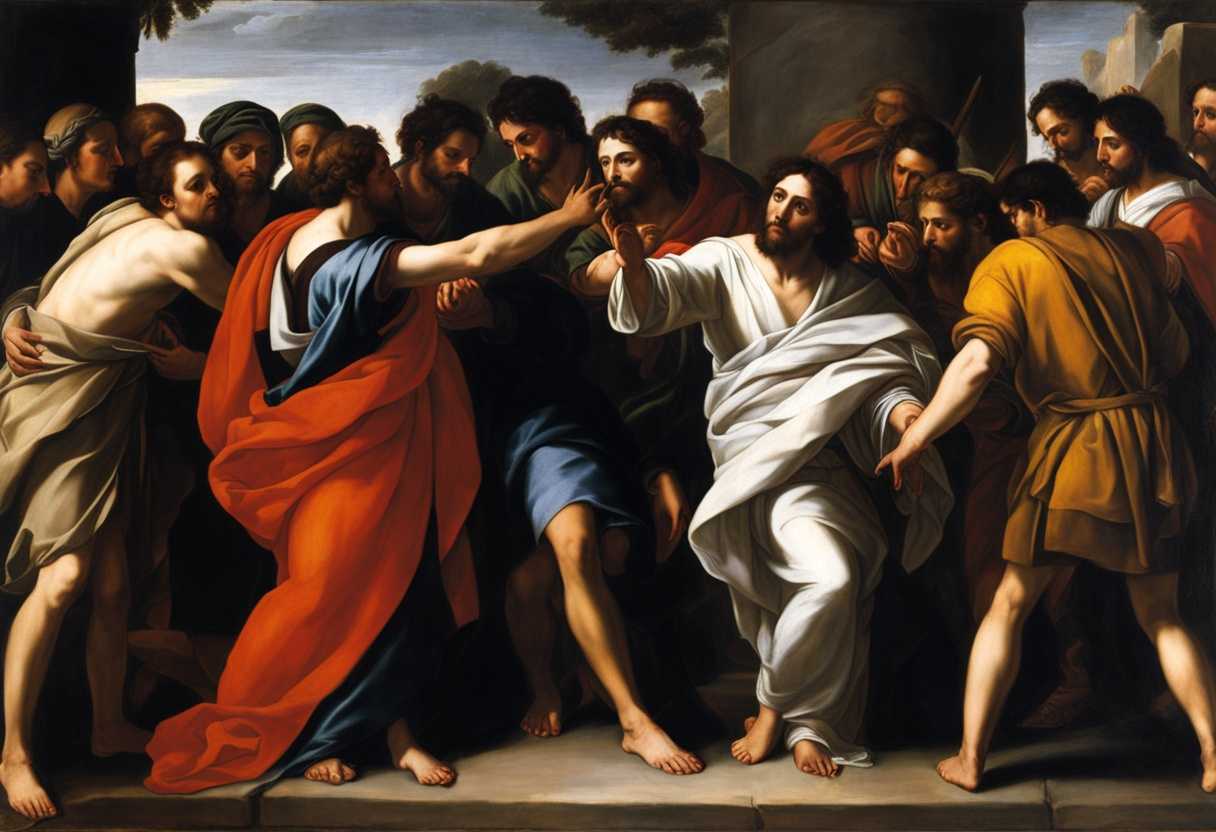
Setting the Scene for John 20:26-28
The scene in John chapter 20:26-28 takes place in a room where the disciples had gathered after the resurrection of Jesus. The disciples were still reeling from the events of the crucifixion and the reports of Jesus being alive. Thomas, one of the disciples, was not present when Jesus first appeared to them, and he expressed doubt about the resurrection, stating that he would not believe unless he saw the nail marks in Jesus’ hands and put his finger in the wounds.
Suddenly, Jesus appeared in the room, even though the doors were locked, and greeted the disciples with peace. He then turned to Thomas and invited him to touch his wounds, telling him, “Put your finger here; see my hands. Reach out your hand and put it into my side. Stop doubting and believe.” Overwhelmed by this encounter, Thomas exclaimed, “My Lord and my God!” This powerful moment solidified Thomas’ belief in the resurrection and affirmed Jesus’ divinity.
The room where this scene unfolded was likely a simple, dimly lit space with a table and some chairs where the disciples gathered for safety and comfort. The atmosphere would have been tense with a mix of fear, confusion, and hope as the disciples grappled with the miraculous events they were witnessing. Jesus’ sudden appearance and Thomas’ profound declaration of faith in this room marked a pivotal moment in the disciples’ understanding of Jesus’ resurrection and divinity.
What is John 20:26-28 about?
Thomas, one of Jesus’ disciples, exemplifies faith and recognition of the divinity of Jesus in this powerful verse from the Bible. When Thomas sees Jesus’ wounds after His resurrection, he not only acknowledges Jesus as his Lord but also as God. This moment showcases the profound impact of witnessing the resurrection of Jesus and the evidence of his identity as the Son of God.
Reflecting on Thomas’ declaration, we can ponder the significance of recognizing Jesus as both Lord and God. It prompts us to consider our own beliefs and faith in Jesus Christ. How do we acknowledge His divinity in our lives? How do we show reverence and devotion to Him as our Lord and Savior? Thomas’ proclamation serves as a reminder for us to deepen our faith, trust in the miraculous power of God, and declare Jesus as our ultimate guide and source of salvation. Let Thomas’ unwavering faith and the profound realization of Jesus’ true identity inspire us as we meditate on this verse. Let us strive to emulate his conviction and devotion to Jesus as our Lord and God. May this verse encourage us to strengthen our relationship with Jesus and proclaim His divinity in all aspects of our lives.
Understanding what John 20:26-28 really means
After Jesus’ resurrection, in John 20:26-28, we find the disciples gathered, including Thomas, who had doubted the resurrection. Despite locked doors, Jesus appears, addressing Thomas directly. He offers peace, not just as a greeting but as a profound assurance of His presence and the peace that faith in Him brings. Jesus invites Thomas to physically verify His resurrection, addressing his doubts head-on, urging him to move from skepticism to belief. Thomas responds with a declaration of faith, acknowledging Jesus as his Lord and God, recognizing His divinity and lordship.
In John 14:27, Jesus promises a peace that surpasses worldly understanding, reinforcing the peace He offers in the midst of turmoil. Hebrews 11:1 emphasizes the importance of faith, highlighting confidence in the unseen. Matthew 28:20 assures believers of Jesus’ continual presence, echoing His appearance to Thomas despite doubts. Today, many grapple with doubt in their faith journey, finding solace in knowing that doubt is a natural part of faith and that Jesus meets us in our uncertainties. In a world rife with anxiety, Jesus’ offer of peace remains relevant, transcending circumstances and offering a deep sense of calm.
While faith often requires belief without tangible evidence, Jesus’ interaction with Thomas shows His understanding of our need for reassurance. Consider someone struggling with faith after a personal tragedy, feeling adrift and questioning God’s presence. Meeting a friend who shares their own doubts and journey towards peace through prayer and community can offer a glimmer of hope. This encounter illustrates that doubt is part of the faith journey and seeking Jesus, even in uncertainty, can lead to profound peace and renewed faith. Ultimately, this passage encourages believers to bring their doubts to Jesus, who offers peace and reassurance, reminding us that faith is a continual journey with Jesus by our side, beckoning us to trust Him completely.
Is my faith in Jesus unshakable like Thomas’?
Thomas had doubts about Jesus’ resurrection and needed physical evidence to believe. However, once he saw Jesus and felt the scars of the crucifixion, his faith became unshakable. This shows that Thomas’ doubt did not hinder the strength of his faith once he encountered the truth.
For our faith to be unshakable like Thomas’, we should be open and honest about our doubts and questions. We can deepen our understanding and personal experience of Jesus by seeking answers and evidence. Thomas’ example teaches us that doubt can lead to a stronger, more resilient faith when we confront and reconcile it with the truth of who Jesus is. Encountering Jesus personally and being willing to face our doubts and questions ultimately gives us unshakeable faith in Him. Our faith can grow stronger and more unshakeable as we seek to know Jesus more intimately and authentically, just like Thomas did when he encountered the risen Christ.
Application
Imagine you’re juggling work deadlines and family commitments; sometimes faith feels like just another ball in the air. But, much like Thomas, we are invited to trust without seeing everything. Strengthen your grip on faith, believing in God’s plan and provision, even when it’s unclear. Take a bold step today—embrace faith over doubt in every corner of your life. Are you ready to trust the path ahead?

Reverend Michael Johnson is an experienced Church Minister with a profound expertise in spirituality and guidance. With a serene presence and a compassionate heart, he has faithfully served his congregation for over 20 years, leading them on a spiritual journey towards inner peace and enlightenment. Reverend Johnson’s extensive knowledge of religious philosophies and profound understanding of human nature have made him a trusted confidant and mentor to many, as he seamlessly weaves his profound wisdom into life teachings. Reverend Johnson’s calming demeanor and empathetic nature continue to uplift and heal souls, nurturing a sense of unity and tranquility within his community.