
John 2:1-25 is about Jesus performing his first miracle at the wedding in Cana, turning water into wine, signifying the beginning of his ministry and the manifestation of his divine power.
1 On the third day there was a wedding at Cana in Galilee, and the mother of Jesus was there.
2 Jesus also was invited to the wedding with his disciples.
3 When the wine ran out, the mother of Jesus said to him, “They have no wine.”
4 And Jesus said to her, “Woman, what does this have to do with me? My hour has not yet come.”
5 His mother said to the servants, “Do whatever he tells you.”
6 Now there were six stone water jars there for the Jewish rites of purification, each holding twenty or thirty gallons.
7 Jesus said to the servants, “Fill the jars with water.” And they filled them up to the brim.
8 And he said to them, “Now draw some out and take it to the master of the feast.” So they took it.
9 When the master of the feast tasted the water now become wine, and did not know where it came from (though the servants who had drawn the water knew), the master of the feast called the bridegroom.
10 and said to him, “Everyone serves the good wine first, and when people have drunk freely, then the poor wine. But you have kept the good wine until now.”
11 This, the first of his signs, Jesus did at Cana in Galilee, and manifested his glory. And his disciples believed in him.
12 After this he went down to Capernaum, with his mother and his brothers and his disciples, and they stayed there for a few days.
13 The Passover of the Jews was at hand, and Jesus went up to Jerusalem.
14 In the temple he found those who were selling oxen and sheep and pigeons, and the money-changers sitting there.
15 And making a whip of cords, he drove them all out of the temple, with the sheep and oxen. And he poured out the coins of the money-changers and overturned their tables.
16 And he told those who sold the pigeons, “Take these things away; do not make my Father’s house a house of trade.”
17 His disciples remembered that it was written, “Zeal for your house will consume me.”
18 So the Jews said to him, “What sign do you show us for doing these things?”
19 Jesus answered them, “Destroy this temple, and in three days I will raise it up.”
20 The Jews then said, “It has taken forty-six years to build this temple, and will you raise it up in three days?”
21 But he was speaking about the temple of his body.
22 When therefore he was raised from the dead, his disciples remembered that he had said this, and they believed the Scripture and the word that Jesus had spoken.
23 Now when he was in Jerusalem at the Passover Feast, many believed in his name when they saw the signs that he was doing.
24 But Jesus on his part did not entrust himself to them, because he knew all people
25 and needed no one to bear witness about man, for he himself knew what was in man.
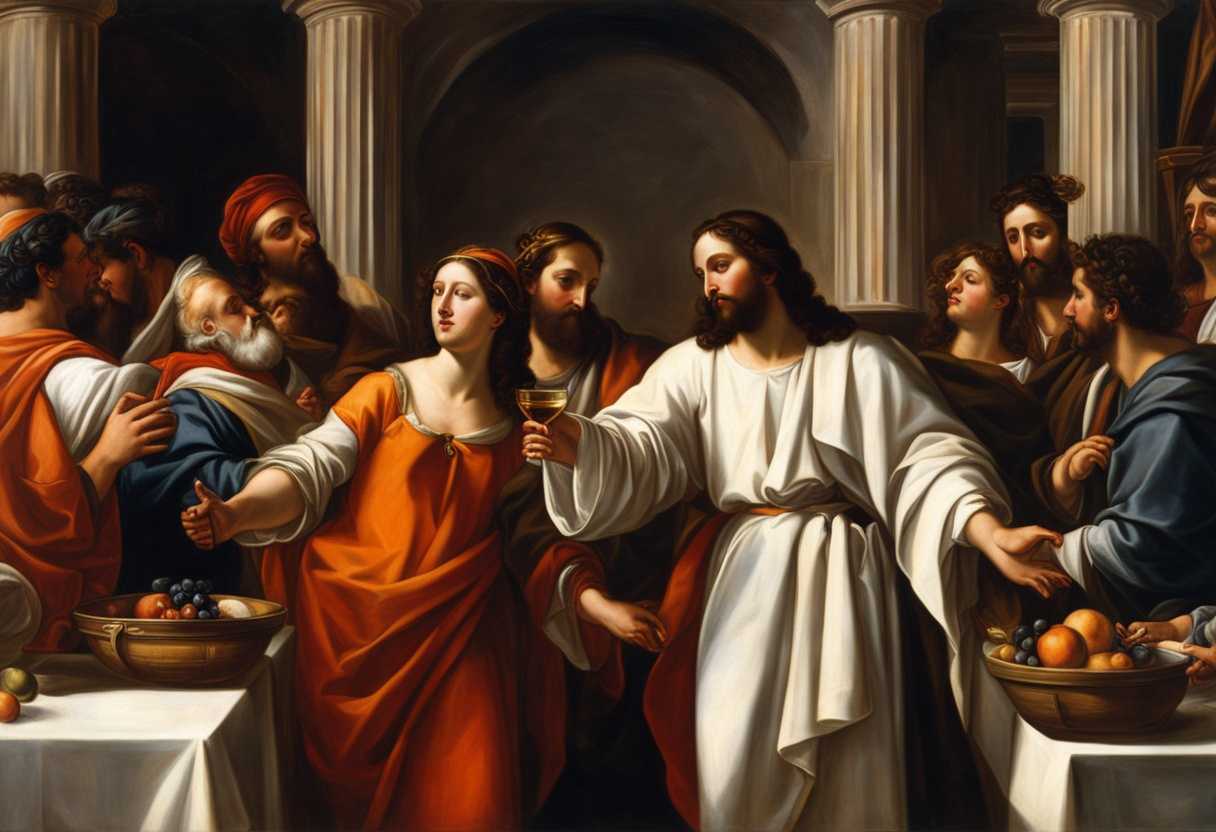
Setting the Scene for John 2:1-25
The scene in John chapter 2 takes place at a wedding in the town of Cana in Galilee. The guests are joyously celebrating the union of the bride and groom, surrounded by colorful decorations and the sounds of laughter and music. Among the attendees are Mary, the mother of Jesus, and Jesus himself, along with his disciples who have been invited to the wedding.
The wedding feast is in full swing when the host runs into a dilemma – they have run out of wine. Mary, knowing her son’s capabilities, approaches Jesus and informs him of the situation. Despite initially hesitating, Jesus instructs the servants to fill six stone water jars with water. Miraculously, the water turns into the finest wine, much to the amazement of the guests.
This miracle marks the beginning of Jesus’ public ministry, as his disciples witness his power and authority. The scene at the wedding in Cana sets the stage for the unfolding of Jesus’ divine mission and reveals his compassion and ability to bring joy and abundance to those around him.
What is John 2:1-25 about?
Isn’t it fascinating how Jesus chose to perform his first miracle at a wedding, a joyous occasion where love and celebration abound? Jesus not only demonstrated his miraculous power but also showcased his compassion and care for the couple and their guests by turning water into wine. This act symbolizes abundance, transformation, and the idea that Jesus brings fulfillment and joy to those around him. Jesus acknowledges and blesses the importance of marriage and the significance of shared happiness and community in this miraculous event. Jesus ensured that the celebration continued by providing an abundance of wine, highlighting his desire to bring joy and abundance into the lives of others. This miracle also serves as a powerful reminder of Jesus’s role in transforming the ordinary into the extraordinary, showing us that through faith and belief in him, we too can experience profound and miraculous changes in our own lives.
Understanding what John 2:1-25 really means
In John 2:1-25, we encounter two significant events in Jesus’ ministry: the Wedding at Cana and the cleansing of the temple. These events hold profound meaning and offer valuable insights into Jesus’ character and mission.
At the Wedding at Cana, the mention of “On the third day” not only sets the scene but also alludes to the resurrection, highlighting the theme of new beginnings and divine intervention. When the wine runs out, it symbolizes human limitations and the necessity for divine provision, echoing the sentiment of Psalm 23:1, “The Lord is my shepherd; I shall not want.” The directive to “Do whatever he tells you” underscores the importance of obedience and trust in following Jesus’ instructions, akin to the wisdom in Proverbs 3:5-6, “Trust in the Lord with all your heart and lean not on your own understanding.” The provision of the best wine signifies the abundance and quality of God’s blessings, mirroring the promise in John 10:10 of a full and abundant life through Christ.
In the cleansing of the temple, Jesus’ declaration, “Zeal for your house will consume me,” reveals His passion for the purity of worship and the sanctity of God’s dwelling place, reflecting the sentiment of Psalm 69:9. His cryptic statement, “Destroy this temple, and I will raise it again in three days,” serves as a foreshadowing of His death and resurrection, linking to the idea in 1 Corinthians 6:19 that our bodies are temples of the Holy Spirit. The assertion that Jesus did not need testimony about mankind showcases His divine knowledge and understanding of human nature, resonating with Jeremiah 17:10, where God searches the heart and mind.
These events hold relevance for us today as they highlight themes of divine provision, obedience, purity of worship, and understanding human nature. Just as Jesus provided wine at the wedding, He continues to provide for our needs today, often in unexpected ways. Obedience and trust in following Jesus’ guidance remain crucial for navigating life’s challenges and experiencing His blessings. Maintaining the sanctity of our worship and relationship with God is essential in a world filled with distractions and temptations. Jesus’ deep understanding of human nature offers comfort and assurance that He empathizes with our struggles and is intimately acquainted with our hearts.
In conclusion, reflecting on the lessons from John 2:1-25 can lead us to a deeper trust in Jesus’ provision, guidance, and understanding. May we strive to emulate His obedience, zeal for God’s house, and compassion for humanity as we walk in faith and seek to honor Him in all aspects of our lives.
How can we trust in Jesus’ power and authority?
We can trust in Jesus’ power and authority by observing His miraculous signs and wonders. The passage demonstrates Jesus’ ability to transform water into wine, showing His dominion over nature. Additionally, Jesus’ knowledge of people’s hearts and actions highlights His divine insight and authority. We can have confidence in trusting Jesus with our lives and circumstances by witnessing these displays of power and authority.
Furthermore, the dialogue between Jesus and the Jews in this passage reveals the challenge to Jesus’ authority. Despite the skepticism and questioning from those around Him, Jesus stands firm in His identity and mission. His unwavering confidence in who He is and His purpose on earth serves as a testament to His authority that we can trust in. Through His interactions and responses, Jesus asserts His rightful place as Lord and Savior, inviting us to place our faith in Him and His power to transform lives.
Application
Think of God as the guiding light in the busy maze of work and family life. Obeying His word opens doors that you never knew existed. Trust in His power and watch as He transforms your chaotic schedules and overwhelming moments into something extraordinary. Are you ready to step out in faith and see the miracles unfold in your own life?

Reverend Michael Johnson is an experienced Church Minister with a profound expertise in spirituality and guidance. With a serene presence and a compassionate heart, he has faithfully served his congregation for over 20 years, leading them on a spiritual journey towards inner peace and enlightenment. Reverend Johnson’s extensive knowledge of religious philosophies and profound understanding of human nature have made him a trusted confidant and mentor to many, as he seamlessly weaves his profound wisdom into life teachings. Reverend Johnson’s calming demeanor and empathetic nature continue to uplift and heal souls, nurturing a sense of unity and tranquility within his community.