
John 2:12-17 is about the righteous anger of Jesus towards those who turned the temple into a marketplace, highlighting the importance of reverent worship and denouncing commercial exploitation in sacred spaces.
12 After this he went down to Capernaum, with his mother and his brothers and his disciples, and they stayed there for a few days.
13 The Passover of the Jews was at hand, and Jesus went up to Jerusalem.
14 In the temple he found those who were selling oxen and sheep and pigeons, and the money-changers sitting there.
15 And making a whip of cords, he drove them all out of the temple, with the sheep and oxen. And he poured out the coins of the money-changers and overturned their tables.
16 And he told those who sold the pigeons, “Take these things away; do not make my Father’s house a house of trade.”
17 His disciples remembered that it was written, “Zeal for your house will consume me.”
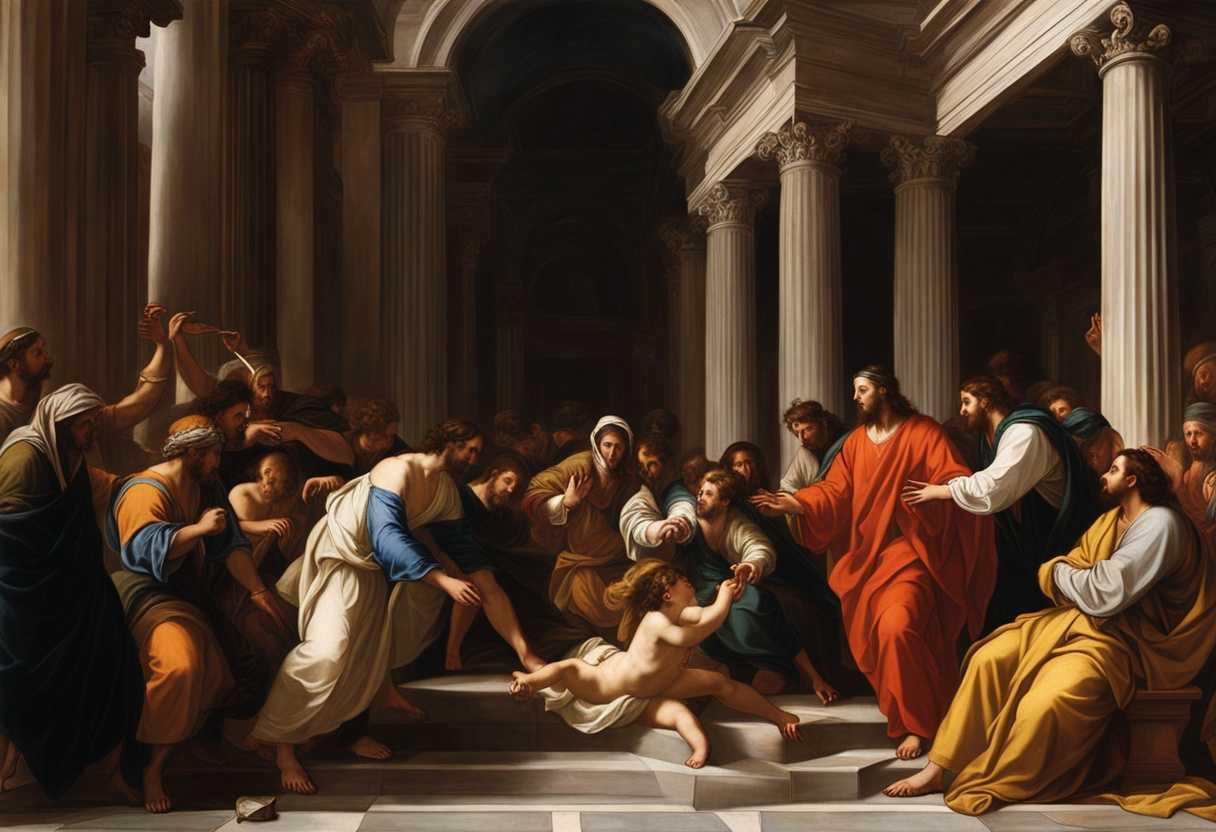
Setting the Scene for John 2:12-17
In John chapter 2, we find Jesus and his disciples in the city of Jerusalem during the time of the Passover festival. The scene is bustling with activity as people from all over have gathered to celebrate this important Jewish holiday. Jesus and his disciples have come to Jerusalem to participate in the festivities and to worship at the temple.
As they make their way through the crowded streets, they come across the temple courts which are filled with merchants selling animals for sacrifice and exchanging money. Jesus is filled with righteous anger at the sight of these practices taking place in the house of God. He overturns the tables of the money changers and drives out the merchants, declaring, “Get these out of here! Stop turning my Father’s house into a market!”
The disciples watch in awe as Jesus displays his authority and zeal for the purity of God’s house. This event marks the beginning of Jesus’ public ministry and sets the stage for the miracles and teachings that will follow. The temple, usually a place of reverence and worship, is now a scene of chaos and disruption as Jesus takes a stand against corruption and injustice.
What is John 2:12-17 about?
Jesus demonstrates his deep reverence for the temple as a sacred space dedicated to worship and prayer in this verse. Jesus asserts the importance of honoring the spiritual significance of the temple and removing anything that detracts from its sanctity by driving out the merchants and money changers who had turned the temple into a marketplace. This action emphasizes the need for purity and sincerity in worship, as well as the rejection of materialistic pursuits that can overshadow spiritual priorities.
Through this powerful symbol of cleansing the temple, Jesus challenges us to reflect on our own lives and spaces of worship. Are we prioritizing the spiritual aspects of our faith, or have we allowed worldly concerns to take precedence? Are we treating our sacred spaces with the reverence they deserve, or are we allowing distractions to cloud their purpose? We are reminded to cultivate a mindset of spiritual purity and authenticity in our worship and daily lives by following Jesus’s example of purifying the temple.
Understanding what John 2:12-17 really means
In the Gospel of John, we encounter a powerful scene where Jesus, early in His ministry, cleanses the temple in Jerusalem during the Passover. This event showcases Jesus’ zeal for God’s house and His authority over religious practices. The temple, meant for worship, had been commercialized with the selling of animals and money-changing, prompting Jesus to drive out the merchants, declaring, “Do not make My Father’s house a house of merchandise!” This statement underscores the sacredness Jesus attributed to the temple, a place meant for prayer and reverence rather than profit.
The intensity of Jesus’ actions is further emphasized by His reference to Psalm 69:9, stating, “Zeal for Your house has eaten Me up.” This quote reveals the depth of Jesus’ passion and commitment to upholding the sanctity of God’s dwelling place. The cleansing of the temple serves as a poignant reminder of the importance of maintaining reverence and purity in our worship spaces, free from worldly distractions and commercial interests.
This passage resonates with contemporary audiences by challenging us to respect sacred spaces, ensuring that our places of worship are honored and revered. It prompts us to examine our motives in worship, encouraging us to prioritize purity and sincerity over material gain. Just as Jesus displayed righteous anger in defense of God’s house, we are called to uphold the sanctity of our worship practices and principles with fervor and dedication.
Consider a scenario where a church becomes more focused on fundraising events than on worship and community service. Inspired by Jesus’ actions in the temple, a pastor decides to realign the church’s activities towards worship, prayer, and service, redirecting the congregation’s focus back to honoring God above all else. This anecdote illustrates the relevance of the passage in guiding us to prioritize spiritual devotion over worldly pursuits within our religious communities.
In conclusion, reflecting on Jesus’ cleansing of the temple prompts us to evaluate our own lives and communities, ensuring that our worship practices are centered on God rather than material gain. By cultivating a zeal for God’s house and maintaining the purity of our worship spaces, we can deepen our relationship with the divine and foster a more authentic connection with the sacred. Let us heed the lessons from this passage, striving to uphold the reverence and sanctity of our worship spaces in a world often consumed by commercialism and distractions.
How can we honor God with our bodies?
We can honor God with our bodies by recognizing that they are temples of the Holy Spirit and treating them with respect and care. This means avoiding behaviors that harm our bodies physically, mentally, or spiritually, such as substance abuse, overeating, or neglecting self-care. We show gratitude to God for the gift of our bodies by living a healthy lifestyle and engaging in activities that promote well-being.
Additionally, we can honor God with our bodies by using them to serve others and spread His love and message of salvation. When we offer our time, talents, and physical abilities to help those in need or to support our communities, we reflect God’s compassion and selflessness. We can demonstrate God’s love through our actions and bring glory to Him by being mindful of how we use our bodies to interact with others. Honoring God with our bodies ultimately involves aligning our thoughts, words, and actions with His will, going beyond physical appearance or abilities. When we seek to live in obedience to God and strive to glorify Him in all that we do, we honor Him with our bodies as vessels for His kingdom and instruments of His grace in the world.
Application
Just like how we protect our work and nurture our family, let’s also safeguard the sanctity of our places of worship. Jesus set the standard of respect and reverence for our sacred spaces – it’s up to us to follow His lead. Let’s pledge to keep our churches pure and sacred, just as Jesus intended. Will you join in this important mission to honor and worship the Lord in our places of devotion?

Reverend Michael Johnson is an experienced Church Minister with a profound expertise in spirituality and guidance. With a serene presence and a compassionate heart, he has faithfully served his congregation for over 20 years, leading them on a spiritual journey towards inner peace and enlightenment. Reverend Johnson’s extensive knowledge of religious philosophies and profound understanding of human nature have made him a trusted confidant and mentor to many, as he seamlessly weaves his profound wisdom into life teachings. Reverend Johnson’s calming demeanor and empathetic nature continue to uplift and heal souls, nurturing a sense of unity and tranquility within his community.