
John 2:3-16 is about Jesus performing his first public miracle at the wedding in Cana, turning water into wine, which symbolizes his ability to transform the ordinary into the extraordinary and foreshadows his greater spiritual purpose and ministry.
3 When the wine ran out, the mother of Jesus said to him, “They have no wine.”
4 And Jesus said to her, “Woman, what does this have to do with me? My hour has not yet come.”
5 His mother said to the servants, “Do whatever he tells you.”
6 Now there were six stone water jars there for the Jewish rites of purification, each holding twenty or thirty gallons.
7 Jesus said to the servants, “Fill the jars with water.” And they filled them up to the brim.
8 And he said to them, “Now draw some out and take it to the master of the feast.” So they took it.
9 When the master of the feast tasted the water now become wine, and did not know where it came from (though the servants who had drawn the water knew), the master of the feast called the bridegroom.
10 and said to him, “Everyone serves the good wine first, and when people have drunk freely, then the poor wine. But you have kept the good wine until now.”
11 This, the first of his signs, Jesus did at Cana in Galilee, and manifested his glory. And his disciples believed in him.
12 After this he went down to Capernaum, with his mother and his brothers and his disciples, and they stayed there for a few days.
13 The Passover of the Jews was at hand, and Jesus went up to Jerusalem.
14 In the temple he found those who were selling oxen and sheep and pigeons, and the money-changers sitting there.
15 And making a whip of cords, he drove them all out of the temple, with the sheep and oxen. And he poured out the coins of the money-changers and overturned their tables.
16 And he told those who sold the pigeons, “Take these things away; do not make my Father’s house a house of trade.”
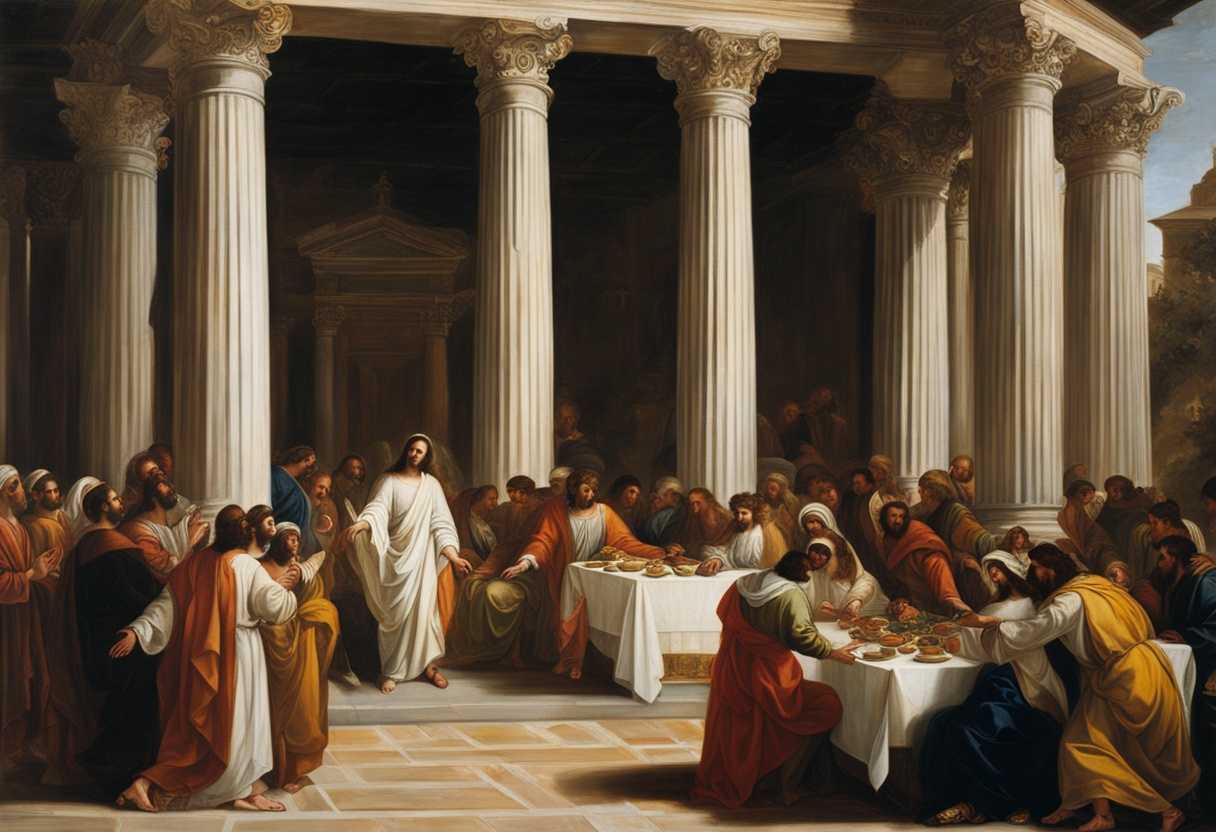
Setting the Scene for John 2:3-16
The scene in John chapter 2 takes place at a wedding in the town of Cana in Galilee. The guests are joyously celebrating the union of the bride and groom, surrounded by colorful decorations and the sounds of laughter and music. Among the attendees are Mary, the mother of Jesus, and Jesus himself, along with his disciples who have also been invited to the wedding.
As the festivities continue, the host realizes that they have run out of wine, a crucial element for any wedding celebration in that culture. Mary, knowing her son’s capabilities, approaches Jesus and informs him of the situation. Despite initially expressing reluctance, Jesus performs his first public miracle by turning water into wine, much to the amazement of the guests and the servants who witnessed the transformation.
The scene is filled with a sense of wonder and awe as the guests marvel at the quality of the wine that Jesus has provided. This miracle serves as a sign of Jesus’ divine power and sets the stage for his ministry, revealing his compassion and ability to bring joy and abundance to those in need.
What is John 2:3-16 about?
This verse holds great significance as it showcases one of the miracles performed by Jesus during his time on Earth. Jesus demonstrates his divine power and ability to perform miracles beyond human understanding by turning water into wine at a wedding in Cana. This act not only reveals Jesus’s compassion and willingness to help those in need but also symbolizes the abundance and blessings that accompany his presence.
Imagine being a guest at that wedding in Cana, witnessing the transformation of water into wine before your very eyes. The awe and wonder that would have filled the hearts of those present is a powerful reminder of the miraculous nature of Jesus’s ministry. This miracle serves as a reminder of the boundless love and grace that Jesus offers to all who believe in him, showing that he is not only a teacher but also a provider and sustainer of life. Jesus, the one who can turn the ordinary into the extraordinary with a simple touch, reminds us of his power and majesty as we reflect on this verse.
Understanding what John 2:3-16 really means
The passage in John 2:3-16 recounts the remarkable events of Jesus turning water into wine at a wedding in Cana and later cleansing the temple in Jerusalem. To truly appreciate the depth of these actions, it is essential to delve into the cultural and historical context surrounding Jewish weddings and temple practices. Understanding the significance of these events requires a grasp of the societal norms and religious customs of the time.
In the phrase “They have no more wine,” we witness a moment of need and potential shame for the hosts, symbolizing human inadequacy. Jesus’ response to Mary, “My hour has not yet come,” hints at a divine timetable and purpose, aligning His actions with God’s will. When Jesus instructs the servants to “Fill the jars with water,” it showcases the importance of obedience and faith, as they comply without comprehending the outcome. The master of the banquet’s declaration, “You have saved the best till now,” underscores the miraculous transformation and the superior quality of Jesus’ provision. Furthermore, Jesus’ righteous indignation at the temple merchants reveals His passion for genuine worship and the sanctity of God’s dwelling place.
Drawing parallels with other biblical passages enhances our understanding of the significance of these events. Isaiah 25:6 prophesies a future banquet with the finest wines, symbolizing God’s abundant provision and the Messianic era. In Matthew 21:12-13, Jesus’ cleansing of the temple underscores His authority and the necessity of pure worship. Revelation 19:9 portrays the wedding supper of the Lamb, linking the theme of a divine feast and the ultimate fulfillment in Christ.
The relevance of these teachings to contemporary life is profound. Just as Jesus provided wine at the wedding, He continues to meet our needs in unexpected and abundant ways, urging us to rely on His provision. The servants’ obedience in filling the jars with water serves as a lesson in following God’s instructions faithfully, even when the outcome is unclear. Jesus’ temple cleansing reminds us to approach worship with reverence and purity, guarding against distractions and commercialization.
To illustrate this relevance, envision a scenario where a family hosting a significant celebration faces a food shortage. The tension and embarrassment are palpable until a friend intervenes, surpassing expectations and transforming the situation. Similarly, Jesus enters our lives in moments of crisis, providing abundantly beyond what we could imagine.
In conclusion, John 2:3-16 offers profound insights into divine provision, obedience, faith, and the sanctity of worship. It prompts us to trust in Jesus’ timing and provision, adhere to His commands faithfully, and honor God in our worship practices.
What actions demonstrate true faith in God?
True faith in God is demonstrated by obedience and trust in His word. The actions of faith entail following His commands and believing in His promises even when things seem impossible or challenging. When individuals take steps of faith like the servants in the story who filled the jars with water, they are expressing their belief that God can work miracles and provide in ways beyond human understanding. This trust and action in response to God’s command displays true faith.
Furthermore, true faith involves a willingness to surrender to God’s timing and methods. Jesus instructed the servants to fill the jars with water, even though it did not make sense at the time. Individuals demonstrate their reliance on His wisdom and power to work in their lives by carrying out God’s instructions with obedience and humility like the servants did. A firm conviction in His ability to intervene and provide for His people ultimately underlines genuine faith in God. It involves stepping out in obedience, trusting in His goodness, and believing that He can bring about transformation and blessings. When individuals act in alignment with these principles, they showcase a faith that is rooted in God’s sovereignty and characterized by a deep reliance on His faithfulness.
Application
Imagine transforming your tedious workday or family routine into something extraordinary—just like Jesus turned water into wine at Cana. This story shows us the power of inviting Jesus into our everyday moments. Let Jesus turn your mundane into miraculous. Act now and let Him elevate your life. Will you let Jesus work wonders in your day-to-day?

Reverend Michael Johnson is an experienced Church Minister with a profound expertise in spirituality and guidance. With a serene presence and a compassionate heart, he has faithfully served his congregation for over 20 years, leading them on a spiritual journey towards inner peace and enlightenment. Reverend Johnson’s extensive knowledge of religious philosophies and profound understanding of human nature have made him a trusted confidant and mentor to many, as he seamlessly weaves his profound wisdom into life teachings. Reverend Johnson’s calming demeanor and empathetic nature continue to uplift and heal souls, nurturing a sense of unity and tranquility within his community.