
John 2:9-11 is about Jesus performing his first miracle, turning water into wine at the wedding in Cana, revealing his divine power and establishing his authority as the true Son of God.
9 When the master of the feast tasted the water now become wine, and did not know where it came from (though the servants who had drawn the water knew), the master of the feast called the bridegroom.
10 and said to him, “Everyone serves the good wine first, and when people have drunk freely, then the poor wine. But you have kept the good wine until now.”
11 This, the first of his signs, Jesus did at Cana in Galilee, and manifested his glory. And his disciples believed in him.
Setting the Scene for John 2:9-11
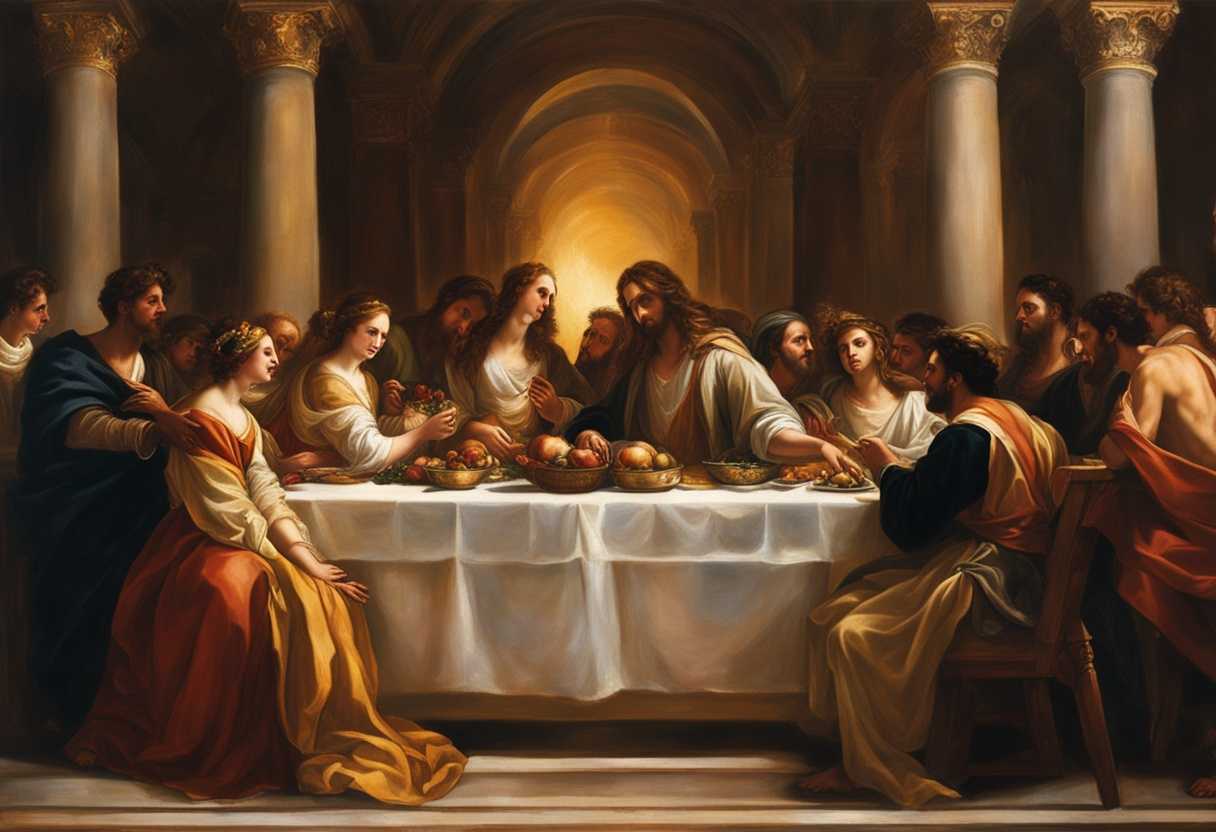
In John chapter 2, we find Jesus attending a wedding in the town of Cana in Galilee. The scene is filled with joy and celebration as the guests gather to witness the union of a couple. Jesus is accompanied by his disciples, who were invited to the wedding along with Mary, his mother. The atmosphere is festive, with music, dancing, and the aroma of delicious food filling the air.
As the celebration progresses, the host runs into a dilemma when the wine runs out. Mary, knowing her son’s capabilities, approaches Jesus and informs him of the situation. Despite initially hesitating, Jesus instructs the servants to fill six stone water jars with water. Following his directions, the servants fill the jars to the brim, and miraculously, the water turns into the finest wine. This act of turning water into wine becomes Jesus’ first public miracle, revealing his divine power and bringing awe and wonder to those present.
The guests, unaware of the miracle that has taken place, are amazed by the quality of the wine and commend the host for saving the best for last. This event marks the beginning of Jesus’ public ministry, demonstrating his compassion, power, and ability to bring joy and abundance to those around him.
What is John 2:9-11 about?
At this momentous occasion, Jesus showcases his divine power and care for humanity by performing his very first miracle. He displays not only his ability to perform miracles but also his desire to bring joy and abundance to those around him by turning water into wine at a wedding feast. This act is a testament to Jesus’ compassion and willingness to help others in their times of need.
Imagine being a guest at the wedding feast and witnessing this incredible transformation firsthand. The water that once filled the jars is suddenly transformed into the finest wine, demonstrating the extraordinary power that Jesus possesses. This miracle serves as a powerful reminder of Jesus’ ability to bring about transformation and abundance in our own lives, showing us that with faith and trust, he can turn even the simplest of elements into something extraordinary. It is a testament to the depths of his love and the endless possibilities that exist when we place our trust in him.
Understanding what John 2:9-11 really means
In the Gospel of John, we encounter a pivotal moment in Jesus’ ministry at the wedding in Cana. This event marks the beginning of His public ministry, where He performs His first miracle, turning water into wine. The significance of this miracle goes beyond just providing wine at a wedding; it reveals Jesus’ power and willingness to intervene in our lives in extraordinary ways.
The setting of this miracle is a wedding feast in Cana of Galilee, a joyous occasion where the wine running out would have been a social embarrassment. Jesus, His mother Mary, the servants, and the master of the banquet are key figures in this narrative. Mary’s faith and trust in Jesus lead to the miraculous transformation of water into wine, showcasing Jesus’ divine authority.
“The water that had been turned into wine” symbolizes Jesus bringing new life and joy, transforming the ordinary into the extraordinary. When the master of the banquet tastes the wine, he acknowledges the superior quality, affirming the miraculous nature of the event. His statement, “You have saved the best till now,” reflects the idea of Jesus bringing the best blessings and fulfilling God’s promises in unexpected ways.
Connecting this miracle to other biblical passages enriches our understanding of its significance. John 1:14 speaks of Jesus’ glory revealed through His miracles, while Isaiah 25:6 prophesies a feast of aged wine, linking to the abundance and quality of the wine Jesus provided. Revelation 19:9 points to the ultimate wedding feast in heaven, echoing the celebration and joy experienced at the wedding in Cana.
The relevance of this miracle to us today lies in its demonstration of Jesus’ power and His desire to intervene in our everyday lives. Just as the servants obeyed and filled the jars with water, we are called to have faith and obedience, trusting in Jesus for transformation and renewal. By seeking Jesus’ presence and intervention, we can experience His abundant provision and the extraordinary changes He brings about in our lives.
Consider a modern-day anecdote where someone experienced a significant positive change or “miracle” through faith in Jesus. This story illustrates how Jesus continues to work in miraculous ways, providing abundantly and transforming lives. As we reflect on Jesus’ first miracle at the wedding in Cana, may we be encouraged to trust in His power, seek His intervention, and believe in His ability to bring about positive change and renewal in our lives.
How can we recognize the manifestations of God’s glory?
The manifestations of God’s glory can be recognized through signs and miracles that reveal His power and majesty. These acts of divine intervention are often extraordinary and go beyond the natural order of things, pointing to the presence and work of God in a situation. The awe and wonder inspired by these manifestations serve to strengthen faith and belief in God’s existence and His ability to work miracles in our lives. Jesus performs a miraculous sign at a wedding in Cana, turning water into wine in the given verse. This act of transformation demonstrated his divine power and authority, causing the disciples to believe in him. The manifestation of God’s glory in this context was evident through the miracle itself and the response of those who witnessed it. It serves as a reminder that God’s glory can be seen in the miraculous events that transpire, leading us to acknowledge and worship His greatness and sovereignty.
Application
Think of your life like a busy workday or a family gathering. Miracles happen when we let Jesus be in charge. He turned water into wine; imagine what He can do in your life! Trust Him like you trust your team or family. Open the door to His wonders in your daily grind. Will you take a leap of faith and see His power at work today?

Reverend Michael Johnson is an experienced Church Minister with a profound expertise in spirituality and guidance. With a serene presence and a compassionate heart, he has faithfully served his congregation for over 20 years, leading them on a spiritual journey towards inner peace and enlightenment. Reverend Johnson’s extensive knowledge of religious philosophies and profound understanding of human nature have made him a trusted confidant and mentor to many, as he seamlessly weaves his profound wisdom into life teachings. Reverend Johnson’s calming demeanor and empathetic nature continue to uplift and heal souls, nurturing a sense of unity and tranquility within his community.