
John 3:1-8 is about the conversation between Jesus and Nicodemus, illustrating the necessity of being born again through the Spirit in order to enter the kingdom of God.
1 Now there was a man of the Pharisees named Nicodemus, a ruler of the Jews.
2 This man came to Jesus by night and said to him, “Rabbi, we know that you are a teacher come from God, for no one can do these signs that you do unless God is with him.”
3 Jesus answered him, “Truly, truly, I say to you, unless one is born again he cannot see the kingdom of God.”
4 Nicodemus said to him, “How can a man be born when he is old? Can he enter a second time into his mother’s womb and be born?”
5 Jesus answered, “Truly, truly, I say to you, unless one is born of water and the Spirit, he cannot enter the kingdom of God.
6 That which is born of the flesh is flesh, and that which is born of the Spirit is spirit.
7 Do not marvel that I said to you, ‘You must be born again.’
8 The wind blows where it wishes, and you hear its sound, but you do not know where it comes from or where it goes. So it is with everyone who is born of the Spirit.
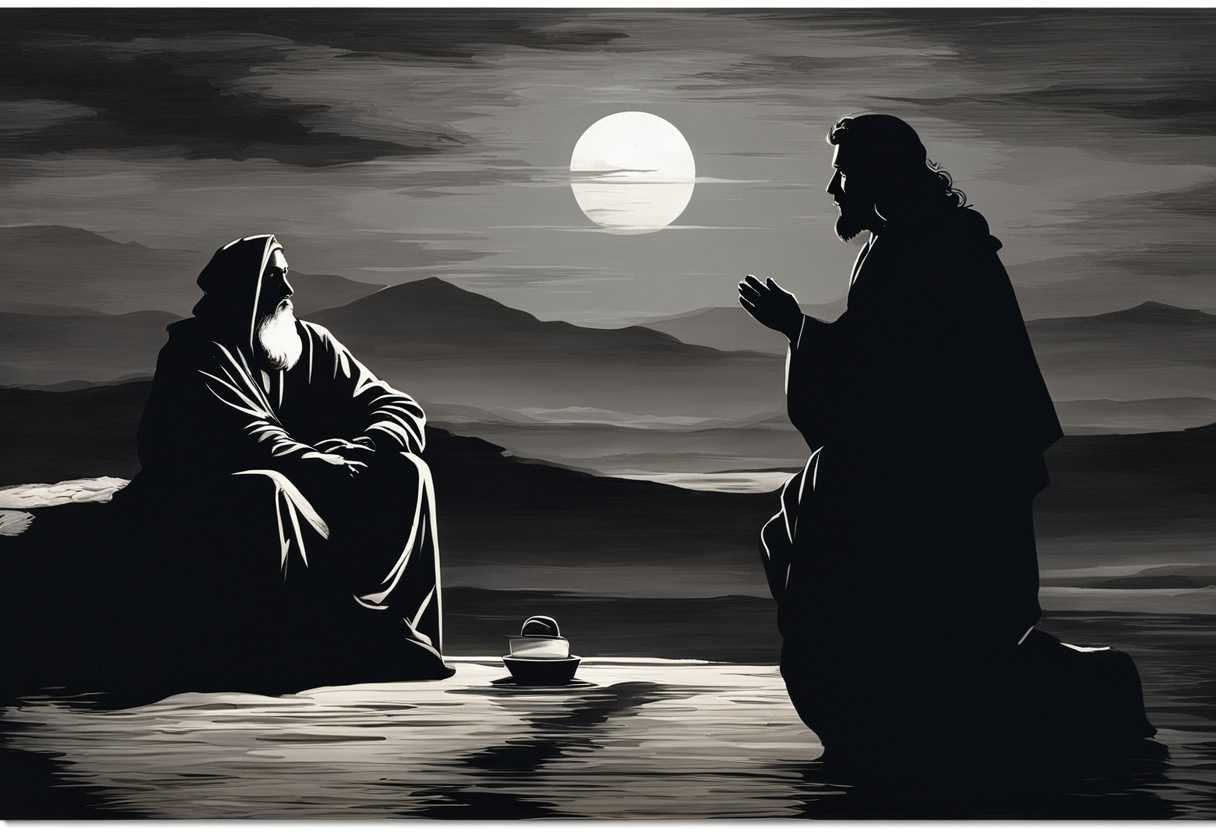
Setting the Scene for John 3:1-8
In John chapter 3, we find Nicodemus, a Pharisee and a member of the Jewish ruling council, coming to visit Jesus under the cover of night. The scene is set in Jerusalem, likely in a quiet courtyard or garden where they can converse privately. Nicodemus, a respected religious leader, approaches Jesus with curiosity and a desire to understand more about his teachings.
As they engage in conversation, Jesus begins to explain the concept of being “born again” to Nicodemus. The night air is cool and still around them as they discuss spiritual rebirth and the importance of being born of the Spirit. The flickering light of a nearby lamp illuminates their faces, casting shadows on the ground as they delve into deep theological discussions.
Nicodemus listens intently, grappling with the profound truths that Jesus is sharing with him. The atmosphere is charged with a sense of mystery and revelation as Jesus challenges Nicodemus to consider the spiritual realities beyond the physical realm. The encounter between these two figures, one a revered teacher of the law and the other a revolutionary rabbi, sets the stage for a transformative conversation that will leave Nicodemus questioning his own beliefs and understanding of God’s kingdom.
What is John 3:1-8 about?
Jesus is imparting crucial spiritual wisdom to Nicodemus, a curious Pharisee seeking understanding in this verse. Through the metaphor of being “born again,” Jesus explains the concept of spiritual rebirth and the transformative power of the Holy Spirit. Being “born again” signifies a spiritual renewal and a deep personal transformation, where one’s old self is put to rest, and a new life in Christ begins.
Imagine the profound impact of this teaching on Nicodemus, a learned and respected religious leader. Is Jesus suggesting a radical shift in worldview and beliefs? Jesus underscores the necessity of divine intervention for true spiritual growth by emphasizing the role of the Holy Spirit in this rebirth. This verse reminds us that our spiritual journey is not just about rituals or rules but about a profound inner transformation that can only come from a deep connection with God. Let us reflect on this teaching and consider our own understanding of being “born again” in the Spirit. Are we open to the idea of spiritual rebirth and growth? How can we cultivate a deeper connection with the Holy Spirit to experience true transformation in our lives? Jesus’ words to Nicodemus invite us to ponder these questions and seek a renewed and vibrant relationship with God.
Understanding what John 3:1-8 really means
In the passage of John 3:1-8, we witness a profound conversation between Jesus and Nicodemus, a Pharisee and member of the Jewish ruling council. The central theme revolves around the concept of being “born again” to perceive the Kingdom of God. This notion of spiritual rebirth emphasizes a transformative change within the inner being, rather than a mere physical occurrence. It speaks to the renewal of the heart and spirit, highlighting the necessity of a profound inward transformation.
The key phrases within this passage hold significant meanings that deepen our understanding of spiritual rebirth. “Born again” symbolizes a spiritual renewal that transcends the physical realm, signifying a radical change in one’s spiritual identity. “Water and the Spirit” allude to the purifying and rejuvenating work of the Holy Spirit, cleansing individuals and ushering in new life. The “Kingdom of God” represents the domain where God’s sovereignty reigns supreme, offering believers both a present reality and a future hope in His eternal kingdom.
Drawing connections to other biblical passages enriches our comprehension of the concept of being born again. Ezekiel 36:25-27 prophesies about God’s transformative work through cleansing His people with water and granting them new hearts and spirits. Titus 3:5 underscores the role of the Holy Spirit in the washing of rebirth and renewal, emphasizing the spiritual regeneration brought about by God’s grace. Similarly, 2 Corinthians 5:17 speaks of believers becoming new creations in Christ, aligning with the theme of spiritual transformation and renewal.
The relevance of this passage extends to contemporary society, offering a message of hope and personal transformation. In a world marred by brokenness and sin, the idea of being born again provides individuals with the prospect of a fresh start and a renewed life. It encourages seekers to embark on a journey towards a deeper, more authentic relationship with God, fostering personal and spiritual growth in the process.
To illustrate the transformative power of being born again, consider the story of an individual battling addiction. Amidst despair and hopelessness, encountering a community of believers who embody the message of spiritual rebirth can spark a profound change. Through prayer, support, and the transformative work of the Holy Spirit, this person finds newfound purpose and strength to overcome their struggles, exemplifying the life-altering impact of embracing spiritual renewal.
In conclusion, the dialogue between Jesus and Nicodemus in John 3:1-8 serves as a poignant reminder of the imperative nature of spiritual rebirth. It beckons individuals to pursue a deeper connection with God and to allow the Holy Spirit to catalyze transformative change within their lives. This timeless message continues to resonate with people today, offering a beacon of hope and the promise of renewal for all who seek a fresh start in their spiritual journey.
What does it mean to be born again?
To be born again means to experience a spiritual rebirth, a transformation of the heart and soul by the Holy Spirit. This rebirth is not a physical one, but a new beginning in one’s relationship with God. It signifies a turning away from the old ways of living in sin and a turning toward a new life in Christ filled with repentance, faith, and obedience.
The process of being born again involves acknowledging one’s need for a Savior, confessing and repenting of sin, and placing faith in Jesus Christ as the Son of God. Through this spiritual regeneration, a person becomes a new creation, with a renewed heart and a desire to live a life that is pleasing to God. It is through this new birth that one receives the gift of salvation and eternal life.
Application
Think of your life like a constant upgrade at work or nurturing your family. John 3:1-8 calls you to hit the reset button and be born anew in the Spirit. This isn’t just a casual suggestion—it’s a challenge to fully surrender and invite transformative change. Pray, dive into the Bible, and live your faith out loud every day. Will you step up and commit to a renewed life in Christ?

Reverend Michael Johnson is an experienced Church Minister with a profound expertise in spirituality and guidance. With a serene presence and a compassionate heart, he has faithfully served his congregation for over 20 years, leading them on a spiritual journey towards inner peace and enlightenment. Reverend Johnson’s extensive knowledge of religious philosophies and profound understanding of human nature have made him a trusted confidant and mentor to many, as he seamlessly weaves his profound wisdom into life teachings. Reverend Johnson’s calming demeanor and empathetic nature continue to uplift and heal souls, nurturing a sense of unity and tranquility within his community.