
John 3:14-15 is about the symbolic representation of Jesus being lifted up on the cross to save humanity from sin and grant eternal life to all who believe in him.
14 And as Moses lifted up the serpent in the wilderness, so must the Son of Man be lifted up,
15 that whoever believes in him may have eternal life.
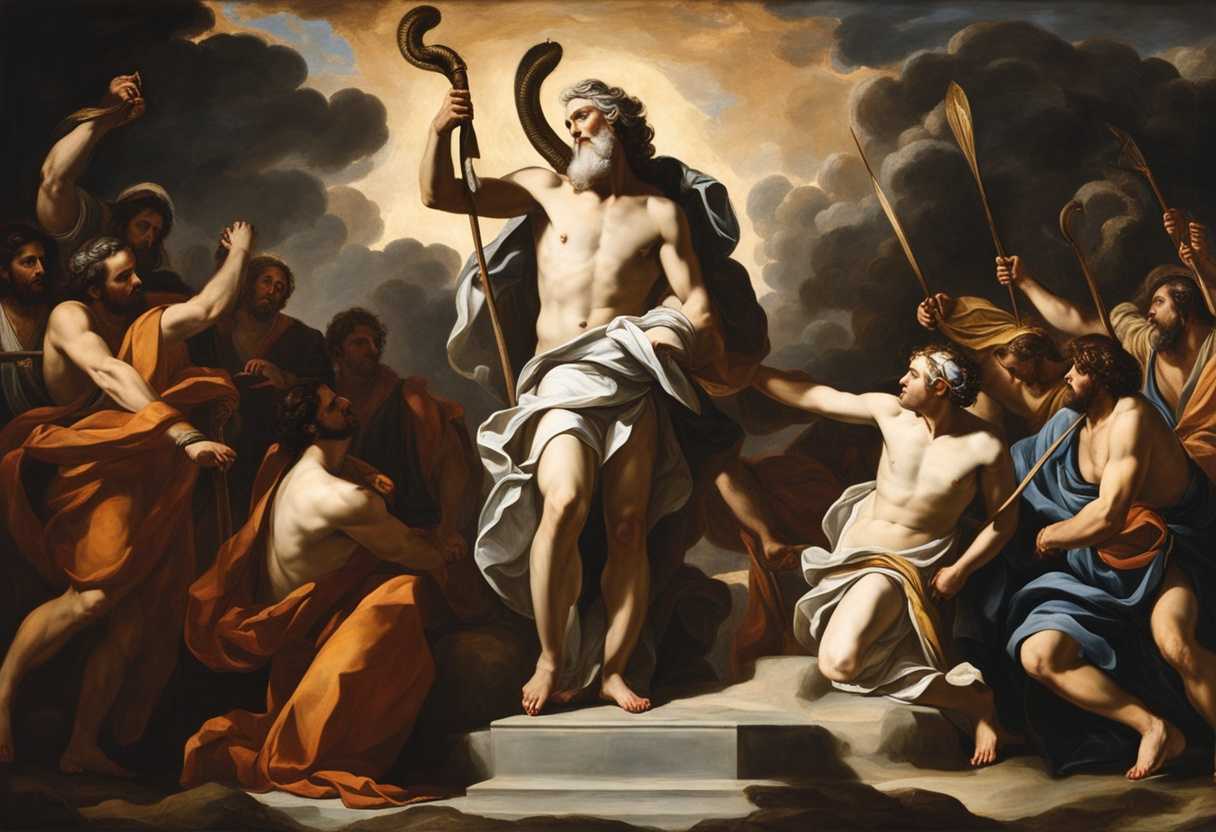
Setting the Scene for John 3:14-15
In John chapter 3, we find Nicodemus, a Pharisee and a member of the Jewish ruling council, coming to Jesus under the cover of night to seek wisdom and understanding. The scene is set in the dimly lit courtyard of a grand house in Jerusalem, with the night air carrying a sense of secrecy and intrigue. Nicodemus, a respected religious leader, is grappling with the teachings and miracles of Jesus, trying to reconcile them with his own beliefs.
As Nicodemus engages in a deep conversation with Jesus, they are joined by a small group of disciples who have been following Jesus and listening to his teachings. The disciples, including Peter, John, and others, are eager to learn from their teacher and witness the unfolding dialogue between Nicodemus and Jesus. The courtyard is filled with the hushed tones of their conversation, punctuated by moments of revelation and insight as Jesus speaks about being born again and the significance of believing in him for eternal life.
The flickering light of torches casts shadows on the faces of those gathered, highlighting the intensity of the discussion and the weight of the words being exchanged. As Jesus references the story of Moses lifting up the serpent in the wilderness, the group leans in, captivated by his words and the profound truths he is revealing. In this moment, amidst the quiet of the night and the earnest seeking of truth, Nicodemus and the disciples are challenged to consider the radical nature of Jesus’ message and the transformative power of faith in him.
What is John 3:14-15 about?
Jesus uses an analogy to highlight the significance of his sacrifice on the cross in this verse. Jesus is emphasizing the parallel between those who looked at the serpent and were healed with those who turn to him in faith and receive eternal life by referencing the story of Moses lifting up the serpent in the wilderness (Numbers 21:4-9). Believers are called to trust in Jesus and his sacrifice to be saved from spiritual death and receive eternal life, just as the Israelites had to trust and look upon the serpent to be saved from physical death.
This comparison deepens our understanding of the atonement and the redemptive work of Christ. It shows how Jesus’ crucifixion is not just an isolated event in history but rather a profound act of salvation that continues to have relevance for believers today. Jesus, lifted on the cross, provides spiritual healing and eternal life to all who believe in him, just as Moses lifted the serpent for physical healing. It prompts us to reflect on the power of Christ’s sacrifice and the invitation he extends to each one of us to come to him in faith and receive the gift of eternal life. Reflect on how this analogy weighs and further illuminates the depth of Jesus’ love and sacrifice for us. Reflect on the connection between the Old Testament story of the serpent and Jesus’ role as the Savior in the New Testament. How does this comparison deepen your appreciation for the redemptive work of Christ and the promise of eternal life for those who believe in him? Let these parallels encourage you to trust in Jesus and his sacrifice, knowing that through him, we have the opportunity to receive salvation and eternal life.
Understanding what John 3:14-15 really means
In the Gospel of John, we encounter a profound dialogue between Jesus and Nicodemus, a Pharisee seeking spiritual understanding. Jesus delves into the concept of being “born again,” emphasizing the necessity of a spiritual rebirth for entering the Kingdom of God. Within this discourse, Jesus draws a parallel to an event from the Old Testament, where Moses lifted up a bronze serpent in the wilderness to heal the Israelites bitten by snakes. This symbolic act foreshadowed the salvation and deliverance that would come through Jesus’ sacrificial death on the cross.
The imagery of Jesus being “lifted up” carries a dual meaning, pointing to His crucifixion on the cross and His subsequent exaltation through resurrection and ascension. This prophetic reference underscores the central role of Jesus’ sacrifice in providing salvation for all who believe in Him. The offer of eternal life through faith in Jesus is universal, extending to all who choose to trust in Him for their redemption.
Drawing from related passages in Numbers, John, and Isaiah, we see a tapestry of interconnected prophecies and fulfillments that weave together the narrative of Jesus’ redemptive work. The bronze serpent in Numbers finds its ultimate fulfillment in Jesus, who, when lifted up, draws all people to Himself, offering healing and salvation to a broken world.
In our contemporary context, the call to look to Jesus, the lifted-up Savior, remains as relevant as ever. Amidst the trials and tribulations of life, the promise of eternal life through faith in Christ provides a beacon of hope and assurance. Belief in Jesus not only assures us of salvation but also transforms our lives, infusing them with purpose and direction as we walk in faith.
Consider a poignant anecdote of someone grappling with illness and despair, finding solace and healing through encountering the story of Jesus’ redemptive love. This individual’s journey mirrors the Israelites’ gaze upon the bronze serpent for physical healing, illustrating how faith in Jesus brings about spiritual restoration and the assurance of eternal life. Just as the lifted-up serpent brought physical healing, so too does faith in the lifted-up Son of Man bring about spiritual healing and renewal.
In conclusion, these verses from John 3:14-15 serve as a poignant reminder of the centrality of faith in Jesus for attaining eternal life. They bridge the gap between the Old and New Testaments, showcasing the continuity of God’s redemptive plan throughout history. Today, they offer a message of hope and redemption, inviting us to fix our gaze upon Jesus, the ultimate source of healing and eternal life.
How can one have eternal life through Christ?
One can have eternal life through Christ by believing in Him, just as the verse explains. Jesus used the example of Moses lifting up the snake in the wilderness for the Israelites to look at and be healed. Those who believe in Jesus and look to Him in faith will have eternal life in the same way. This indicates that by putting our faith and trust in Christ, we can receive the gift of eternal life that He offers.
This verse emphasizes the importance of faith in Christ as the means to attain eternal life. The act of believing in Him is central to receiving this gift. We can have assurance of eternal life by acknowledging Jesus as the Son of God and accepting Him as our Savior. Thus, eternal life through Christ is not based on our own merits or deeds, but on our faith in Him. This verse underscores the significance of belief in Christ as the way to receive the eternal life He promises.
Application
Think of your life as a busy city street. There, amidst the rush, stands a beacon of hope and love reminding you of Jesus’s powerful sacrifice. This is your moment to pause and reflect. Will you let this profound truth not just touch but transform your heart? Take a step toward believing in Him and embrace the promise of eternal life. Doesn’t your life deserve this incredible gift?

Reverend Michael Johnson is an experienced Church Minister with a profound expertise in spirituality and guidance. With a serene presence and a compassionate heart, he has faithfully served his congregation for over 20 years, leading them on a spiritual journey towards inner peace and enlightenment. Reverend Johnson’s extensive knowledge of religious philosophies and profound understanding of human nature have made him a trusted confidant and mentor to many, as he seamlessly weaves his profound wisdom into life teachings. Reverend Johnson’s calming demeanor and empathetic nature continue to uplift and heal souls, nurturing a sense of unity and tranquility within his community.