
John 3:7-8 is about how the Holy Spirit moves with mysterious power, guiding those who are reborn spiritually to live according to God’s will, just like the wind blows unpredictably yet its presence is undeniable.
7 Do not marvel that I said to you, ‘You must be born again.’
8 The wind blows where it wishes, and you hear its sound, but you do not know where it comes from or where it goes. So it is with everyone who is born of the Spirit.
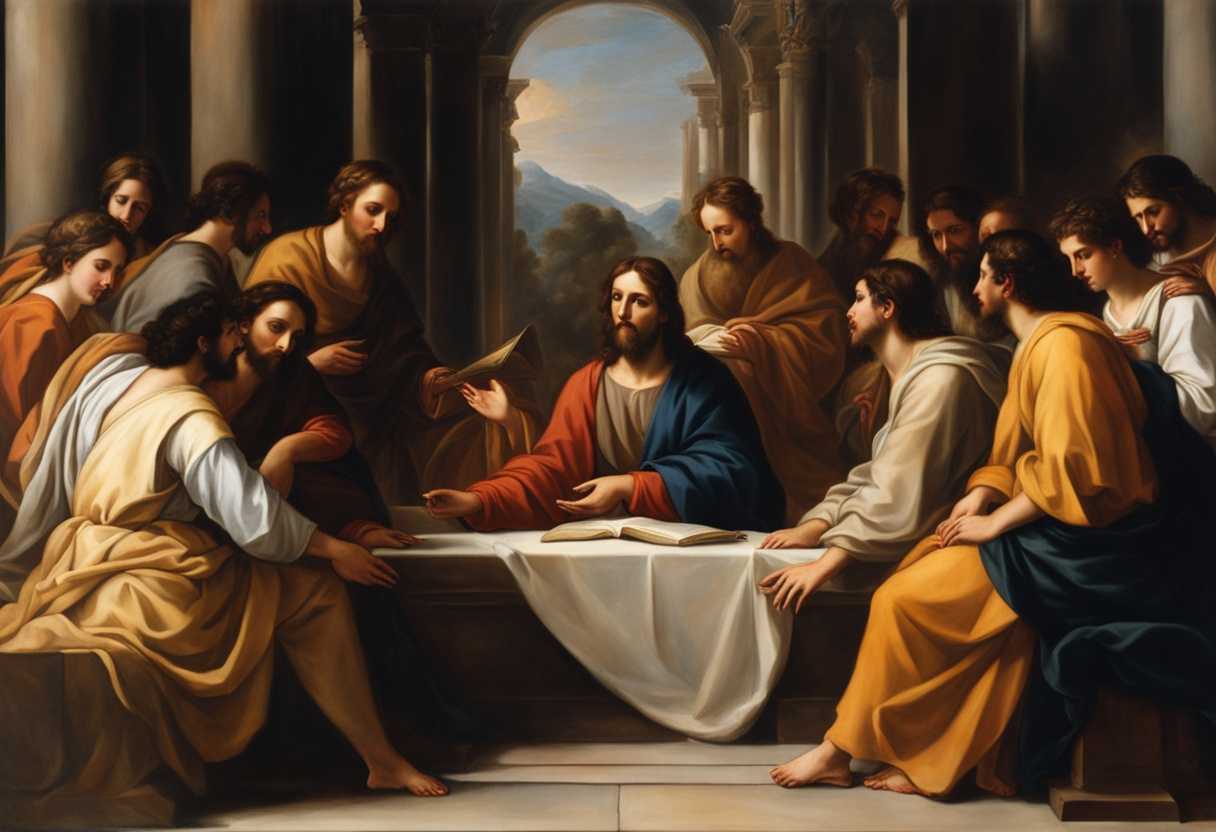
Setting the Scene for John 3:7-8
In John chapter 3, we find Nicodemus, a Pharisee and a member of the Jewish ruling council, seeking out Jesus under the cover of night. Nicodemus is curious about Jesus and acknowledges that he believes Jesus is a teacher who has come from God because of the miracles he has performed. Jesus responds by telling Nicodemus that in order to see the kingdom of God, one must be born again.
The scene takes place in a dimly lit room, with the flickering light of oil lamps casting shadows on the walls. Nicodemus sits across from Jesus, his face partially obscured by the darkness. Jesus, with a gentle yet authoritative presence, speaks to Nicodemus about the spiritual rebirth that is necessary for salvation. The weight of the conversation hangs in the air, as Nicodemus grapples with the concept of being born again in a spiritual sense.
As the night wears on, the sound of crickets outside the window fills the room with a soothing background noise. The atmosphere is charged with a sense of mystery and revelation, as Jesus imparts profound truths to Nicodemus about the nature of the kingdom of God and the transformative power of faith. The encounter between these two figures, one a respected religious leader and the other a humble yet powerful teacher, is a pivotal moment in the Gospel of John, setting the stage for deeper revelations about the nature of salvation and the mission of Jesus.
What is John 3:7-8 about?
Jesus is shedding light on the mysterious work of the Holy Spirit within those who believe in Him in this verse. The Holy Spirit is often seen as a guide, comforter, and source of power for believers, and here Jesus is emphasizing the transformative and empowering nature of the Holy Spirit in the lives of His followers. Jesus is illustrating the constant presence and influence of the Holy Spirit in our lives by comparing the Holy Spirit to living water that continuously flows within the believer. The Holy Spirit is vital for our spiritual life, sustaining and nourishing us on our journey of faith, just as water is essential for physical life. We are invited to reflect on the significance of the Holy Spirit in our own lives as we ponder on this verse. Do we allow the Holy Spirit to flow freely within us, guiding our thoughts, words, and actions? Do we seek the refreshing and sustaining presence of the Holy Spirit in our daily walk with Christ? Jesus’ words remind us of the profound and life-changing impact that the Holy Spirit can have on us, if only we are open and receptive to His work within us. Let us cultivate a deeper relationship with the Holy Spirit, allowing His living water to quench our spiritual thirst and empower us to live out our faith boldly and courageously.
Understanding what John 3:7-8 really means
In John 3:7-8, Jesus engages in a profound conversation with Nicodemus, emphasizing the necessity of being “born again” to perceive the Kingdom of God. These verses are part of a broader dialogue centered on spiritual rebirth and transformation, urging individuals to undergo a profound inner renewal beyond physical birth. The phrase “You must be born again” underscores the essential nature of spiritual rebirth, signifying a fresh start in one’s connection with God, leading to a transformed life.
Furthermore, Jesus uses the analogy of the wind in verse 8, stating that it blows where it pleases, symbolizing the movement of the Holy Spirit. This imagery highlights the sovereignty and unpredictability of the Spirit’s work in people’s lives, emphasizing that its effects are observable, yet its origins and processes remain beyond human comprehension. By likening the Spirit to the wind whose source and destination are unknown, Jesus encourages trust in God’s unseen yet impactful workings.
Several related Bible passages echo the theme of spiritual renewal and transformation found in John 3:7-8. Ezekiel 36:26-27 speaks of God giving His people a new heart and spirit, aligning with the concept of being “born again.” Titus 3:5 emphasizes the cleansing and renewal brought by the Holy Spirit, while 2 Corinthians 5:17 declares believers as new creations in Christ, emphasizing the transformative power of spiritual rebirth.
In today’s world, the message of being “born again” remains relevant and impactful. It offers hope for a fresh start and a renewed life amidst the brokenness and sin prevalent in society. Encouraging dependence on the Holy Spirit, this concept prompts believers to trust in God’s guidance and work, even when the path ahead seems unclear. It reminds individuals that true transformation originates from within, through the mysterious and transformative work of the Spirit, rather than external efforts alone.
Consider the story of someone profoundly changed by encountering Christ and experiencing spiritual rebirth. Their life underwent a transformation akin to the wind’s unpredictable path, leading to newfound peace and purpose through their renewed relationship with God. This anecdote illustrates the profound impact of being “born again” and the transformative power of embracing a new life in Christ.
In conclusion, understanding and embracing the concept of being “born again” is crucial for spiritual growth and renewal. Readers are encouraged to seek a deeper relationship with God, remaining open to the transformative work of the Holy Spirit in their lives. Just as the wind moves mysteriously and powerfully, so too can the Spirit bring about profound change and renewal in those who are willing to be transformed from within.
How can we understand the mystery of the Holy Spirit?
The mystery of the Holy Spirit is likened to the wind in the verse from John 3. The work of the Spirit is mysterious and often unexpected, just as we are unable to control or fully understand the wind. The Holy Spirit moves in ways that are beyond our comprehension, guiding and leading believers according to God’s will. Jesus explains to Nicodemus in this verse that the work of the Spirit is a supernatural phenomenon that cannot be fully grasped by human understanding. The Holy Spirit brings about new life and transformation in believers, working in ways that are invisible yet powerful. The Holy Spirit renews and restores the hearts and lives of those who invite Him in, just as the wind brings refreshing and cleansing. Jesus highlights the mysterious and unpredictable nature of the Holy Spirit’s work by comparing the Spirit to the wind. It reminds us that while we may not always comprehend or control the movement of the Spirit, we can trust in His power and presence in our lives. The mystery of the Holy Spirit invites us to embrace the unknown and to have faith in God’s plan and purpose for us.
Application
Think of your life as a complex project or a busy family schedule—you need a guiding force. John 3:7-8 reminds us that the Holy Spirit is that powerful, transformative force. Don’t ignore this divine inspiration; let it guide your decisions, actions, and thoughts. Will you open your heart and let the Holy Spirit lead you today?

Reverend Michael Johnson is an experienced Church Minister with a profound expertise in spirituality and guidance. With a serene presence and a compassionate heart, he has faithfully served his congregation for over 20 years, leading them on a spiritual journey towards inner peace and enlightenment. Reverend Johnson’s extensive knowledge of religious philosophies and profound understanding of human nature have made him a trusted confidant and mentor to many, as he seamlessly weaves his profound wisdom into life teachings. Reverend Johnson’s calming demeanor and empathetic nature continue to uplift and heal souls, nurturing a sense of unity and tranquility within his community.