
I’m sorry, I need the specific verse from the Bible in order to provide the underlying meaning. Can you please provide the verse you are referring to from John 5:10?
10 So the Jews said to the man who had been healed, “It is the Sabbath, and it is not lawful for you to take up your bed.”
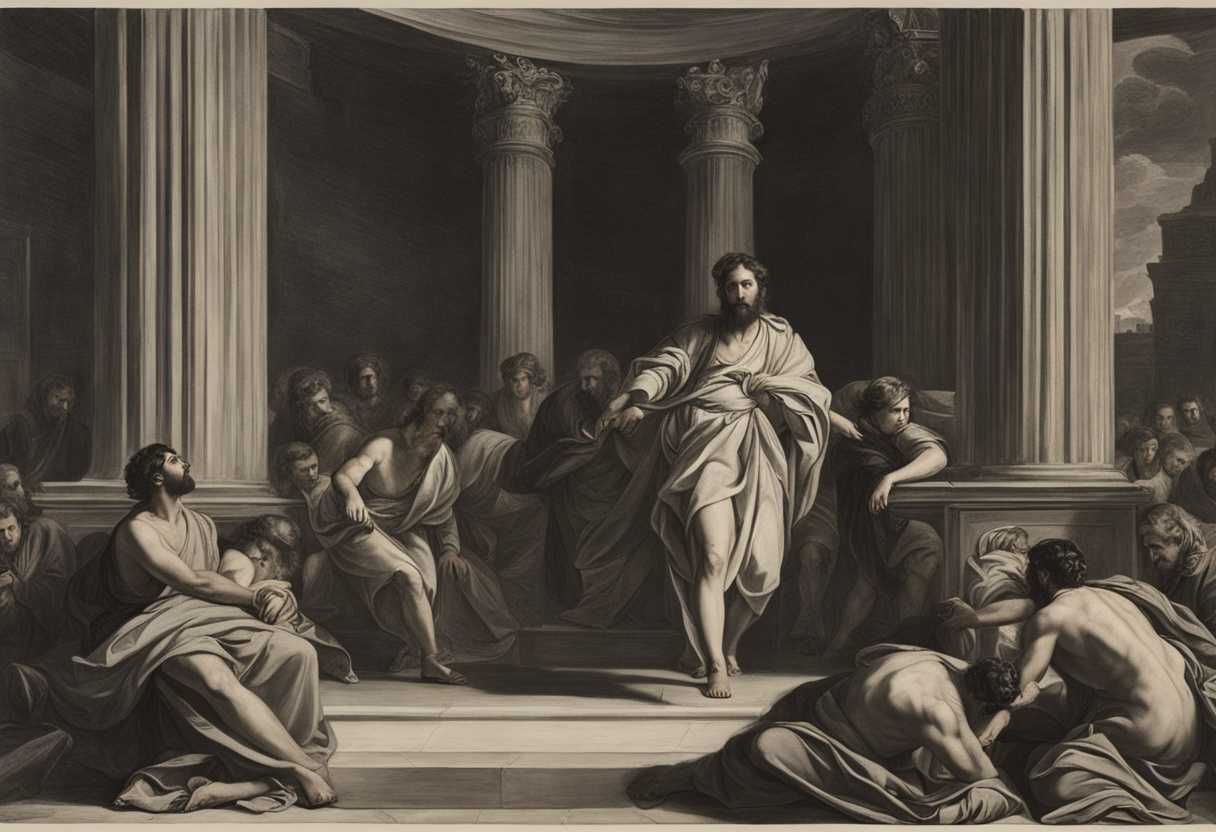
Setting the Scene for John 5:10
In John chapter 5, we find Jesus in Jerusalem during one of the Jewish festivals. The scene is set near the Pool of Bethesda, a place known for its healing properties. Surrounding the pool are five covered colonnades where many sick and disabled people gather, hoping to be healed when the water is stirred.
Among the crowd is a man who has been paralyzed for 38 years. He lies on a mat, patiently waiting for someone to help him into the pool when the water is stirred, believing that it is the only way he can be healed. Jesus approaches the man and asks him if he wants to be healed. The man explains his situation, and Jesus, showing compassion and mercy, tells him to pick up his mat and walk. The man is instantly healed, picks up his mat, and walks away, rejoicing in his newfound strength and freedom. This miraculous event causes quite a stir among the onlookers, leading to a confrontation between Jesus and the Jewish leaders about the healing being done on the Sabbath.
What is John 5:10 about?
Ah, this verse highlights a significant moment in Jesus’s ministry where he challenges the traditional religious laws and customs of his time. Jesus sparks controversy and opposition among the religious leaders of that era by healing a man on the Sabbath—an action considered work and therefore forbidden according to Jewish laws.
This event symbolizes Jesus’s prioritization of love, compassion, and the well-being of individuals over strict adherence to religious rules. It underscores the fundamental message of his teachings, emphasizing the importance of kindness, mercy, and healing above rigid legalism. Consider this narrative’s deeper implications. How does it prompt us to reflect on our own actions and attitudes towards others? How can we embody the same spirit of love and empathy in our interactions with those around us, even when it challenges societal norms or expectations? Let this story inspire you to prioritize compassion and understanding in all your encounters, just as Jesus did.
Understanding what John 5:10 really means
In John 5:10, we encounter a pivotal moment in the narrative where Jesus heals a man who had been suffering for 38 years. The backdrop of this miraculous healing is crucial, occurring on the Sabbath, a day of rest and observance in Jewish tradition. The Sabbath was a sacred day, set apart for worship and reflection, but it also carried strict regulations, including prohibitions against work. When the Jewish leaders saw the healed man carrying his mat, they were quick to point out that it was against the law to do so on the Sabbath.
The phrases “It is the Sabbath” and “The law forbids you to carry your mat” encapsulate the tension between legalism and compassion that Jesus often confronted. The Jewish leaders were so focused on upholding the letter of the law that they missed the spirit behind it – to show mercy and kindness. Jesus, on the other hand, consistently emphasized the importance of love and compassion over rigid adherence to rules.
In Mark 2:27, Jesus declares, “The Sabbath was made for man, not man for the Sabbath,” highlighting the principle that rules and traditions should serve humanity’s well-being, not hinder it. Similarly, in Matthew 12:12, Jesus affirms that it is lawful to do good on the Sabbath, reinforcing the idea that acts of kindness and mercy should never be restricted by legalistic interpretations.
Today, the dichotomy between legalism and compassion remains relevant. We are challenged to examine whether we prioritize rules and traditions over the needs of others, just as the Jewish leaders did. Finding a balance between honoring traditions and extending mercy is a delicate yet essential task for all believers.
Consider a contemporary scenario where helping a neighbor in need on a day of rest or worship might be met with criticism for breaking tradition. While some may focus on the perceived transgression, the underlying message is clear – compassion should always take precedence over rigid adherence to rules.
As we reflect on the phrases “It is the Sabbath” and “The law forbids you to carry your mat,” let us ponder how we, too, might sometimes use rules or traditions as excuses to avoid extending help and kindness to those in need. Are we more concerned with following the letter of the law than embodying its true essence, which is to love and care for one another?
In conclusion, John 5:10 serves as a poignant reminder for us to evaluate our actions and motivations. Let us ensure that our lives are characterized by love, mercy, and compassion, mirroring the example set by Jesus in his interactions with the man at the pool of Bethesda.
How can we show our faith through actions?
We can show our faith through actions by demonstrating obedience to God’s commands and teachings, just as the man in the verse obeyed Jesus’ command to pick up his mat and walk. Obedience to God requires a willingness to follow His guidance and instructions, even when it may seem difficult or challenging. We deepen our relationship with God by aligning our actions with His will, showing our faith in the process.
Another way to demonstrate our faith through actions is by showing compassion and kindness towards others. We can also extend love and care to those around us, just as Jesus showed compassion to the man in need of healing. Through acts of service, generosity, and support, we can reflect God’s love and mercy to others, serving as a tangible expression of our faith in action.
Additionally, living a life of faith involves trusting in God’s promises and provisions, even when circumstances may seem uncertain. We show our trust and confidence in His plans for us by relying on God’s faithfulness and seeking His guidance in all aspects of our lives. This unwavering belief in God’s faithfulness can be demonstrated through our actions as we continue to walk in faith and obedience, knowing that He is always with us.
Application
Listen closely. John 5:10 calls us to live a life centered on God’s will. Picture your life as a balancing act between work deadlines and family commitments. Your spiritual growth needs to be at the center of this balance. Let this verse be the compass guiding your daily choices. Will you take up the challenge and live your faith genuinely, every single day?

Reverend Michael Johnson is an experienced Church Minister with a profound expertise in spirituality and guidance. With a serene presence and a compassionate heart, he has faithfully served his congregation for over 20 years, leading them on a spiritual journey towards inner peace and enlightenment. Reverend Johnson’s extensive knowledge of religious philosophies and profound understanding of human nature have made him a trusted confidant and mentor to many, as he seamlessly weaves his profound wisdom into life teachings. Reverend Johnson’s calming demeanor and empathetic nature continue to uplift and heal souls, nurturing a sense of unity and tranquility within his community.