
John 5:8-11 is about a man who was healed by Jesus on the Sabbath, leading to a conflict with the religious leaders questioning the man about the source of his healing and ultimately revealing Jesus as the Son of God with the power to heal and restore.
8 Jesus said to him, “Get up, take up your bed, and walk.”
9 And at once the man was healed, and he took up his bed and walked.
10 So the Jews said to the man who had been healed, “It is the Sabbath, and it is not lawful for you to take up your bed.”
11 But he answered them, “The man who healed me, that man said to me, ‘Take up your bed, and walk.’”
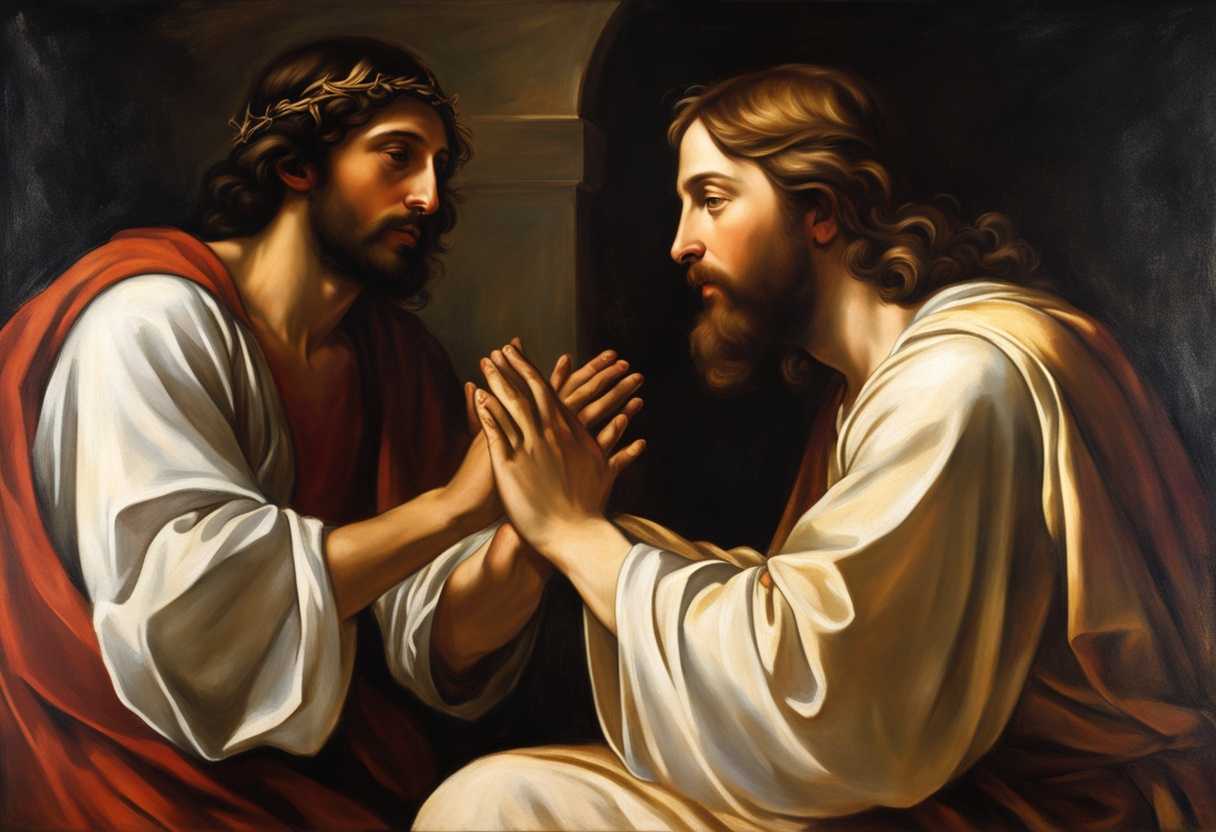
Setting the Scene for John 5:8-11
In John chapter 5, we find Jesus in Jerusalem at the pool of Bethesda. The scene is bustling with activity as a great number of disabled people, blind, lame, and paralyzed, are gathered around the pool. The atmosphere is filled with a sense of anticipation and hope as the people believe that an angel of the Lord occasionally stirs the waters, and the first person to enter the pool when this happens will be healed.
Among the crowd is a man who has been paralyzed for 38 years. His name is not mentioned, but we can imagine the look of desperation and longing in his eyes as he watches others being healed while he remains helpless. Jesus approaches him and asks a simple yet profound question, “Do you want to get well?” The man responds with his own sense of hopelessness, explaining that he has no one to help him into the pool when the water is stirred.
Jesus, in his compassion and power, then commands the man to pick up his mat and walk. Instantly, the man is healed, picks up his mat, and walks away. The onlookers are amazed and in awe of this miraculous event, while the religious leaders are filled with anger and disbelief at Jesus’ actions. The scene at the pool of Bethesda is a powerful reminder of Jesus’ compassion, healing power, and the transformative impact of encountering him.
What is John 5:8-11 about?
Jesus demonstrates immense power in this verse by physically healing a paralyzed man and challenging societal norms and religious traditions. Jesus defies the expectations of the religious leaders of the time by healing the man on the Sabbath, a day traditionally reserved for rest and refraining from work. His actions demonstrate the priority of showing compassion and mercy towards others over blindly following rigid rules. Jesus instructs the healed man to pick up his mat, emphasizing the man’s newfound physical ability and symbolically challenging the legalistic interpretations of the Sabbath laws. This act serves as a powerful reminder that true healing and restoration come not just from physical cures but also from breaking free from the burdens of legalism and embracing a deeper understanding of God’s love and grace. Reflecting on this verse invites us to consider our own attitudes towards rules and traditions. Do we prioritize showing love and compassion towards others, even if it means going against societal norms or traditions? How can we embody the transformative power of Jesus’ healing in our own lives and communities?
Understanding what John 5:8-11 really means
The story in John 5:8-11 recounts a profound moment when Jesus healed a man who had been an invalid for 38 years at the pool of Bethesda. Jesus, in His compassion, approached the man and asked a simple yet profound question: “Do you want to be healed?” This question not only addressed the man’s physical condition but also delved into his desire for change and transformation. It’s a reminder that Jesus meets us where we are and offers us the opportunity for a new beginning, should we choose to accept it.
When Jesus commanded the man to “Get up! Pick up your mat and walk,” it was more than just a physical healing. The words carried a deeper meaning, calling the man to action and faith. “Get up!” signified a call to rise from his state of helplessness and embrace the healing power of Jesus. “Pick up your mat” symbolized leaving behind the old life of suffering and embracing the new life of wholeness and freedom that Jesus offers. And “walk” represented moving forward in faith, no longer bound by past limitations but stepping into a new future with Jesus leading the way.
This passage resonates with other biblical accounts, such as Mark 2:11-12, where Jesus heals a paralytic and instructs him to take up his mat and go home. These instances highlight the immediate response required when encountering the transformative power of Jesus’ words. Additionally, Isaiah 35:6 prophesies the healing and restoration that Jesus brings, while Philippians 4:13 emphasizes the strength and empowerment that come from faith in Him.
The relevance of this story extends to people today in various ways. It teaches us that faith in Jesus necessitates action; it’s not merely about believing but also about responding to that belief with tangible steps forward. Just as the man experienced physical healing, we too can experience spiritual and emotional transformation through Jesus. The command to pick up the mat serves as a reminder to leave behind our past struggles and move forward with a renewed purpose and direction in life.
Consider a person battling addiction for years who, upon hearing a message of hope and transformation, decides to take action, seek help, and change their life. This mirrors the man’s experience at the pool of Bethesda. Just as he had to get up and walk, the individual struggling with addiction had to take that crucial first step towards recovery. It illustrates the power of faith, action, and the transformative work of Jesus in our lives.
In conclusion, the story of Jesus healing the man at the pool of Bethesda is a poignant reminder of His ability to heal, transform, and renew lives. It challenges us to have faith, take action, and leave behind our past struggles, knowing that Jesus offers us a new beginning filled with hope and purpose. Whether we face physical, emotional, or spiritual challenges, the command to “Get up, pick up your mat, and walk” remains as relevant and powerful today as it was over two millennia ago.
How can we respond when God challenges our faith?
When God challenges our faith, we can respond by choosing to trust that His ways are higher than our ways. We can lean on His understanding and believe that He knows what is best for us, even when His plans may seem difficult or challenging. We can choose to step out in faith and believe in God’s power to work miracles in our lives, just as the man in the verse chose to obey Jesus’ command to pick up his mat and walk. We can also draw strength from the examples of faith in the Bible, such as the man who was healed at the pool of Bethesda, in the face of challenges to our faith. Despite not fully understanding the reasons behind Jesus’ command, the man obeyed in faith and experienced a miraculous healing. This serves as a reminder to us that God’s ways are not always clear to us, but if we trust and obey Him, He can do miraculous things in our lives. We can ultimately respond to God’s challenge to our faith by surrendering our doubts and fears to Him. We can choose to believe in His goodness, trust in His promises, and rely on His strength to carry us through any difficulties we may face. Through prayer, seeking guidance from His Word, and surrounding ourselves with a supportive community of believers, we can find the courage and faith to overcome any challenge that comes our way.
Application
Imagine you’re swamped at work, drowning in deadlines, and overwhelmed with responsibilities at home. Now, picture Jesus as your lifeline, offering you a way out. Just like the paralyzed man in John 5:8-11 who got up against all odds, you too can rise and walk. Trust Jesus to bring healing and change into your life. Are you ready to take that first step and embrace your faith?

Reverend Michael Johnson is an experienced Church Minister with a profound expertise in spirituality and guidance. With a serene presence and a compassionate heart, he has faithfully served his congregation for over 20 years, leading them on a spiritual journey towards inner peace and enlightenment. Reverend Johnson’s extensive knowledge of religious philosophies and profound understanding of human nature have made him a trusted confidant and mentor to many, as he seamlessly weaves his profound wisdom into life teachings. Reverend Johnson’s calming demeanor and empathetic nature continue to uplift and heal souls, nurturing a sense of unity and tranquility within his community.