
John 6:52-59 is about Jesus using the metaphor of eating his flesh and drinking his blood as symbolism for believers to fully partake in his teachings, embrace his sacrificial death, and experience spiritual nourishment and eternal life through faith in him.
52 The Jews then disputed among themselves, saying, “How can this man give us his flesh to eat?”
53 So Jesus said to them, “Truly, truly, I say to you, unless you eat the flesh of the Son of Man and drink his blood, you have no life in you.
54 Whoever feeds on my flesh and drinks my blood has eternal life, and I will raise him up on the last day.
55 For my flesh is true food, and my blood is true drink.
56 Whoever feeds on my flesh and drinks my blood abides in me, and I in him.
57 As the living Father sent me, and I live because of the Father, so whoever feeds on me, he also will live because of me.
58 This is the bread that came down from heaven, not like the bread the fathers ate, and died. Whoever feeds on this bread will live forever.”
59 Jesus said these things in the synagogue, as he taught at Capernaum.
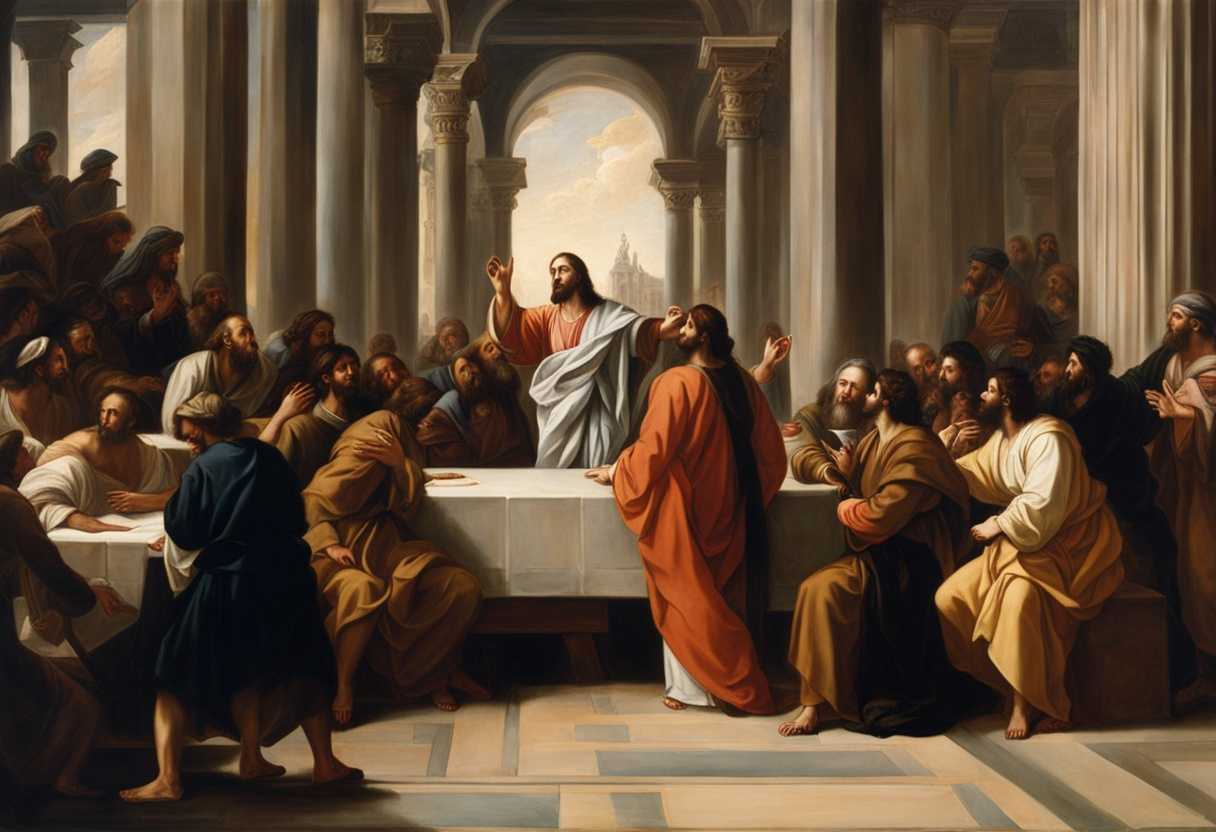
Setting the Scene for John 6:52-59
In John chapter 6, we find Jesus teaching a large crowd of people near the Sea of Galilee. The scene is set on a grassy hillside overlooking the sea, with the gentle waves lapping against the shore in the background. The sun is beginning to set, casting a warm golden glow over the gathering.
Among the crowd are the disciples of Jesus, including Peter, Andrew, James, and John. They had been traveling with Jesus, witnessing His miracles and teachings, and had followed Him to this remote location to hear more of His words. The people in the crowd are a mix of locals and travelers who had heard of Jesus’ teachings and were eager to see Him in person.
As Jesus speaks to the crowd, He begins to talk about the bread of life, using metaphors that confuse some of the listeners. They question how He can give them His flesh to eat, not understanding the deeper spiritual meaning behind His words. The atmosphere is charged with curiosity and anticipation as Jesus continues to teach and reveal more about His identity and purpose to those gathered around Him.
What is John 6:52-59 about?
Jesus is emphasizing the significance of communion and the act of partaking in His body and blood in this verse. Jesus highlights the importance of a deep, personal connection with Him by using this metaphor. Jesus is teaching that partaking in His body and blood is essential for spiritual nourishment and eternal life, just as we need physical nourishment for our bodies to sustain life. This act of communion serves as a symbolic way for believers to remember Jesus’ sacrifice for their sins and to affirm their faith in Him.
Reflect on the profound symbolism of partaking in Jesus’ body and blood. Consider how we signify our unity with Christ and the community of believers through this act. It’s a powerful reminder of the depth of Jesus’ love for us and His willingness to sacrifice Himself for our salvation. Partaking in communion spiritually nourishes our souls and strengthens our relationship with Jesus, just as we physically consume food to sustain our bodies. Let this verse inspire you to approach communion with a heart full of gratitude and reverence, recognizing the profound significance of this act in your faith journey.
Understanding what John 6:52-59 really means
In the Gospel of John, specifically in the passage John 6:52-59, we find Jesus delivering a profound message known as the Bread of Life discourse. This discourse takes place in the synagogue at Capernaum, following the miraculous feeding of the 5,000 where Jesus multiplied loaves and fishes to feed a vast crowd. The Jews listening to Jesus are perplexed and even offended by His statements regarding eating His flesh and drinking His blood.
When Jesus speaks of eating His flesh and drinking His blood, He is using symbolic language to convey the importance of fully partaking in His sacrifice and teachings. This symbolic language points towards the Eucharist, a central sacrament in Christianity where believers partake in the body and blood of Christ. By stating that whoever eats His flesh and drinks His blood has eternal life, Jesus emphasizes the promise of everlasting life through a deep, personal relationship with Him.
Furthermore, Jesus declares that His flesh is real food and His blood is real drink, highlighting that His sacrifice is the true sustenance for our spiritual lives, surpassing the significance of physical nourishment. This concept is echoed in related Bible passages such as Matthew 26:26-28, where Jesus institutes the Eucharist during the Last Supper, and 1 Corinthians 11:23-26, where Paul underscores the importance of the Eucharist in Christian practice. Additionally, in John 15:4-5, Jesus speaks about abiding in Him as the vine and the branches, emphasizing the idea of being spiritually nourished by Him.
In today’s world, where people often seek fulfillment through various avenues, this passage serves as a poignant reminder that true satisfaction and eternal life are found in a relationship with Jesus. The Eucharist continues to hold a central place in many Christian denominations, serving as a tangible reminder of Jesus’ sacrifice and our unity with Him.
Consider a scenario where an individual, amidst a relentless pursuit of meaning and purpose, experiences a profound emptiness despite exploring different paths. Upon participating in the Eucharist during a church service, they encounter a deep sense of peace and connection, realizing that genuine fulfillment stems from a relationship with Jesus. This transformative experience imbues them with newfound purpose and direction, reshaping their life.
In conclusion, the passage in John 6:52-59 challenges us to transcend the material realm and seek spiritual nourishment in Jesus. It prompts us to engage in the Eucharist with a deeper understanding of its significance, reminding us of the assurance of eternal life through a devoted relationship with Christ.
How can we deepen our understanding of spiritual truths?
One way to deepen our understanding of spiritual truths is by reflecting on the symbolic meanings behind the teachings. Jesus speaks metaphorically about the importance of spiritual sustenance through the imagery of bread and flesh in this passage. We can uncover layers of truth about the profound connection between nourishing our physical bodies and feeding our souls with the teachings of Christ by delving into the deeper meaning of these symbols.
Furthermore, we can deepen our understanding by contemplating the context in which these teachings were delivered. We can gain insight into the challenges and beliefs of the people to whom Jesus was speaking by examining the historical and cultural background of the passage. Understanding the circumstances surrounding his words can shed light on the intended message and help us apply these spiritual truths to our own lives in a meaningful way.
Finally, seeking guidance from spiritual leaders, scholars, and fellow believers can also aid in our quest for understanding spiritual truths. Engaging in discussions, attending religious study groups, and seeking mentorship can provide valuable perspectives and interpretations that can enrich our comprehension of the teachings found in this passage and other scriptures. Collaboration and dialogue with others on a similar spiritual journey can lead to fresh insights and a deeper grasp of the profound truths contained in the teachings of Christ.
Application
Imagine your workday, where every task we tackle feeds our growth and success. In the same way, partaking in the body and blood of Christ nourishes your spirit, fueling your journey with purpose and strength. Don’t just treat it as a ritual; it’s your lifeline, a real connection to the ultimate source of grace. Approach the communion table with the same reverence you would for the most pivotal moments in your life. Will you let this act transform and empower you from within?

Reverend Michael Johnson is an experienced Church Minister with a profound expertise in spirituality and guidance. With a serene presence and a compassionate heart, he has faithfully served his congregation for over 20 years, leading them on a spiritual journey towards inner peace and enlightenment. Reverend Johnson’s extensive knowledge of religious philosophies and profound understanding of human nature have made him a trusted confidant and mentor to many, as he seamlessly weaves his profound wisdom into life teachings. Reverend Johnson’s calming demeanor and empathetic nature continue to uplift and heal souls, nurturing a sense of unity and tranquility within his community.