
John 9:1-11 is about Jesus’ miraculous healing of a man born blind, which symbolizes the spiritual blindness of the Pharisees who refused to see Jesus as the Messiah despite witnessing his miraculous signs.
2 And his disciples asked him, “Rabbi, who sinned, this man or his parents, that he was born blind?”
2 And his disciples asked him, “Rabbi, who sinned, this man or his parents, that he was born blind?”
3 Jesus answered, “It was not that this man sinned, or his parents, but that the works of God might be displayed in him.
4 We must work the works of him who sent me while it is day; night is coming, when no one can work.
5 As long as I am in the world, I am the light of the world.”
6 Having said these things, he spit on the ground and made mud with the saliva. Then he anointed the man’s eyes with the mud.
7 and said to him, “Go, wash in the pool of Siloam” (which means Sent). So he went and washed and came back seeing.
8 The neighbors and those who had seen him before as a beggar were saying, “Is this not the man who used to sit and beg?”
9 Some said, “It is he.” Others said, “No, but he is like him.” He kept saying, “I am the man.”
10 So they said to him, “Then how were your eyes opened?”
11 He answered, “The man called Jesus made mud and anointed my eyes and said to me, ‘Go to Siloam and wash.’ So I went and washed and received my sight.”
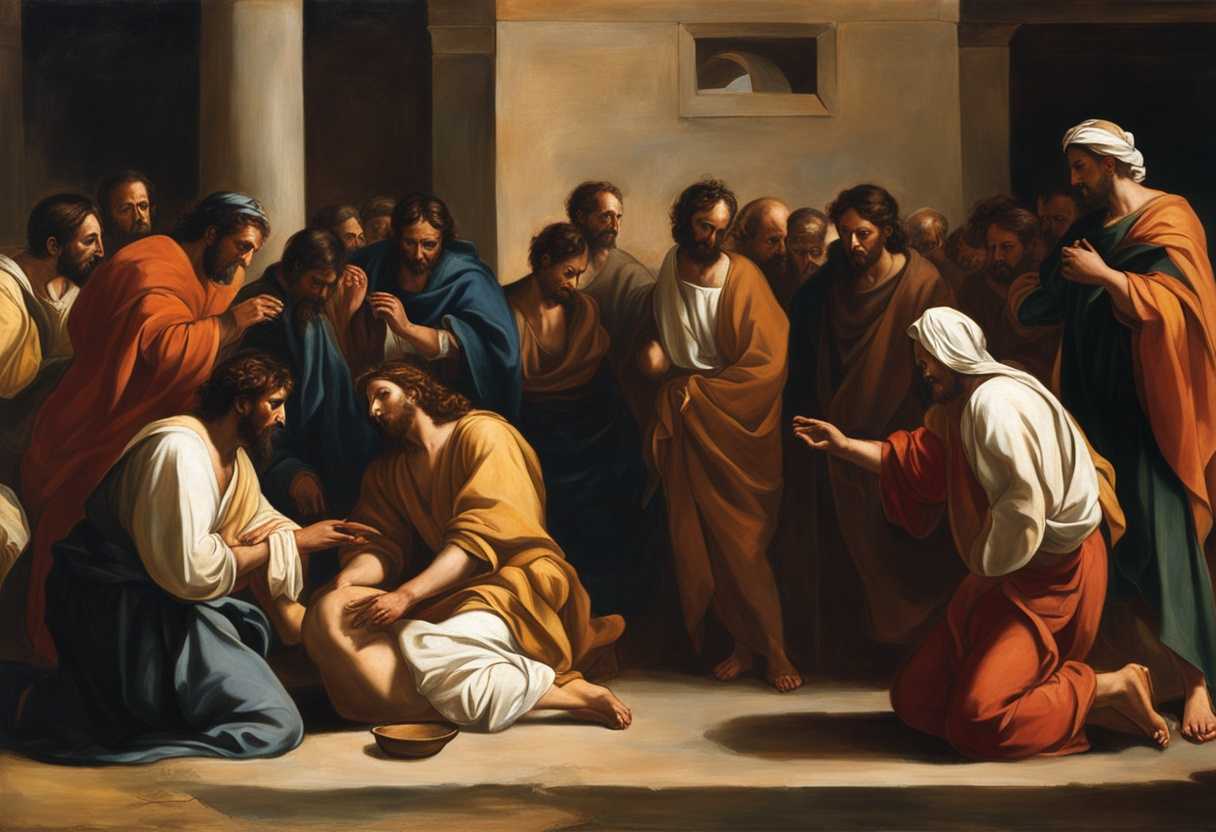
Setting the Scene for John 9:1-11
In John chapter 9, we find Jesus and his disciples walking through the streets of Jerusalem. As they pass by the temple, they come across a man who has been blind from birth, sitting by the roadside begging for alms. The man’s name is not mentioned in the passage, but his condition is a well-known sight to the people in the area.
The disciples, curious about the man’s condition, ask Jesus, “Rabbi, who sinned, this man or his parents, that he was born blind?” Jesus, always ready to teach a lesson, responds that neither the man nor his parents sinned, but that the works of God might be displayed in him. With that, Jesus spits on the ground, makes mud with his saliva, and spreads it on the man’s eyes. He then instructs the man to go and wash in the pool of Siloam. The blind man obeys, and as he washes the mud from his eyes, he is miraculously healed and can see for the first time in his life.
The scene is filled with a mix of emotions – curiosity from the disciples, hope from the blind man, and awe from the onlookers witnessing this incredible miracle. The dusty streets of Jerusalem are bustling with activity as the news of the blind man’s healing spreads like wildfire, causing a stir among the people. Jesus’ compassion and power are on full display, showing that he is indeed the Son of God with the ability to bring light into the darkest of situations.
What is John 9:1-11 about?
This verse showcases the miraculous power and compassion of Jesus as he heals a man who was blind from birth. Imagine the profound impact of witnessing someone who had never experienced sight suddenly being able to see. Jesus not only restores the man’s physical eyesight but also sheds light on the spiritual blindness that exists in the world. Through this act of healing, Jesus reveals his divine authority and ability to bring about transformation in individuals’ lives. Consider beyond the physical healing the significance of this event. Jesus opens up new possibilities for the man to engage with the world around him and to experience the beauty of creation by restoring his sight. This story challenges us to reflect on our own spiritual blindness and the areas in our lives where we may need healing and renewal. Jesus offers hope and grace to all who seek him as we contemplate his power and compassion.
Understanding what John 9:1-11 really means
In the passage from John 9:1-11, we witness a profound encounter between Jesus and a man born blind. As Jesus and His disciples walk by, they come across this man, sparking a conversation that challenges common beliefs and reveals deeper truths about God’s plan and power. One key phrase that stands out is when Jesus declares, “Neither this man nor his parents sinned,” debunking the notion that physical ailments are always a direct consequence of personal sin. This statement prompts us to reconsider our understanding of suffering and the complexities of human experiences.
Moreover, Jesus further illuminates the situation by stating, “But this happened so that the works of God might be displayed in him.” Here, Jesus emphasizes that even in the midst of adversity, there is a divine purpose at play. This notion challenges us to look beyond surface-level explanations for hardships and consider how God might be working through our struggles for a greater good. Additionally, when Jesus proclaims, “I am the light of the world,” He not only reveals His identity but also highlights His role as the ultimate source of spiritual enlightenment and guidance.
Furthermore, the passage takes a practical turn when Jesus instructs the blind man to “Go, wash in the Pool of Siloam.” This command requires the man to take a step of faith and obedience, illustrating the importance of trusting in God’s instructions even when they may seem unconventional or challenging. Through this act, the blind man demonstrates faith in action, showing us the transformative power of obedience to God’s will.
Drawing connections to other biblical passages, such as Exodus 4:11, Isaiah 42:7, and Psalm 146:8, we see a consistent theme of God’s sovereignty, compassion, and miraculous works throughout Scripture. These references deepen our understanding of the significance of Jesus’ actions in the context of divine prophecy and fulfillment, reinforcing the interconnectedness of God’s plan across generations.
In applying this passage to our lives today, we are reminded of several key lessons. Firstly, we learn to view suffering through a different lens, understanding that it can serve a greater purpose beyond individual sin. Secondly, we are encouraged to embrace faith and obedience, trusting in God’s guidance even in the face of uncertainty. Lastly, we are reassured of God’s sovereignty and His ability to work all things together for His glory, offering hope and comfort in challenging times.
As we reflect on the story of the man born blind, we are prompted to consider our own experiences of hardship and how they can be transformed into testimonies of God’s power and grace. Just as the blind man’s life was forever changed by his encounter with Jesus, we are invited to seek God’s purpose in our circumstances and respond with faith and obedience. May this passage inspire us to trust in God’s plan, seek His guidance, and step out in faith, knowing that He is the ultimate source of light and hope in our lives.
How can we see past physical appearances to understand truth?
Jesus heals a man who was born blind in the passage. The disciples inquire about who sinned for him to be born blind, indicating a belief that physical afflictions were a result of sin. Jesus challenges this assumption by explaining that the man’s blindness was an opportunity for the works of God to be displayed in him. Through this miracle, Jesus demonstrates that physical appearances do not always reflect the truth, and that there is more to a person’s story than meets the eye.
This story reminds us to look beyond the surface and not judge or make assumptions based solely on physical appearances. The man who was healed of his blindness was seen in a different light after his encounter with Jesus, revealing a deeper truth about his identity and purpose. We can better understand the complexities of a person’s life and the work of God in their circumstances by seeing past physical appearances and considering the deeper truths at play.
Application
Think of balancing work and family; the constant grind can sometimes feel like life’s struggles have no end. But just like a miracle turning darkness into light, you have the power to bring change and hope. Reach out to someone who’s struggling; be their beacon in tough times. Can you step up and be the hands that lift others, the feet that walk beside them in their journey?

Reverend Michael Johnson is an experienced Church Minister with a profound expertise in spirituality and guidance. With a serene presence and a compassionate heart, he has faithfully served his congregation for over 20 years, leading them on a spiritual journey towards inner peace and enlightenment. Reverend Johnson’s extensive knowledge of religious philosophies and profound understanding of human nature have made him a trusted confidant and mentor to many, as he seamlessly weaves his profound wisdom into life teachings. Reverend Johnson’s calming demeanor and empathetic nature continue to uplift and heal souls, nurturing a sense of unity and tranquility within his community.