
John 9:1-23 is about Jesus healing a man born blind, illustrating not only the physical restoration but also the spiritual enlightenment and transformation that comes from encountering Jesus.
2 And his disciples asked him, “Rabbi, who sinned, this man or his parents, that he was born blind?”
2 And his disciples asked him, “Rabbi, who sinned, this man or his parents, that he was born blind?”
3 Jesus answered, “It was not that this man sinned, or his parents, but that the works of God might be displayed in him.
4 We must work the works of him who sent me while it is day; night is coming, when no one can work.
5 As long as I am in the world, I am the light of the world.”
6 Having said these things, he spit on the ground and made mud with the saliva. Then he anointed the man’s eyes with the mud.
7 and said to him, “Go, wash in the pool of Siloam” (which means Sent). So he went and washed and came back seeing.
8 The neighbors and those who had seen him before as a beggar were saying, “Is this not the man who used to sit and beg?”
9 Some said, “It is he.” Others said, “No, but he is like him.” He kept saying, “I am the man.”
10 So they said to him, “Then how were your eyes opened?”
11 He answered, “The man called Jesus made mud and anointed my eyes and said to me, ‘Go to Siloam and wash.’ So I went and washed and received my sight.”
12 They said to him, “Where is he?” He said, “I do not know.”
13 They brought to the Pharisees the man who had formerly been blind.
14 Now it was a Sabbath day when Jesus made the mud and opened his eyes.
15 So the Pharisees again asked him how he had received his sight. And he said to them, “He put mud on my eyes, and I washed, and I see.”
16 Some of the Pharisees said, “This man is not from God, for he does not keep the Sabbath.” But others said, “How can a man who is a sinner do such signs?” And there was a division among them.
17 So they said again to the blind man, “What do you say about him, since he has opened your eyes?” He said, “He is a prophet.”
18 The Jews did not believe that he had been blind and had received his sight, until they called the parents of the man who had received his sight.
19 And they asked them, “Is this your son, who you say was born blind? How then does he now see?”
20 His parents answered, “We know that this is our son and that he was born blind,
21 But how he now sees we do not know, nor do we know who opened his eyes. Ask him; he is of age. He will speak for himself.”
22 (His parents said these things because they feared the Jews, for the Jews had already agreed that if anyone should confess Jesus to be Christ, he was to be put out of the synagogue.)
23 Therefore his parents said, “He is of age; ask him.”
Setting the Scene for John 9:1-23
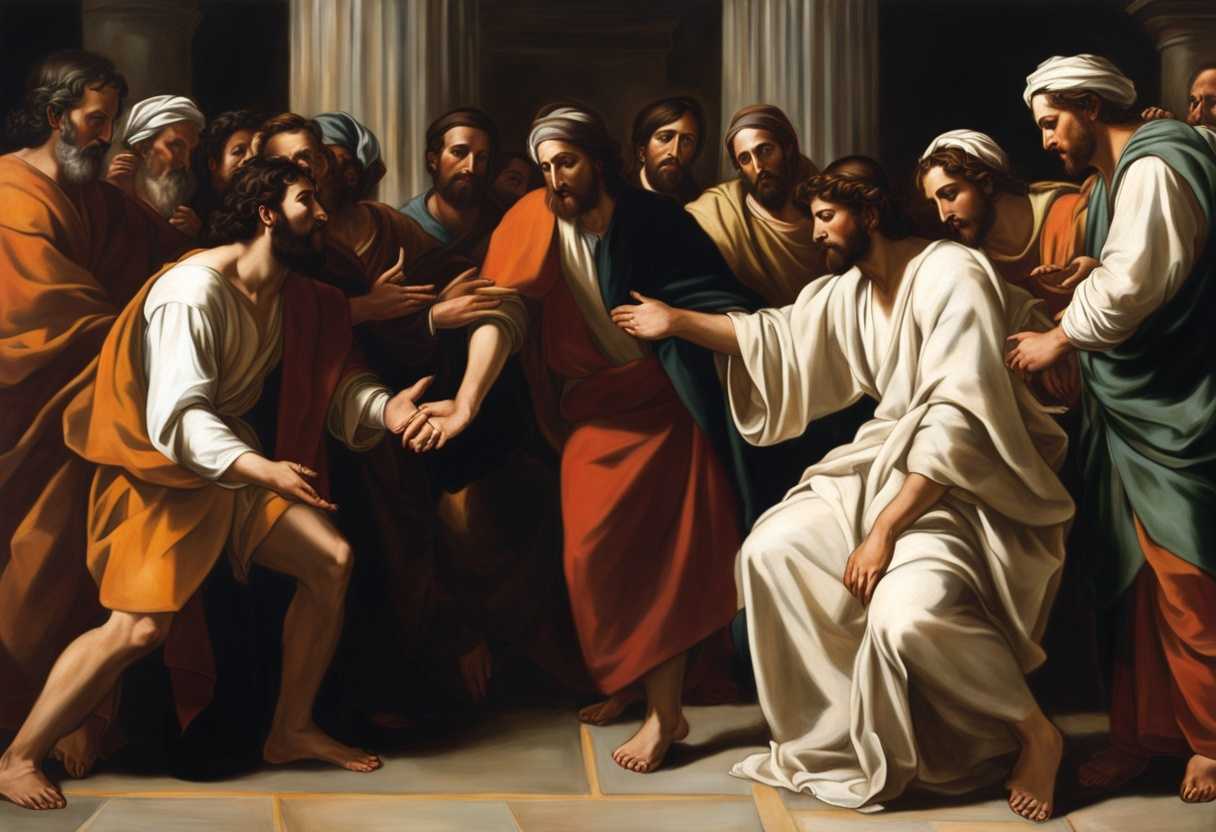
In John chapter 9, we find Jesus and his disciples walking along a dusty road in Jerusalem. As they pass by the temple, they come across a man who has been blind from birth, sitting by the roadside begging for alms. The man’s name is not mentioned in the passage, but his condition is well known in the community, and he is often seen in that spot seeking help from passersby.
The disciples, curious about the man’s condition, ask Jesus, “Rabbi, who sinned, this man or his parents, that he was born blind?” Jesus, always ready to teach a lesson, responds that neither the man nor his parents sinned, but that the works of God might be displayed in him. With that, Jesus spits on the ground, makes mud with his saliva, and spreads it on the man’s eyes, instructing him to go and wash in the pool of Siloam. The man obeys, and as he washes the mud from his eyes, he is miraculously healed and can see for the first time in his life.
The scene is filled with a mix of emotions – wonder, amazement, and disbelief. The man’s neighbors and those who had seen him begging are astonished at his sudden transformation. Some are skeptical, unable to believe that this is the same man who was blind from birth. The Pharisees are also brought into the scene, questioning the man about how he received his sight and ultimately rejecting the miracle as being from God. But through it all, the man who was once blind stands as a testimony to the power and compassion of Jesus, who has brought light into his darkness.
What is John 9:1-23 about?
Jesus performs a miracle by healing a man who was born blind in this powerful verse. The physical healing of the blind man represents not only a compassionate act of mercy by Jesus but also serves as a metaphor for spiritual blindness. We too are invited to recognize and confront our own spiritual blindness that may prevent us from seeing the truth and experiencing the fullness of God’s grace in our lives, just as the blind man gained the gift of sight through Jesus’ miraculous touch. We reflect on this verse and consider the areas in our lives where we may be spiritually blind. Are there prejudices, misunderstandings, or doubts that cloud our perception and prevent us from fully embracing the light of Christ? We are reminded of the transformative power of God’s grace to illuminate our hearts and minds, enabling us to see the world through the lens of love, compassion, and faith, just as the blind man gained a new perspective and vision through his encounter with Jesus. He offers us the same opportunity to experience spiritual healing and renewal in our own lives, just as Jesus brought healing to the blind man.
Understanding what John 9:1-23 really means
This passage from the Gospel of John recounts a remarkable event where Jesus heals a man who was blind from birth. It serves as a compelling demonstration of both Jesus’ divine authority and His deep compassion for those in need. The narrative unfolds with Jesus encountering the blind man, performing a miraculous healing, and the subsequent reactions from various individuals, including the man himself, his parents, and the Pharisees.
One key theme that emerges from this passage is the notion that suffering is not always a direct consequence of sin. The statement, “Neither this man nor his parents sinned,” challenges the prevailing belief of the time that physical afflictions were punishments for specific transgressions. It underscores the idea that suffering can serve a higher purpose beyond mere retribution, highlighting the complexity of human experiences and the workings of divine providence.
Moreover, Jesus’ proclamation, “I am the light of the world,” signifies His role as the bringer of spiritual enlightenment and truth. By declaring Himself as the light, Jesus illuminates the darkness of ignorance and sin, offering a path to salvation and redemption for all who choose to follow Him. This metaphorical imagery underscores the transformative power of faith and the profound impact of encountering the truth embodied in Christ.
The command for the blind man to “Go, wash in the Pool of Siloam” symbolizes the importance of obedience and faith in experiencing divine intervention. The man’s willingness to trust and follow Jesus’ instructions leads to his miraculous healing, serving as a powerful testament to the transformative power of faith in action. This act of obedience underscores the profound connection between faith and the manifestation of God’s grace in our lives.
Drawing parallels with other biblical passages, such as Isaiah 42:7 and Psalm 146:8, further enriches our understanding of the significance of this miracle in the broader context of God’s redemptive plan. These verses emphasize God’s compassion, power, and His mission to bring light to those in darkness, echoing the themes present in the story of the blind man healed by Jesus.
In contemporary times, this passage resonates with individuals grappling with the age-old question of suffering and its purpose. It offers reassurance that suffering is not always a direct result of personal sin but can be a means through which God’s glory and transformative work are revealed. The narrative also underscores the importance of faith, obedience, and seeking spiritual enlightenment in navigating life’s challenges and experiencing God’s healing and transformative power.
Consider the story of a person facing a significant life trial, such as a serious illness or a profound loss. Initially questioning the reasons behind their suffering, they find strength and purpose through their faith and the support of their community. Their journey becomes a testimony to God’s presence and transformative work in the midst of adversity, inspiring others to trust in God’s plan even in the face of hardship.
In conclusion, the account of the blind man in John 9:1-23 serves as a poignant reminder of Jesus’ ability to heal, transform, and bring light into the darkest corners of our lives. It challenges us to reexamine our understanding of suffering, to embrace faith and obedience in our journey with Christ, and to seek spiritual enlightenment amidst life’s uncertainties and trials.
How is physical disability related to spiritual destiny?
Physical disability is not necessarily a punishment for sin or a result of someone’s or their parents’ wrongdoing. Rather, it can be an opportunity for God’s work to be displayed in their life. God demonstrates His power and glory through healing and restoration using the disabled person as a vessel in this case.
The story in John 9 illustrates that physical disability does not exempt someone from having a spiritual destiny. God’s glory is revealed through it. The blind man in this passage did not let his disability define him or hinder his encounter with Jesus. Instead, his disability became a pathway for him to experience a miraculous healing and bear witness to the power of God. Physical disability can ultimately be a part of someone’s spiritual journey, leading them to a deeper relationship with God and a greater understanding of His purpose for their life. God can use all circumstances, including disabilities, to bring about His redemptive work and reveal His glory in ways that we may not expect.
Application
Think of John 9:1-23 like a motivational story for modern life. It’s all about Jesus bringing change and hope. Are you ready to trust and act, like making that bold career move or strengthening family bonds? Don’t just watch from the sidelines. Jump in with faith, and see how transformative this can be. Will you take the leap and believe in the power of change today?

Reverend Michael Johnson is an experienced Church Minister with a profound expertise in spirituality and guidance. With a serene presence and a compassionate heart, he has faithfully served his congregation for over 20 years, leading them on a spiritual journey towards inner peace and enlightenment. Reverend Johnson’s extensive knowledge of religious philosophies and profound understanding of human nature have made him a trusted confidant and mentor to many, as he seamlessly weaves his profound wisdom into life teachings. Reverend Johnson’s calming demeanor and empathetic nature continue to uplift and heal souls, nurturing a sense of unity and tranquility within his community.