
John 9:2-3 is about Jesus explaining that the man born blind was not the result of sin, but an opportunity for God’s work to be displayed through him.
2 And his disciples asked him, “Rabbi, who sinned, this man or his parents, that he was born blind?”
3 Jesus answered, “It was not that this man sinned, or his parents, but that the works of God might be displayed in him.
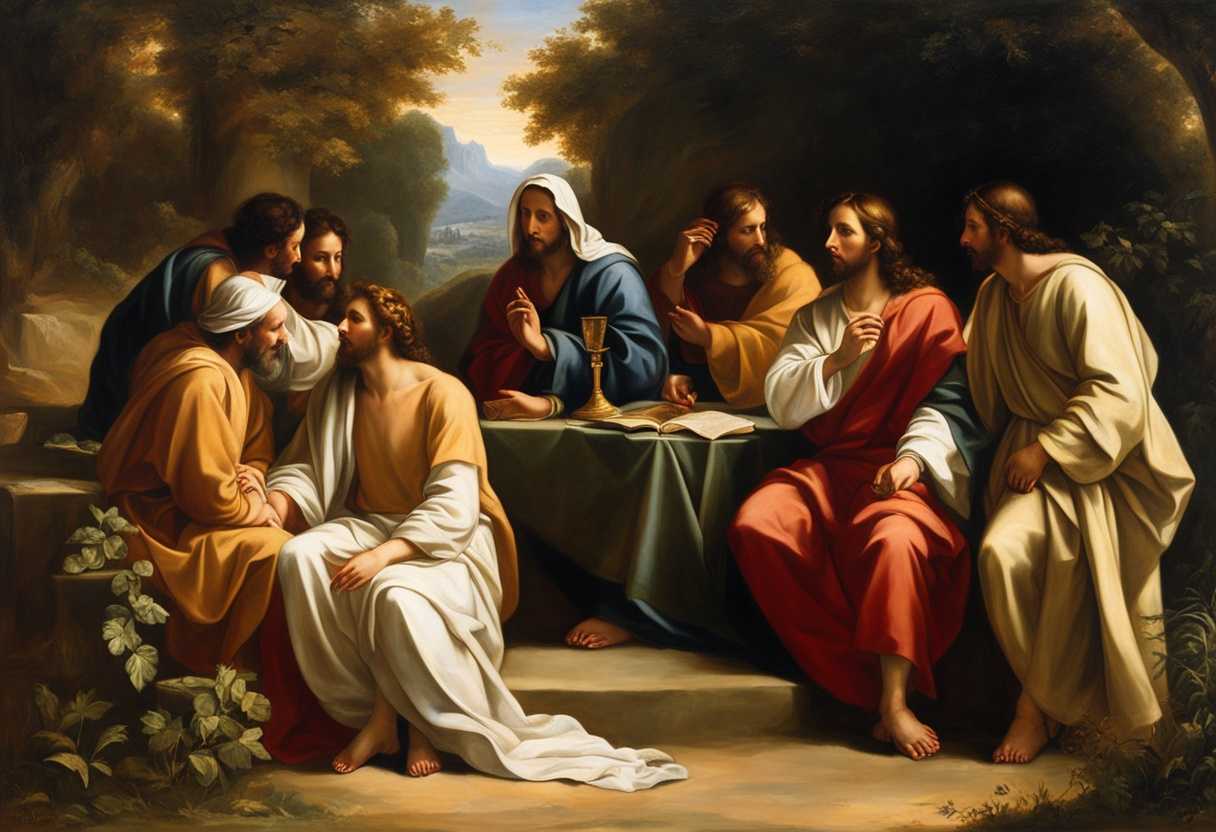
Setting the Scene for John 9:2-3
In John chapter 9, we find Jesus and his disciples walking through the streets of Jerusalem. As they pass by the temple, they come across a man who has been blind from birth. The man sits by the roadside, begging for alms, his face turned towards the ground, his eyes forever shrouded in darkness. The disciples, curious and compassionate, stop in their tracks at the sight of this man.
Jesus, sensing their curiosity, begins to teach them about the nature of suffering and the work of God. He explains that the man’s blindness is not a punishment for sin, but an opportunity for God’s glory to be revealed. The disciples listen intently, their hearts stirred by Jesus’ words. As the crowd gathers around them, the disciples feel a sense of awe and wonder at the power and wisdom of their teacher. And in that moment, they realize that they are witnessing something truly miraculous – the unfolding of God’s plan in the most unexpected of places.
What is John 9:2-3 about?
Let’s take a moment to reflect on the depth and beauty of this verse. Jesus challenges the common belief that suffering is always a punishment for sin in this passage. Jesus redirects our focus to something greater – the glory of God by proclaiming that the blind man’s condition is not a result of sin. This shift in perspective invites us to consider the sovereignty and purpose of God in all aspects of our lives, including our sufferings and challenges.
So, why did Jesus choose to heal the blind man and reveal God’s glory through him? This gesture serves as a powerful reminder that God’s plans and ways are far beyond our understanding. God, in his infinite wisdom, can turn moments of hardship into opportunities for his glory to shine through. This verse encourages us to trust in God’s overarching plan for our lives, even when we may not see the immediate reasons behind our struggles. It invites us to have faith that God can use our circumstances, no matter how difficult, to reveal his power and goodness to the world.
Understanding what John 9:2-3 really means
In John 9:2-3, the disciples approach Jesus with a question that has likely crossed many minds: why does suffering exist? They inquire whether the man’s blindness is a consequence of his sin or his parents’ sin. Jesus’ response is profound and shifts the focus from assigning blame to recognizing a higher purpose. He explains that the man’s blindness is not a punishment for sin but an opportunity for the works of God to be displayed through him. This challenges the common notion that suffering is always a direct result of personal wrongdoing and invites us to consider a broader perspective on the nature of adversity.
The passage in Exodus 4:11 reinforces the idea of God’s sovereignty over physical conditions. It reminds us that God is the ultimate authority over our bodies and circumstances, including disabilities or illnesses. Romans 8:28 further emphasizes that God can work all things for the good of those who love Him, illustrating His ability to bring beauty out of brokenness. Similarly, 2 Corinthians 12:9 highlights how God’s power is often most evident in our moments of weakness and vulnerability, showcasing His strength in our limitations.
Today, many individuals grapple with the concept of suffering and its purpose. John 9:2-3 offers a perspective that challenges us to see beyond the immediate causes of pain and consider the potential for God’s glory to be revealed through our struggles. It provides reassurance that even in the midst of hardship, there can be a divine plan at work, guiding us towards a greater understanding of God’s sovereignty and goodness.
Consider the story of a young woman born with a congenital heart defect, facing numerous challenges throughout her life. Despite her physical limitations, she became a beacon of faith and inspiration to those around her. Her journey mirrors that of the blind man in John 9, illustrating that her condition was not a punishment but a platform for God’s work to shine through her. Her unwavering faith and positive outlook drew others to Christ, showcasing how God can use our weaknesses to demonstrate His power and love.
The phrases “Neither this man nor his parents sinned” and “But this happened so that the works of God might be displayed in him” encapsulate the core message of John 9:2-3. They challenge us to rethink our understanding of suffering and to seek God’s purpose in our pain. By embracing these truths, we can find solace and meaning in our own struggles, trusting that God is at work in every situation, weaving a tapestry of redemption and grace.
Why do bad things happen to good people?
Bad things happen to good people because we live in a fallen world where suffering and challenges are a part of the human experience. The verse mentioned highlights a common question about the suffering of innocents and the seeming lack of justice in the world. However, the verse suggests that such hardships can serve a purpose in revealing the glory of God and allowing His work to be displayed through the lives of individuals.
Despite the difficulties that good people may face, the verse implies that God can use these challenges as opportunities for His power and goodness to be demonstrated. It reminds us that even in the midst of suffering, there can be a higher purpose at work that surpasses our understanding. The verse ultimately conveys the idea that God’s ways are higher than our ways, and He can bring about good even in the midst of trials and tribulations.
Application
In the hustle of our daily lives, remember that each challenge is like a hidden gem in the rough, revealing its true beauty only under pressure. Don’t judge a book by its cover or a person by their current struggle; instead, see these moments as opportunities to spread kindness and love. Just as you wouldn’t abandon a project at work or a family member in need, stand by those who need a hand. How will you choose to light up someone’s day today?

Reverend Michael Johnson is an experienced Church Minister with a profound expertise in spirituality and guidance. With a serene presence and a compassionate heart, he has faithfully served his congregation for over 20 years, leading them on a spiritual journey towards inner peace and enlightenment. Reverend Johnson’s extensive knowledge of religious philosophies and profound understanding of human nature have made him a trusted confidant and mentor to many, as he seamlessly weaves his profound wisdom into life teachings. Reverend Johnson’s calming demeanor and empathetic nature continue to uplift and heal souls, nurturing a sense of unity and tranquility within his community.