
Jonah 1:9 is about Jonah confessing his faith in the God of the Hebrews and acknowledging his responsibility for the storm that had come upon the ship due to his disobedience.
9 And he said to them, “I am a Hebrew, and I fear the Lord, the God of heaven, who made the sea and the dry land.”
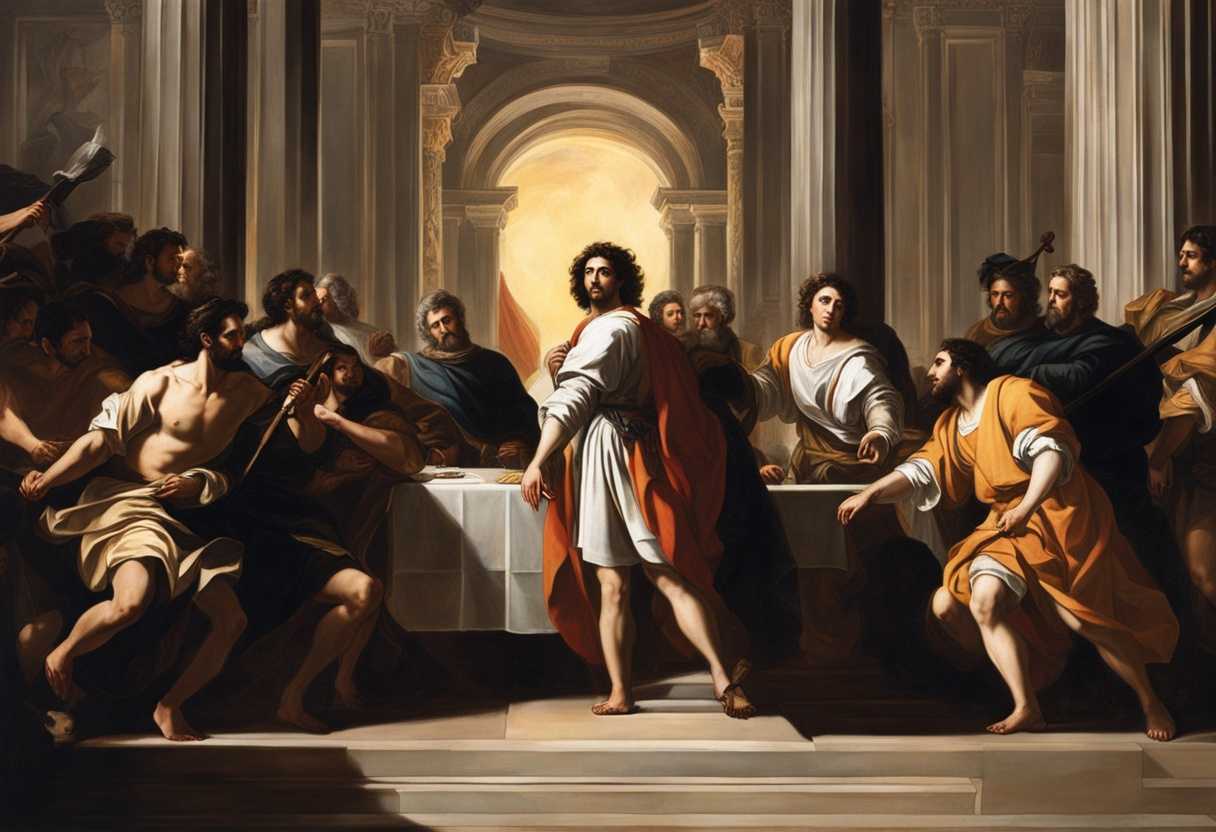
Setting the Scene for Jonah 1:9
The scene in Jonah 1:9 takes place on a ship sailing towards Tarshish. The ship is caught in a fierce storm, and the sailors are terrified as the waves crash against the vessel. Jonah, a prophet of God, is on board the ship, fleeing from the Lord’s command to go to Nineveh and deliver a message of repentance. The sailors, who are not followers of the God of Israel, are desperately trying to figure out the cause of the storm that threatens to break the ship apart.
The sailors, a diverse group of men from different backgrounds and beliefs, are frantically praying to their gods for help, throwing cargo overboard to lighten the ship’s load, and trying to navigate through the tumultuous waters. In the midst of the chaos, they confront Jonah, who had been sleeping below deck, and question him about his identity and the reason for the storm. Jonah confesses that he is a Hebrew and reveals that he is fleeing from the Lord’s presence, which only adds to the sailors’ fear and confusion. The scene is tense and dramatic, with the elements raging around them and the fate of the ship and its crew hanging in the balance.
What is Jonah 1:9 about?
Jonah’s unwavering faith and devotion towards the Lord, the God of heaven, are witnessed in this verse from the Book of Jonah. Jonah proudly declares his identity as a Hebrew, linking his heritage with his worship of God. Through this simple proclamation, Jonah not only acknowledges his cultural and religious background but also reaffirms his commitment to serving the one true God.
This verse reminds us of the importance of staying true to our beliefs and honoring our faith even in the face of adversity. Jonah’s declaration serves as a powerful example of how our identity and faith are intertwined, guiding us through life’s challenges and uncertainties. Jonah showcases the strength and peace that comes from living a life dedicated to serving God by embracing his Hebrew identity and worshiping the Lord. Jonah’s words encourage us to reflect on our own identities and consider how our faith shapes our actions and attitudes. How do we, like Jonah, proudly proclaim our beliefs and worship the Lord in our daily lives? How does our faith influence the way we interact with others and navigate the complexities of the world around us? Let us strive to emulate Jonah’s declaration and steadfast devotion to the God of heaven in all that we do.
Understanding what Jonah 1:9 really means
In the narrative of Jonah, found in Jonah 1:9, we encounter a pivotal moment where Jonah, a prophet of God, finds himself in a dire situation. Attempting to flee from God’s command to go to Nineveh, Jonah boards a ship only to face a violent storm at sea. As the storm rages on, the sailors, fearing for their lives, cast lots to determine the cause of their predicament, and the lot falls on Jonah. In response, Jonah makes a profound confession, stating, “I am a Hebrew; and I fear the Lord, the God of heaven, who made the sea and the dry land.”
These words hold significant meaning within the context of Jonah’s story. When Jonah identifies himself as a Hebrew, he not only acknowledges his heritage but also his connection to the chosen people of Israel. By proclaiming his fear of the Lord, Jonah demonstrates his reverence and submission to God’s authority, despite his attempt to escape his divine calling. Furthermore, by recognizing God as the creator of the sea and the dry land, Jonah highlights God’s sovereignty over all creation, including the storm that threatens the ship.
In related passages such as Psalm 95:5, Exodus 3:6, and Proverbs 1:7, we see echoes of Jonah’s confession. These verses emphasize God’s dominion over the seas and the earth, the covenant relationship with His chosen people, and the importance of fearing the Lord as the foundation of wisdom. Jonah’s declaration aligns with these themes, underscoring the universal truth of God’s power and authority.
The message of Jonah 1:9 remains relevant to people today in various ways. It challenges individuals to reflect on their identity and faith, urging them to embrace their role as followers of Christ. Moreover, it prompts believers to acknowledge God’s sovereignty in a world filled with uncertainty and chaos, offering a source of comfort and stability. Jonah’s act of confession also serves as a reminder of the significance of taking responsibility for one’s actions and seeking forgiveness when needed.
To illustrate the enduring relevance of Jonah’s confession, consider a contemporary scenario where someone grapples with a challenging situation at work. Like Jonah, they may initially try to evade the issue out of fear or discomfort. However, by embracing their faith and trusting in God’s guidance, they can confront the problem with courage and integrity. Just as Jonah’s honesty led to a resolution on the ship, acknowledging our struggles and relying on God can pave the way for peace and clarity in our lives.
In conclusion, Jonah 1:9 encapsulates profound truths about identity, faith, and God’s sovereignty. It calls us to be authentic in our relationship with God, to recognize His supreme authority, and to take ownership of our actions. By heeding the lessons embedded in Jonah’s confession, we are encouraged to walk in faith, humility, and obedience before the Lord who reigns over all creation.
How does our disobedience affect those around us?
Disobedience can have a ripple effect, impacting not just the disobedient individual but those around them as well. When we choose to go against what is right or what is required of us, it can lead to consequences that extend beyond ourselves. Jonah’s disobedience not only put his own life in danger but also endangered the lives of those who were with him on the ship. The decisions we make can have repercussions that affect not only ourselves but also our relationships and the well-being of those around us.
Our actions, whether obedient or disobedient, do not happen in isolation. They can impact the people we interact with and the broader community. When we choose to disobey, we not only face consequences personally, but we also risk causing harm to our relationships and potentially putting others in challenging or dangerous situations. It is a reminder of the interconnectedness of our choices and the responsibility we have towards those around us.
Application
Embrace accountability in your life like a responsible leader at work or a caring parent at home. Don’t run from your mistakes, but confront them head-on with sincerity and a willingness to change. Take inspiration from Jonah’s journey and make amends with God through honesty and contrition. Will you choose to answer the call for self-reflection and growth today?

Reverend Michael Johnson is an experienced Church Minister with a profound expertise in spirituality and guidance. With a serene presence and a compassionate heart, he has faithfully served his congregation for over 20 years, leading them on a spiritual journey towards inner peace and enlightenment. Reverend Johnson’s extensive knowledge of religious philosophies and profound understanding of human nature have made him a trusted confidant and mentor to many, as he seamlessly weaves his profound wisdom into life teachings. Reverend Johnson’s calming demeanor and empathetic nature continue to uplift and heal souls, nurturing a sense of unity and tranquility within his community.