
Joshua 17:1-6 is about the division of the land among the tribes of Manasseh, reflecting God’s faithfulness in fulfilling his promises to the Israelites and the importance of recognizing and appreciating the blessings bestowed upon them.
1 Then allotment was made to the people of Manasseh, for he was the firstborn of Joseph. To Machir the firstborn of Manasseh, the father of Gilead, were allotted Gilead and Bashan, because he was a man of war.
2 allotment was for the rest of the people of Manasseh by their clans, for the people of Abiezer, Helek, Asriel, Shechem, Hepher, and Shemida. These were the male descendants of Manasseh the son of Joseph, by their clans.
3 Now Zelophehad the son of Hepher, son of Gilead, son of Machir, son of Manasseh, had no sons, but only daughters, and these are the names of his daughters: Mahlah, Noah, Hoglah, Milcah, and Tirzah.
4 They approached Eleazar the priest and Joshua the son of Nun and the leaders and said, “The Lord commanded Moses to give us an inheritance along with our brothers.” So according to the mouth of the Lord he gave them an inheritance among the brothers of their father.
5 Thus there fell to Manasseh ten portions, besides the land of Gilead and Bashan, which is on the other side of the Jordan,
6 because the daughters of Manasseh received an inheritance along with his sons. The land of Gilead was allotted to the rest of the people of Manasseh.
Setting the Scene for Joshua 17:1-6
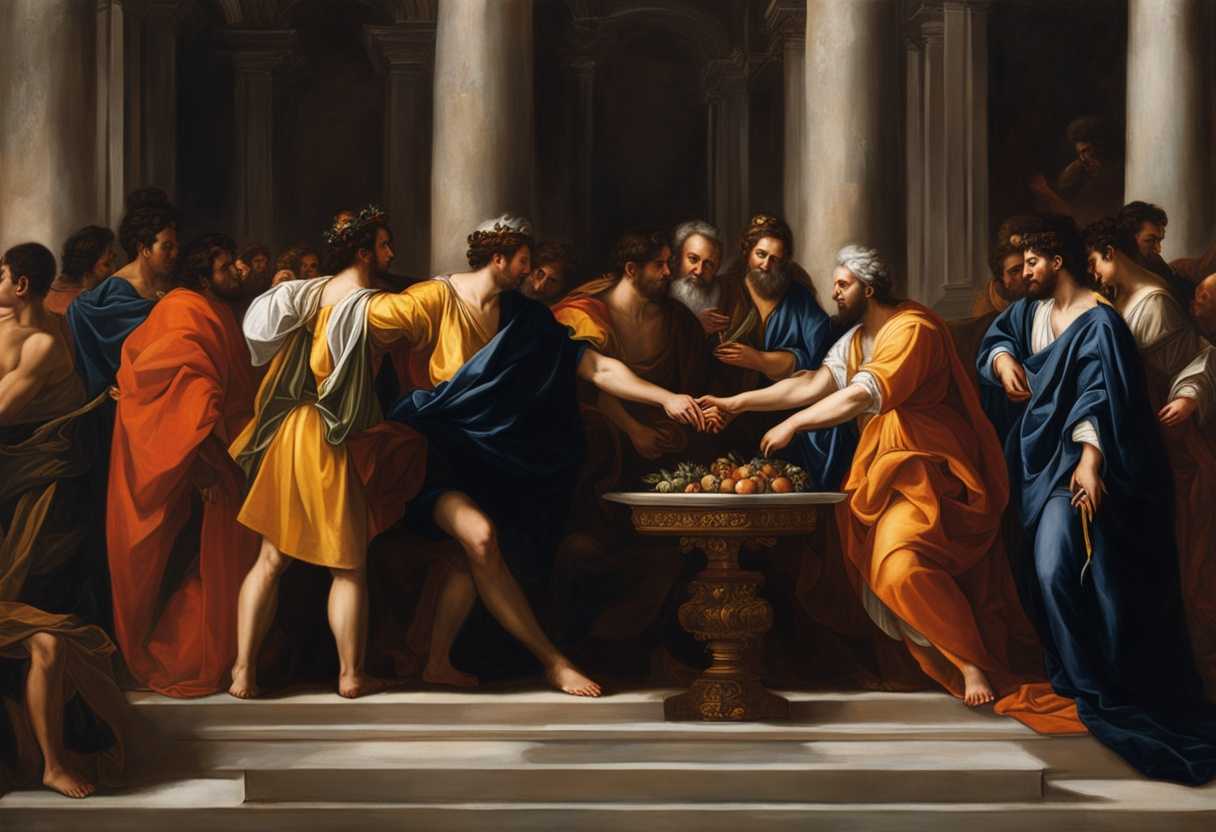
In Joshua chapter 17, we find the scene set in the land of Canaan, shortly after the Israelites have crossed the Jordan River and begun to conquer the promised land. The tribes of Manasseh and Ephraim are gathered together to discuss the division of the territory allotted to them by Joshua, as instructed by the Lord. The leaders of the tribes, including the descendants of Joseph, are present, along with Joshua himself, who is overseeing the distribution of the land.
The atmosphere is tense as the leaders of Manasseh come forward to Joshua, expressing their concern that the portion of land they have been given is not sufficient for their large population and numerous livestock. They appeal to Joshua for more land, citing their strength and numbers as reasons for needing additional territory. Joshua listens attentively to their request, acknowledging their power and influence within the tribe, and ultimately agrees to grant them more land in the hill country of Canaan.
Surrounded by the rugged terrain of the hill country, with the sun setting in the distance, Joshua and the leaders of the tribes engage in a dialogue about the division of the land, reflecting the challenges and complexities of fulfilling God’s promise to the Israelites. The scene captures the tension between the need for fairness and equity in the distribution of the land, while also recognizing the unique circumstances and needs of each tribe.
What is Joshua 17:1-6 about?
The division of land among the tribes of Manasseh and Ephraim after the conquest of Canaan symbolizes the fulfillment of God’s promise to the Israelites in this verse. It highlights the importance of maintaining boundaries and order within the community. The verse emphasizes the idea of unity within diversity by assigning specific territories to each tribe, where different groups work together for a common goal.
Have you ever thought about the significance of land ownership in ancient societies? The distribution of land among the tribes not only provided a sense of security and stability but also established a sense of identity and belonging. It shows how God’s plan involves organization and structure, ensuring that each tribe has its own space to thrive and contribute to the greater community. This verse ultimately reminds us of the importance of unity, cooperation, and fulfilling promises. We too have our own unique roles and responsibilities within our communities, just as each tribe had a designated portion of land. The tribes of Manasseh and Ephraim worked together towards a common goal in the conquest of Canaan by understanding and respecting their boundaries.
Understanding what Joshua 17:1-6 really means
The Book of Joshua provides a detailed account of the Israelites’ conquest of Canaan and the subsequent division of the land among the twelve tribes. In Joshua 17:1-6, we delve into the allocation of land to the tribe of Manasseh, a tribe descended from Joseph. What makes this passage particularly intriguing is the focus on the daughters of Zelophehad, a narrative that challenges traditional inheritance practices.
The mention of “the daughters of Zelophehad” in this context is significant as it sheds light on the pivotal role these women played in biblical history. Their story, as recounted in Numbers 27:1-11, showcases their unwavering faith and commitment to seeking justice. By approaching Moses to assert their right to inheritance, these women defied societal norms and paved the way for a more equitable distribution of land.
“Inheritance among their father’s brothers” signifies a departure from the customary male-centric inheritance system. This phrase underscores the importance of justice and fairness in God’s eyes, emphasizing that all individuals, regardless of gender, are entitled to their rightful share. It serves as a poignant reminder of God’s impartiality and the value He places on justice and equality.
Drawing parallels to contemporary issues, the story of Zelophehad’s daughters resonates deeply with the ongoing conversations surrounding gender equality and women’s rights. It serves as a timeless example of the importance of challenging unjust practices and advocating for fairness in all spheres of life. Just as these women stood up for their rights, individuals today are encouraged to confront inequities and champion justice in their communities.
Consider a scenario where a woman in a corporate environment challenges a discriminatory policy favoring male employees for promotions. Inspired by the courage and determination of Zelophehad’s daughters, she bravely advocates for change within the company. Her actions lead to a policy revision that ensures equal opportunities for all employees, irrespective of gender. This modern-day anecdote mirrors the biblical narrative, highlighting the enduring relevance of advocating for justice and equality in our society.
In conclusion, the narrative of Zelophehad’s daughters in Joshua 17:1-6 serves as a poignant example of faith, courage, and the pursuit of justice. It inspires individuals to stand up for what is right, challenge unjust practices, and strive for fairness in their communities. By reflecting on this passage, readers are prompted to acknowledge the significance of equality and to actively promote justice and equity in their own spheres of influence.
How can we trust in God’s timing?
We can trust in God’s timing by recognizing His sovereignty and ultimate plan for our lives. We too must understand that God’s timing is perfect and His ways are higher than ours, just as the Israelites had to wait for their inheritance and the division of the land according to God’s timing. Even when it may seem like things are not happening as quickly as we would like, we can have faith that God is working things out for our good in His perfect timing.
When we trust in God’s timing, we are surrendering our own desires and plans to His will. It requires patience and a steadfast faith in God’s faithfulness and goodness. We can trust that God has a plan and purpose for every season of our lives, just as the Israelites had to wait for the land to be allocated to them. This trust allows us to rest in the assurance that God’s timing is always right and that He is always working behind the scenes on our behalf. We acknowledge that God is in control of all things and that His timing is perfect by trusting in Him. We may not always understand why things are happening the way they are or why we have to wait, but we can have confidence in God’s faithfulness and trust that He knows what is best for us. We can actively surrender our timelines and expectations to God, knowing that His timing will ultimately lead us to where we need to be.
Application
Reflect on Joshua 17:1-6 where the tribe of Manasseh diligently divided the promised land according to God’s command. Just like them, let’s take proactive steps to claim the blessings meant for us. Don’t wait for blessings to fall into your lap – go out, take charge, and secure what is rightfully yours with faith and obedience. Will you rise up today and seize the abundant blessings waiting for you?

Reverend Michael Johnson is an experienced Church Minister with a profound expertise in spirituality and guidance. With a serene presence and a compassionate heart, he has faithfully served his congregation for over 20 years, leading them on a spiritual journey towards inner peace and enlightenment. Reverend Johnson’s extensive knowledge of religious philosophies and profound understanding of human nature have made him a trusted confidant and mentor to many, as he seamlessly weaves his profound wisdom into life teachings. Reverend Johnson’s calming demeanor and empathetic nature continue to uplift and heal souls, nurturing a sense of unity and tranquility within his community.