
Numbers 27:1-11 is about the daughters of Zelophehad advocating for their inheritance rights after the death of their father, demonstrating the importance of gender equality and justice in the distribution of land and possessions.
1 Then drew near the daughters of Zelophehad the son of Hepher, son of Gilead, son of Machir, son of Manasseh, from the clans of Manasseh the son of Joseph. The names of his daughters were: Mahlah, Noah, Hoglah, Milcah, and Tirzah.
2 They stood before Moses, Eleazar the priest, the chiefs, and all the congregation, at the entrance of the tent of meeting, saying,
3 Our father died in the wilderness. He was not among the company of those who gathered themselves together against the Lord in the company of Korah, but died for his own sin. And he had no sons.
4 Why should the name of our father be taken away from his clan because he had no son? Give to us a possession among our father’s brothers.”
5 So Moses brought their case before the Lord.
6 And the Lord said to Moses:
7 The daughters of Zelophehad are right. You shall give them possession of an inheritance among their father’s brothers and transfer the inheritance of their father to them.
8 And you shall speak to the people of Israel, saying, If a man dies and has no son, then you shall transfer his inheritance to his daughter.
9 And if he has no daughter, then you shall give his inheritance to his brothers.
10 and if he has no brothers, then you shall give his inheritance to his father’s brothers.
11 “If his father has no brothers, then you shall give his inheritance to the nearest kinsman of his clan, and he shall possess it. And it shall be for the people of Israel a statute and rule, as the Lord commanded Moses.”
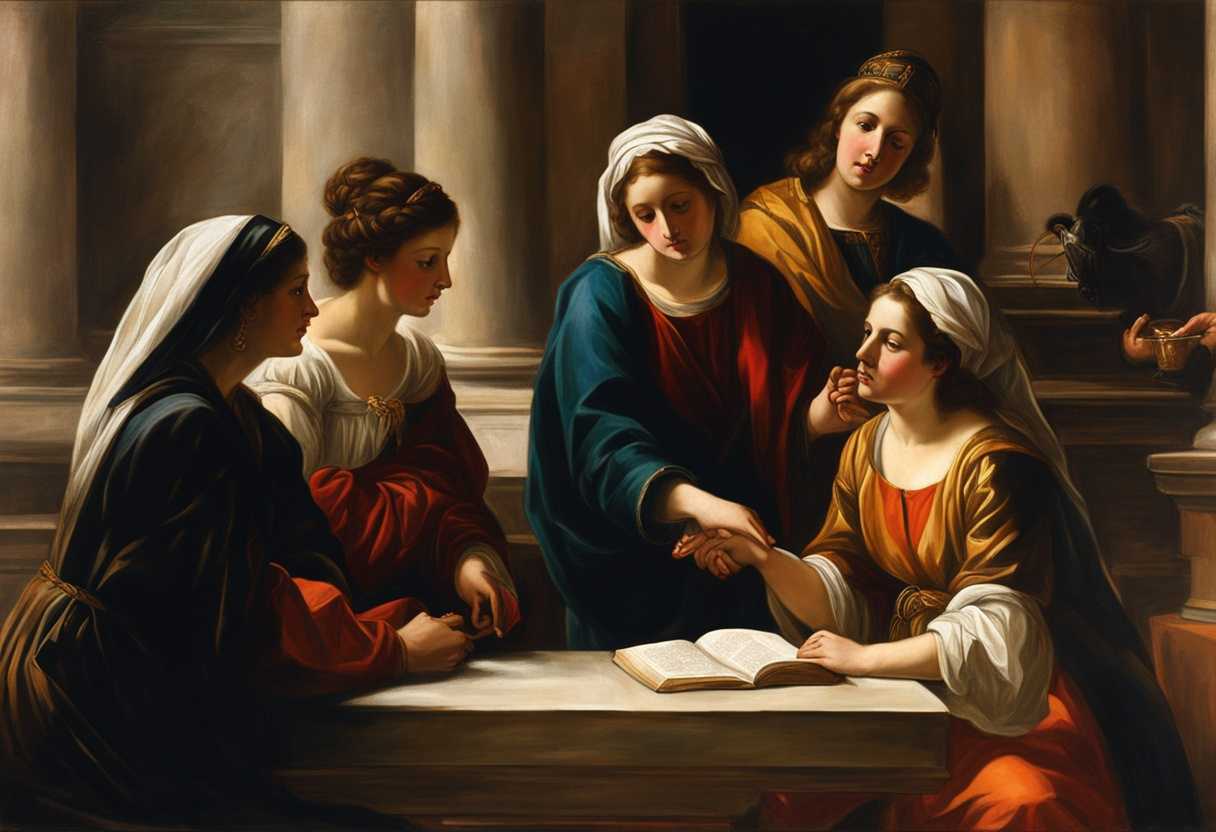
Setting the Scene for Numbers 27:1-11
In Numbers chapter 27, we find ourselves in the wilderness of Zin, a vast and arid desert landscape where the Israelites have been wandering for years after their exodus from Egypt. The scene is set near the entrance of the Tabernacle, the sacred tent where the Israelites worship and seek guidance from God.
Gathered around are the daughters of Zelophehad – Mahlah, Noah, Hoglah, Milcah, and Tirzah. These five sisters have come before Moses, the revered leader of the Israelites, along with Eleazar the priest, the tribal leaders, and the entire congregation. They stand with determination, their voices steady as they present their case before the assembly.
The sisters explain that their father has died without leaving any sons, and they fear that they will be left without an inheritance in the Promised Land. Their plea for justice and fairness in the distribution of land rights captures the attention of all present, sparking a significant discussion about inheritance laws and the rights of women in the community. Moses, guided by God, ultimately rules in favor of the daughters of Zelophehad, setting a precedent for future generations and affirming the importance of justice and equality in the eyes of the Lord.
What is Numbers 27:1-11 about?
This verse from the Bible is a powerful example of gender equality and justice. It marks a pivotal moment when the daughters of Zelophehad – Mahlah, Noah, Hoglah, Milcah, and Tirzah – took a stand to receive their rightful inheritance. This story showcases the importance of standing up for one’s rights and challenging unjust laws and societal norms in a society where women often faced discrimination and were excluded from owning land or receiving inheritance.
This verse is a beacon of hope and empowerment for women everywhere, showing that with courage and determination, one can break barriers and pave the way for future generations. It prompts us to reflect on the importance of equality and justice in our own lives and communities. How can we support and uplift those who are marginalized or denied their rights? How can we work towards a more inclusive society where everyone is treated with fairness and respect? Let this verse inspire us to be agents of change and champions of equality in our own spheres of influence.
Understanding what Numbers 27:1-11 really means
The Book of Numbers, nestled within the Pentateuch, serves as a crucial account of the Israelites’ journey from Egypt to the Promised Land. In this narrative, we witness the unfolding of God’s promises, the challenges of faith and obedience, and the establishment of laws and regulations for the community. Within this context, Numbers 27:1-11 presents a unique episode that sheds light on inheritance laws in ancient Israel, offering a glimpse into the cultural and legal dynamics of that time.
At the heart of this passage are the daughters of Zelophehad, who bravely challenge the prevailing norms of a patriarchal society by stepping forward to claim their rightful inheritance. In a culture where inheritance typically passed through male descendants, their boldness in seeking justice stands out as a testament to their faith and determination. Their plea, “Give us a possession among our father’s brothers,” resonates with a desire for fairness and equity that transcends societal expectations.
Moses, as the appointed leader and intermediary between the people and God, plays a crucial role in this narrative by bringing the case of the daughters before the Lord. This action underscores the importance of seeking divine guidance in matters of justice and highlights the significance of leadership that upholds principles of righteousness and fairness. Through Moses’ intervention, the daughters’ plea is heard, setting a precedent for the just treatment of women in matters of inheritance.
The story of the daughters of Zelophehad finds resonance in other biblical passages and themes. In Joshua 17:3-6, we see the fulfillment of their request, underscoring the lasting impact of their courage and advocacy. Galatians 3:28 further reinforces the theme of equality and justice, reminding us that in Christ, distinctions based on gender, ethnicity, or social status are transcended. Proverbs 31:8-9 exhorts us to speak up for those who cannot advocate for themselves, echoing the daughters’ courageous stance for justice.
In our modern context, the example of the daughters of Zelophehad serves as a powerful reminder of the importance of advocating for justice and equality. Their story challenges us to confront unjust systems, to stand up for what is right, and to seek divine guidance in our pursuit of righteousness. By drawing inspiration from their faith and courage, we are encouraged to emulate their example in our own lives and communities, striving to uphold principles of fairness and equity.
As we reflect on the lessons from Numbers 27:1-11, may we be inspired to champion justice, equality, and righteousness in our spheres of influence. Let us heed the call to speak out against injustice, to advocate for the marginalized, and to seek God’s guidance in all our endeavors. May we find the courage to challenge societal norms that perpetuate inequality and the faith to trust in God’s justice, knowing that He is a God of fairness and compassion.
How should inheritance be handled in cases of uncertainty?
Follow the guidance provided in Numbers 27 in cases of uncertainty regarding inheritance. The daughters of Zelophehad approached Moses with a question about their inheritance, as their father had died without sons in this passage. Through this conversation, God provided direction on how inheritance should be handled in such situations, ensuring that justice and fairness prevailed.
It teaches us that in cases of uncertainty or ambiguity related to inheritance, it is important to seek guidance and clarity from higher authorities or sources of wisdom. This passage highlights the importance of addressing such issues with integrity and seeking resolutions that are just and equitable for all parties involved. Following the principles outlined in this passage can help ensure that inheritance matters are handled in a manner that aligns with divine guidance and values of fairness.
Application
Let’s learn from the daughters of Zelophehad – stand up for fairness and justice in all aspects of our lives. Be bold, be courageous, and seek guidance in making decisions that uphold righteousness. As we navigate the complex terrain of our modern world, let us be beacons of truth and integrity. Will you choose to be a force for good and stand up for what is right, even in the face of challenges?

Reverend Michael Johnson is an experienced Church Minister with a profound expertise in spirituality and guidance. With a serene presence and a compassionate heart, he has faithfully served his congregation for over 20 years, leading them on a spiritual journey towards inner peace and enlightenment. Reverend Johnson’s extensive knowledge of religious philosophies and profound understanding of human nature have made him a trusted confidant and mentor to many, as he seamlessly weaves his profound wisdom into life teachings. Reverend Johnson’s calming demeanor and empathetic nature continue to uplift and heal souls, nurturing a sense of unity and tranquility within his community.