
1 The second lot came out for Simeon, for the tribe of the people of Simeon, according to their clans. And their inheritance was in the midst of the inheritance of the people of Judah.
2 And they had in their inheritance Beersheba, Sheba, Moladah,
3 Then it goes down westward to the territory of the Japhletites, as far as the territory of Lower Beth-horon, then to Gezer, and it ends at the sea.
4 Elath, Beth-tappuah, Aphekah,
5 Zebulun, Asher, and Naphtali
6 Then the boundary goes westward to the sea, past Hazar-enan, and is on the north side of Beth-dagon, and ends at the north of Zebulun, and the valley of Iphtahel,
7 Ain, Remmon, Ether, and Ashan—four cities with their villages—
8 The inheritance of the people of Zebulun according to their clans reached as far as Sarid. And their boundary goes up westward to Maralah, and touches Dabbesheth, and then the brook that is east of Jokneam.
9 The inheritance of the people of Simeon formed part of the territory of the people of Judah. Because the portion of the people of Judah was too large for them, the people of Simeon obtained an inheritance in the midst of their inheritance.
10 The third lot came up for the people of Zebulun, according to their clans. And the territory of their inheritance reached as far as Sarid.
11 Then their boundary goes up westward and on to Mareal and touches Dabbesheth, then the brook that is east of Jokneam.
12 Then it turned eastward to Beth-dagon, and reached to Zebulun and to the valley of Iphtahel northward to Beth-emek and Neiel. Then it continued in the north to Cabul,
13 And from there it passes along on the east toward the sunrise to Gath-hepher, to Eth-kazin, and goes on to Rimmon, stretching to Neah.
14 Then the boundary turns in a southerly direction from the top of the mountain that lies before Beth-horon, and it ends at Kiriath-baal (that is, Kiriath-jearim), a city belonging to the people of Judah. This forms the western side.
15 Included also were Kattath, Nahalal, Shimron, Idalah, and Bethlehem: twelve cities with their villages.
16 This is the inheritance of the tribe of the people of Zebulun according to their clans—these cities with their villages.
17 The fourth lot came out for Issachar, for the people of Issachar, according to their clans.
18 Their territory included Jezreel, Chesulloth, Shunem,
19 The second lot came out for Simeon, for the tribe of the people of Simeon, according to their clans. And their inheritance was in the midst of the inheritance of the people of Judah.
20 This is the inheritance of the tribe of the people of Judah according to their clans.
21 This is the inheritance of the tribe of the people of Benjamin according to its clans, boundary by boundary all around.
22 The boundary also touches Tabor, Shahazumah, and Beth-shemesh, and its boundary ends at the Jordan—sixteen cities with their villages.
23 This is the inheritance of the tribe of the people of Issachar according to their clans—the cities with their villages.
24 The fifth lot came out for the tribe of Asher according to its clans.
25 Their boundary was Helkath, Hali, Beten, Achshaph,
26 Allammelech, Amad, and Mishal. On the west it touches Carmel and Shihor-libnath,
27 then it turns eastward, it goes to Beth-dagon, and touches Zebulun and the Valley of Iphtahel northward to Beth-emek and Neiel. Then it continues in the north to Cabul,
28 Ebron, Rehob, Hammon, Kanah, as far as Sidon the Great.
29 And then the boundary turns to Ramah, reaching to the fortified city of Tyre. Then the boundary turns to Hosah, and it ends at the sea; Mahalab, Achzib,
30 Ummah also, and Aphek and Rehob: twenty-two cities with their villages.
31 This is the inheritance of the tribe of the people of Asher according to their clans—these cities with their villages.
32 The sixth lot came out for the people of Naphtali, for the people of Naphtali, according to their clans.
33 Their boundary was from Heleph, from the oak in Zaanannim, and Adami-nekeb, and Jabneel, as far as Lakkum, and it ended at the Jordan.
34 Then the boundary turns westward to Aznoth-tabor and goes from there to Hukkok, touching Zebulun at the south and Asher on the west, and Judah on the east at the Jordan.
35 The fortified cities are Ziddim, Zer, Hammath, Rakkath, Chinnereth
36 Adamah, Ramah, Hazor,
37 Kedesh, Edrei, En-hazor,
38 This is the inheritance of the tribe of the people of Dan, according to their clans, these cities with their villages.
39 This is the inheritance of the tribe of the people of Naphtali, according to their clans—the cities with their villages.
40 The seventh lot came out for the tribe of the people of Dan, according to their clans.
41 The territory of their inheritance included Zorah, Eshtaol, Ir-shemesh,
42 Shaalabbin, Aijalon, Ithlah,
43 When the boundary of the people of Dan was lost to them, the people of Dan went up and fought against Leshem, and after capturing it and striking it with the sword they took possession of it and settled in it, calling Leshem, Dan, after the name of Dan their ancestor.
44 This is the inheritance of the tribe of the people of Dan according to their clans, these cities with their villages.
45 And Jehud, Bene-berak, Gath-rimmon,
46 Me-jarkon and Rakkon with the territory over against Joppa.
47 When the territory of the people of Dan was lost to them, the people of Dan went up and fought against Leshem, and after capturing it and striking it with the sword they took possession of it and settled in it, calling Leshem, Dan, after the name of Dan their ancestor.
48 This is the inheritance of the tribe of the people of Dan, according to their clans, these cities with their villages.
49 When they had finished distributing the several territories of the land as inheritances, the people of Israel gave an inheritance among them to Joshua the son of Nun.
50 According to the commandment of the Lord they gave him the city that he asked, Timnath-serah in the hill country of Ephraim. And he rebuilt the city and settled in it.
51 These are the inheritances that Eleazar the priest and Joshua the son of Nun and the heads of the fathers’ houses of the tribes of the people of Israel distributed by lot at Shiloh before the Lord, at the entrance of the tent of meeting. So they finished dividing the land.
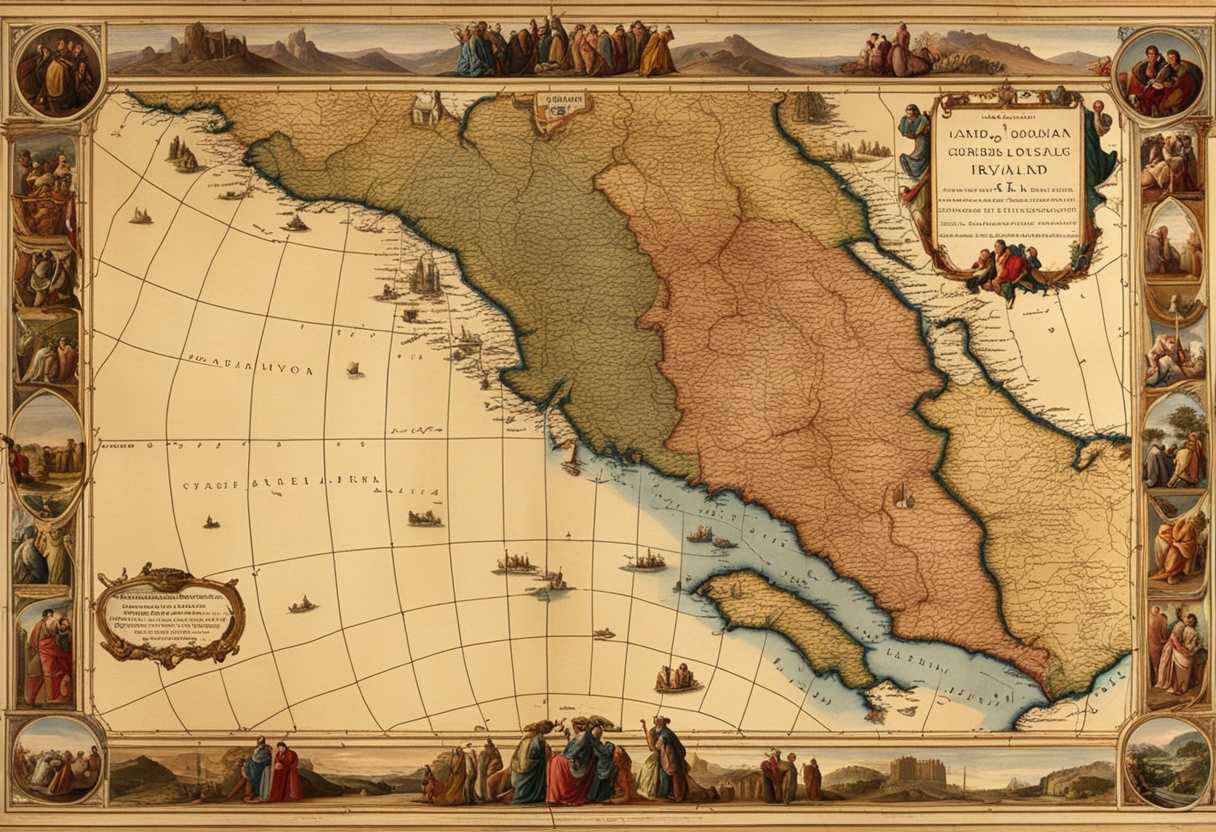
The True Meaning of Joshua 19
This chapter of the Book of Joshua details the allotment of the remaining tribal territories in the Promised Land. The author, believed to be Joshua himself, provides a comprehensive account of how the land was divided among the twelve tribes of Israel, fulfilling God’s promise to their ancestors.
The chapter begins by describing the inheritance of the tribe of Simeon, followed by the allotments for the tribes of Zebulun, Issachar, Asher, Naphtali, and Dan. The narrative then shifts to the unique situation of the tribe of Levi, who were not given a specific territory but rather were dispersed throughout the land to serve as priests and teachers of the law. As we delve into this chapter, we will witness the Israelites meticulously implementing God’s plan to take possession of the land He had promised them. This chapter serves as a testament to the faithfulness of God and the obedience of His people, as they follow the divine instructions given through Joshua, the successor to Moses.
Joshua 19:1-9
The division of the land among the tribes of Israel is witnessed in Joshua 19:1-9. The verses start by detailing how the second lottery was executed, determining the inheritance of the remaining seven tribes. The process was a crucial step in fulfilling the promises God had made to Abraham, Isaac, and Jacob regarding the land. It was essential for each tribe to receive its allotted portion as a reflection of God’s faithfulness and provision for His people.
This division of land was not only about geographic boundaries but also about fulfilling God’s plan for His people. Each tribe received a specific area that suited its size, needs, and resources. This meticulous organization reflects God’s provision and care for His people, ensuring that each tribe had what it needed to thrive in the land He had promised them. This allocation reminds us of God’s sovereignty and attention to detail in fulfilling His promises, underscoring the importance of trust and obedience in His plan.
One key aspect highlighted in these verses is the role of the tribe of Simeon. Simeon’s inheritance was within the territory of Judah, showing how God’s plans sometimes include unexpected arrangements. Simeon’s territory was a consequence of their involvement in the sin at Baal-peor (Numbers 25). This serves as a reminder of the consequences of disobedience but also of God’s mercy in still providing for His people. It is a critical lesson for us today, as we learn that while there may be consequences for our actions, God’s mercy and provision are never far from us.
The narratives in Joshua 19:1-9 portray a picture of God’s faithfulness, meticulous planning, and justice. They demonstrate how God’s promises are steadfast and how He provides for His people in ways that are tailor-made for each one’s needs. This section underscores the importance of God’s sovereignty and His fulfillment of promises, urging us to trust Him even when the path seems uncertain. Just as each tribe received its inheritance according to God’s plan, we are encouraged to seek and trust in God’s provision and guidance in our lives, knowing that He has a unique plan and purpose for each one of us.
Joshua 19:10-16
The division of territory among the tribe of Zebulun is outlined in Joshua 19:10-16. Zebulun was one of the twelve tribes of Israel, descended from Zebulun, the sixth son of Jacob and Leah. The portion allotted to Zebulun included cities like Kattath, Nahalal, Shimron, Idalah, and Bethlehem. These cities and territories were crucial for the tribe’s sustenance and livelihood, serving not only as places of settlement but also as centers of economic activity and community life.
This distribution of land among the tribes of Israel was in fulfillment of the promise that God had made to Abraham, Isaac, and Jacob to give their descendants the land of Canaan as an inheritance. It demonstrates God’s faithfulness in keeping His word and His provision for His people. The boundaries defined for each tribe were not arbitrary but rather part of God’s divine plan for the nation of Israel. This serves as a reminder of the importance of obedience to God’s commandments and the blessings that come from following His will.
Furthermore, the specific mention of Bethlehem in this passage is significant. Bethlehem would later become known as the birthplace of Jesus, fulfilling the prophecy in Micah 5:2 that the Messiah would come from Bethlehem. This connection highlights the intricate ways in which God weaves His plans throughout history, using even the smallest details to bring about His ultimate purposes. It underscores the idea that God’s sovereign will is at work, even in the allocation of land to the tribes of Israel.
The details of the division of land may seem mundane at first glance, but they are part of the larger narrative of God’s redemptive plan for His people. They remind us that God is intimately involved in the lives of His chosen ones, providing for their needs and guiding them in the fulfillment of His promises. Just as Zebulun received its allotted portion of land from God, so too can we trust in God’s provision and sovereignty in our own lives, knowing that He will lead us to the places He has prepared for us.
Joshua 19:17-23
The passage in Joshua 19:17-23 continues the distribution of the land among the tribes of Israel. Each tribe was receiving its inheritance according to the command of the Lord through Joshua. Specifically, this section focuses on the inheritance of the tribe of Issachar.
Issachar was one of the twelve tribes of Israel, descended from Issachar, the ninth son of Jacob and Leah. The territory allocated to Issachar was nestled among the territories of Zebulun and Naphtali. Their inheritance included various towns and villages, with Jezreel, Chesulloth, Shunem, Hapharaim, Shion, Anaharath, Rabbith, Kishion, Ebez, Remeth, En Gannim, En Haddah, and Beth Pazzez being among them.
This distribution of land was not just a geographical division but a spiritual one as well. It was a fulfillment of the promises God had made to the descendants of Abraham, Isaac, and Jacob. Each tribe receiving its allotted portion symbolizes God’s faithfulness in keeping His promises. It also highlights the importance of obedience and following God’s commands, as Joshua meticulously carried out the division of the land as instructed by the Lord.
Furthermore, the specific towns and regions mentioned in the passage have historical and symbolic significance. For example, Jezreel was where King Ahab and Queen Jezebel resided, infamous for their wickedness and eventual downfall as recounted in 1 Kings. Shunem was known for the Shunammite woman who showed kindness to the prophet Elisha and was blessed with a son as a result (2 Kings 4). These references serve as reminders of God’s judgment on the wicked and His blessings on the righteous.
The allocation of land to each tribe underscores the importance of unity and cooperation among God’s people. Each tribe had its own portion, yet they were interconnected and interdependent. This unity is a recurring theme throughout the Bible, emphasizing the strength that comes from standing together in faith and obedience to God. Romans 12:4-5 illustrates this concept: “For as in one body we have many members, and the members do not all have the same function, so we, though many, are one body in Christ, and individually members one of another. God’s faithfulness, the importance of obedience, and the unity of God’s people are symbolized by the detailed distribution of land to the tribes of Israel in Joshua 19. It serves as a reminder of God’s promises fulfilled and the inheritance that awaits those who remain faithful to Him. The intricate details provided in this passage not only document historical events but also convey timeless messages about God’s providence, justice, and the significance of unity in the body of Christ.
Joshua 19:24-31
The division of the land among the tribes of Israel continues in Joshua 19:24-31. The tribe of Asher is being allocated its portion of the Promised Land. This specific portion of land is described to border with other tribes like Naphtali, Zebulun, and Issachar. This meticulous allotment is a fulfillment of God’s promise to give the Israelites the land flowing with milk and honey, as mentioned numerous times in the Old Testament.
The detailed description of the boundaries and cities within the territory of Asher shows the precision and care with which God planned everything for His people. This process highlights the importance of order and obedience in the allocation and possession of their inheritance. It also emphasizes the significance of each tribe’s identity and their connection to the land given to them by God. This idea of land allotment is not merely about geographical boundaries but also about a spiritual connection to their inheritance in the Promised Land, symbolizing God’s faithfulness and providence.
The mention of various cities within the territory of Asher, such as Sidon and Tyre, holds historical and geographical weight. Sidon was a Phoenician city known for its trade and influence, and Tyre was another significant Phoenician city on the Mediterranean coast. These cities had economic and cultural significance in the region. The fact that these cities were within the assigned territory of Asher showcases God’s generosity in giving them prosperous and influential lands. God’s faithfulness in fulfilling His promises is reflected in the meticulous division of the Promised Land among the tribes of Israel in the larger context of the Bible. It underscores the importance of obedience and faith in claiming God’s promises. This division of the land also points forward to the unity and diversity present within the body of Christ, with each tribe having its unique role and contribution, yet all being part of God’s overarching plan.
The specific mention of cities like Sidon and Tyre, which were later known for their involvement in idolatry, serves as a reminder of the challenges that the Israelites would face in remaining faithful to God amidst the influence of surrounding nations. It prompts readers to consider the importance of staying rooted in God’s commands and not being swayed by the ways of the world. Joshua 19:24-31 is not merely a list of boundaries and cities; it is a testament to God’s faithfulness, provision, and the importance of obedience in receiving and cherishing the inheritance He has promised. It echoes themes of divine providence, faithfulness, and the unique roles each individual or tribe plays in the larger narrative of God’s redemptive plan throughout the Bible.
Joshua 19:32-39
The passage in Joshua 19:32-39 details the inheritance given to the tribe of Naphtali. It begins by stating that the sixth lot drawn in the land distribution fell to the tribe of Naphtali, the son of Jacob. This distribution of land was in accordance with the promises made by God to the Israelites, fulfilling the covenant made with Abraham, Isaac, and Jacob to give their descendants the land of Canaan as an inheritance. This highlights the faithfulness of God in fulfilling His promises to His people.
The passage goes on to describe the borders of Naphtali’s territory, listing the cities and villages within these boundaries, such as Kedesh, Edrei, and En Hazor. Each tribe of Israel received its own portion of land, demonstrating the importance of God’s detailed planning and provision for His people. This allocation of land also served to promote unity and order among the twelve tribes of Israel, allowing each tribe to establish its own identity and roots within the Promised Land.
One significant aspect of Naphtali’s inheritance is the inclusion of Mount Tabor within its borders, a prominent mountain in the region. Mount Tabor is associated with several significant events in the Bible, including the battle led by Deborah and Barak against the Canaanite forces under Sisera. This battle led to a great victory for the Israelites, highlighting the theme of God’s faithfulness and deliverance when His people trust and obey Him. The presence of Mount Tabor within Naphtali’s territory served as a reminder of God’s providence and victory in battles. The passage mentions the cities of Kedesh, a designated city of refuge for those who unintentionally committed manslaughter. These cities of refuge provided a place of safety for individuals seeking protection from avengers of blood, demonstrating God’s mercy and justice in providing a means for fair judgment and protection. This reflects the overarching theme of justice and mercy throughout the Bible, emphasizing God’s desire for His people to show compassion and fairness towards one another. God’s faithfulness in fulfilling His promises, the importance of unity and order among the tribes of Israel, and the themes of victory, justice, and mercy woven throughout the Bible are highlighted by the details of Naphtali’s inheritance in Joshua 19:32-39. We can glean timeless lessons about God’s provision, protection, and the establishment of His kingdom on earth through His chosen people by examining these specific verses in the broader context of the Bible.
Joshua 19:40-48
The allocation of land to the tribe of Naphtali is seen in Joshua 19:40-48. This passage demonstrates the fulfillment of God’s promise to divide the land of Canaan among the twelve tribes of Israel. Each tribe was given a specific portion of land according to God’s plan, showing His faithfulness in providing for His people and fulfilling His covenant with them.
The tribe of Naphtali received their inheritance in the northern part of the land, bordered by Zebulun to the south, Asher to the west, and the Jordan River to the east. This allotted territory provided a strategic location for Naphtali, as it included the Sea of Galilee (also known as Lake Kinneret or Lake Tiberias). The region was known for its fertility and agricultural resources, which would have been vital for sustaining the tribe.
The allocation of land to the tribes of Israel was not random; it was part of God’s divine plan for His people. The Lord allotted the nations their inheritances according to the number of the sons of God in Deuteronomy 32:8-9, but his portion is his people, Jacob his allotted heritage. This highlights the special relationship God had with the nation of Israel and the significance of the land He promised to them.
The division of the land among the tribes also reflected unity and mutual support among the Israelites. Each tribe had its own territory, but they were interconnected, relying on one another for defense and cooperation. This demonstrates the importance of unity and working together towards a common goal, which is a timeless message that resonates throughout the Bible. God’s faithfulness in keeping His promises, His wisdom in providing for His people, and the importance of unity and cooperation among believers are reminded to us as we reflect on the allocation of land to the tribe of Naphtali in Joshua 19. Just as each tribe had its own portion of land but was part of a larger community, we as Christians are called to use our individual gifts and resources for the greater good of the body of Christ (1 Corinthians 12:12-27). This passage serves as a poignant reminder of God’s provision, faithfulness, and the importance of unity in fulfilling His purposes.
Joshua 19:49-51
The verses in Joshua 19:49-51 describe the division of land among the tribes of Israel. The section begins by stating, “When they had finished dividing the land into its allotted portions, the Israelites gave Joshua son of Nun an inheritance among them.” This verse highlights the leadership role of Joshua in the distribution of the promised land. It is significant that Joshua, who had faithfully led the Israelites in conquering the land of Canaan, is also honored with a portion of land, showing that leaders should be recognized and rewarded for their service to God and His people. This act symbolizes the importance of acknowledging and valuing those who serve faithfully in leadership positions within the community of believers.
The passage goes on to mention a specific location where Joshua’s portion was allocated – Timnath Serah in the hill country of Ephraim. This particular detail is important because it demonstrates the fulfillment of God’s promise to Joshua. The land assigned to Joshua was not arbitrary, but it was a deliberate and intentional provision from God. This reinforces the principle that God is faithful to fulfill His promises to His people, and He rewards those who trust and obey Him. Joshua’s inheritance in the land of Canaan serves as a reminder that God’s blessings are not limited to just the spiritual realm, but that He also cares for the physical needs of His children.
Furthermore, the verses mention how Joshua built up the town of Timnath Serah and made it his own. This act of Joshua settling down and building a home signifies a sense of permanence and stability. It shows that Joshua was investing in his portion of the land and making it a place where he could continue to serve the Lord. This demonstrates the importance of stewardship and taking care of the blessings that God has given us. Just as Joshua took responsibility for developing his inheritance, we are called to be good stewards of the resources and opportunities that God has placed in our hands. Joshua 19:49-51 provides valuable insights into the themes of leadership, faithfulness, obedience, provision, and stewardship. Through the example of Joshua, we are reminded of the importance of honoring and rewarding leaders, trusting in God’s promises, and being good stewards of the blessings we receive. This passage encourages us to faithfully serve the Lord, knowing that He is faithful to fulfill His promises and provide for all our needs.
After Joshua 19
The Lord had now divided the land among the tribes of Israel, each receiving their allotted portion. Yet, as the sun set on this day, the people knew their work was not done. For the battles that lay ahead would test their faith and their unity. But the Lord had promised to be with them, and they would face these challenges with courage and conviction. The reverend rose to address the gathered people, his voice carrying the weight of the journey they had undertaken. “My brothers and sisters, the path before us is not an easy one. But we must remember the words of our God, who has guided us this far. For it is in times of adversity that our faith is truly tested, and it is in those moments that we must stand firm, trusting in the Lord’s plan for us.”

Reverend Michael Johnson is an experienced Church Minister with a profound expertise in spirituality and guidance. With a serene presence and a compassionate heart, he has faithfully served his congregation for over 20 years, leading them on a spiritual journey towards inner peace and enlightenment. Reverend Johnson’s extensive knowledge of religious philosophies and profound understanding of human nature have made him a trusted confidant and mentor to many, as he seamlessly weaves his profound wisdom into life teachings. Reverend Johnson’s calming demeanor and empathetic nature continue to uplift and heal souls, nurturing a sense of unity and tranquility within his community.