
Joshua 19:49-51 is about the allocation of land among the tribes of Israel according to the command of God, reflecting divine order and fulfillment of promises.
49 When they had finished distributing the several territories of the land as inheritances, the people of Israel gave an inheritance among them to Joshua the son of Nun.
50 According to the commandment of the Lord they gave him the city that he asked, Timnath-serah in the hill country of Ephraim. And he rebuilt the city and settled in it.
51 These are the inheritances that Eleazar the priest and Joshua the son of Nun and the heads of the fathers’ houses of the tribes of the people of Israel distributed by lot at Shiloh before the Lord, at the entrance of the tent of meeting. So they finished dividing the land.
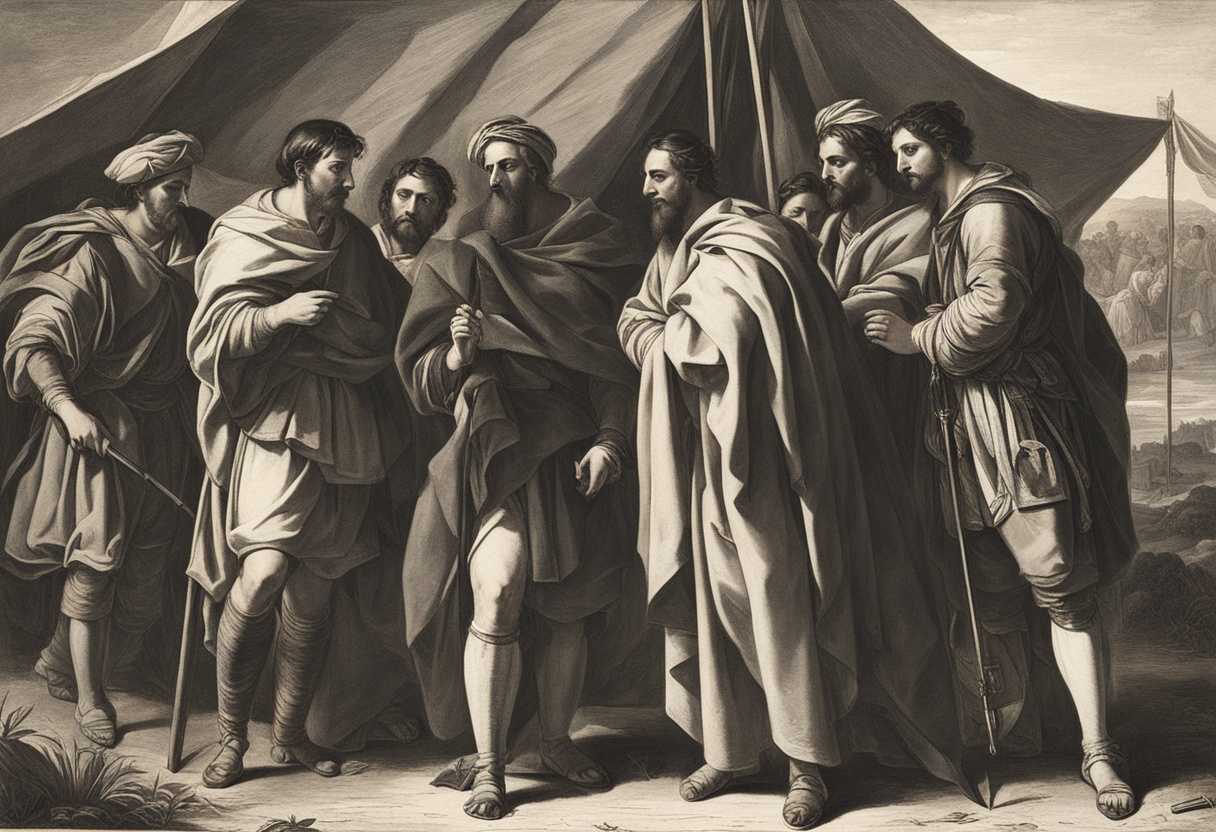
Setting the Scene for Joshua 19:49-51
In Joshua chapter 19, we find the scene where the Israelites are dividing the land among the tribes. The leaders of the tribes, including Eleazar the priest, Joshua the son of Nun, and the heads of the families of Israel, are gathered together to allocate the portions of land that the Lord had promised to them. The atmosphere is one of anticipation and gratitude as they witness the fulfillment of God’s promise to give them the land of Canaan.
The setting is a vast open space, with the leaders standing in a circle, surrounded by representatives from each tribe. The sun is setting, casting a warm glow over the land that has been conquered through years of battles and hardships. Each tribe is patiently waiting for their turn to receive their inheritance, a tangible symbol of God’s faithfulness and provision for His people.
As the leaders continue to divide the land, there is a sense of unity and purpose among the Israelites. The scene is filled with a mixture of emotions – joy for the blessings received, nostalgia for the journey that brought them to this point, and hope for the future that lies ahead. This moment in Joshua chapter 19 serves as a reminder of God’s faithfulness and the importance of trusting in His promises.
What is Joshua 19:49-51 about?
The division and allocation of land in Joshua 19:49-51 mark a significant moment in the history of the Israelites. The passage marks the fulfillment of God’s promise to the tribes of Israel, showing His faithfulness in providing for His people. The tribe of Naphtali received their portion of land, symbolizing God’s provision and care for His chosen people. This distribution of land was not random but part of God’s divine plan for each tribe to have their own inheritance.
Have you ever received something that you knew was a gift from God? Imagine the excitement and gratitude the tribe of Naphtali must have felt when they received their portion of land. This passage serves as a reminder of God’s faithfulness and provision in our own lives. He continues to provide for us today, giving us blessings and gifts according to His plan. We should reflect on our own blessings and give thanks for God’s provision in our lives.
Understanding what Joshua 19:49-51 really means
In Joshua 19:49-51, we witness the culmination of a significant moment in Israelite history as the land is divided among the tribes. This division marks the fulfillment of God’s promise to His people, showcasing His unwavering faithfulness throughout their journey. The completion of this distribution by its borders signifies the meticulous planning and providence of God in ensuring each tribe receives its designated inheritance. It serves as a reminder of God’s faithfulness in fulfilling His covenant with Israel, a testament to His reliability and trustworthiness in keeping His word.
Joshua, the faithful leader who succeeded Moses, is portrayed in these verses as a humble and servant-hearted individual. Despite his pivotal role in leading the Israelites into the Promised Land, Joshua receives his inheritance last. This act of deference highlights Joshua’s humility and servant leadership, setting an example for leaders today on the importance of putting others before oneself. It underscores the principle that true leadership is not about seeking personal gain but about serving others with humility and integrity.
The people of Israel’s gesture of giving an inheritance to Joshua exemplifies the value of honoring and respecting those who lead with dedication and righteousness. Their act reflects a sense of community spirit and unity, emphasizing the significance of acknowledging and appreciating the contributions of leaders and servants within a community. It serves as a reminder for us today to honor and support those who selflessly serve others, recognizing their efforts and sacrifices in advancing the common good.
As we reflect on these verses, we are reminded of the enduring principles of faithfulness, humility, and community that remain relevant in our lives today. Just as God fulfilled His promises to the Israelites, we are encouraged to trust in His faithfulness and provision in our own journeys. Joshua’s example of servant leadership challenges us to lead with humility and selflessness, prioritizing the needs of others above our own desires. The act of honoring and supporting leaders and servants within our communities fosters a culture of respect, unity, and appreciation for those who dedicate themselves to serving others.
In our modern context, these verses prompt us to consider how we can embody the virtues of faithfulness, humility, and community in our daily lives. They invite us to reflect on our attitudes towards leadership, service, and community engagement, urging us to emulate Joshua’s example of selfless dedication and honor towards those who lead and serve faithfully. Let us draw inspiration from Joshua’s legacy and strive to cultivate a culture of faithfulness, humility, and community in our interactions with others, guided by the timeless principles exemplified in these concluding verses of Joshua 19.
What does truly belonging to a tribe entail?
Truly belonging to a tribe entails inheriting the land designated for that tribe and dwelling in it. Receiving your allotted portion of land in this context signifies that you are an integral part of the tribe and connected to its heritage and history. It signifies not just a physical location, but a spiritual and communal bond with your fellow tribe members and ancestors.
Additionally, truly belonging to a tribe involves embracing the tribal identity and culture, actively participating in the traditions and rituals that define the tribe. It means upholding the values and beliefs that have been passed down through generations and contributing to the collective wellbeing and prosperity of the tribe as a whole. Belonging to a tribe ultimately means fully integrating into the social fabric of the community, sharing in both the joyous celebrations and the burdensome challenges that come with tribal life. It is about committing yourself to the tribe’s welfare and success, and finding your sense of purpose and belonging within the larger tapestry of the tribe’s history and destiny.
Application
Dear friend, let’s follow the example of the tribes of Israel and pursue the promises of God with determination. Let’s step into the abundance and blessings that await us, trusting in His unwavering faithfulness. Are you willing to embrace the destiny that awaits you, guiding you to fulfill your purpose in this world?

Reverend Michael Johnson is an experienced Church Minister with a profound expertise in spirituality and guidance. With a serene presence and a compassionate heart, he has faithfully served his congregation for over 20 years, leading them on a spiritual journey towards inner peace and enlightenment. Reverend Johnson’s extensive knowledge of religious philosophies and profound understanding of human nature have made him a trusted confidant and mentor to many, as he seamlessly weaves his profound wisdom into life teachings. Reverend Johnson’s calming demeanor and empathetic nature continue to uplift and heal souls, nurturing a sense of unity and tranquility within his community.