
Joshua 8:31-32 is about Joshua following the commandment of Moses to build an altar on Mount Ebal, illustrating the importance of upholding the covenant with God and seeking forgiveness for past transgressions.
31 just as Moses the servant of the Lord had commanded the people of Israel, as it is written in the Book of the Law of Moses, “an altar of uncut stones, upon which no man has wielded an iron tool.” And they offered on it burnt offerings to the Lord and sacrificed peace offerings.
32 And there in the presence of the people of Israel he wrote on the stones a copy of the law of Moses, which he had written.
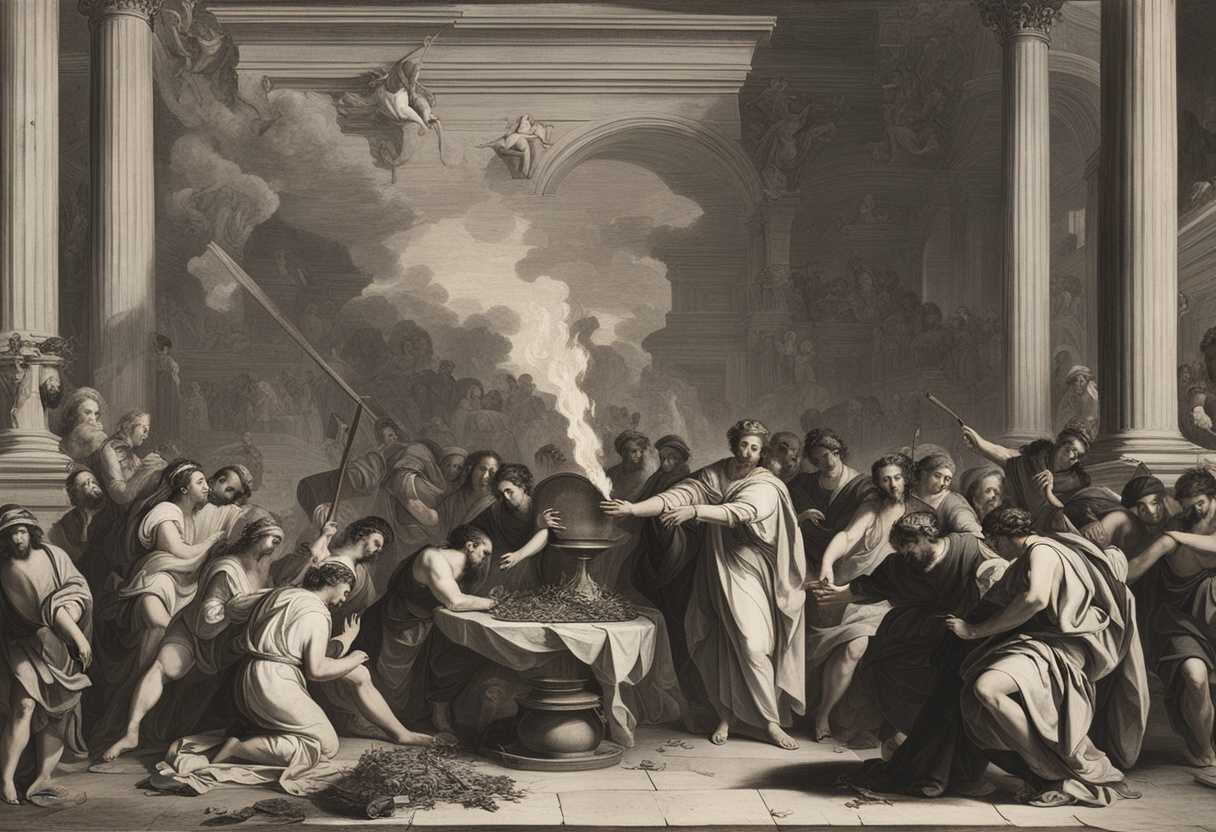
Setting the Scene for Joshua 8:31-32
The scene in Joshua 8:31-32 takes place in the land of Canaan, shortly after the Israelites have conquered the city of Ai. Joshua, the leader of the Israelites, gathers the people together, including the elders, officials, and judges, to fulfill the commandment given by Moses to write the law of Moses on stones. The setting is likely a valley or a plain, with the people standing before Mount Ebal and Mount Gerizim, as instructed in Deuteronomy 27:4-8. The elders, officials, and judges would have been chosen representatives from each tribe of Israel, responsible for ensuring that the law of Moses was upheld among the people. They would have come together to witness the writing of the law on stones, a symbolic act to reaffirm their covenant with God and their commitment to following His commandments. The atmosphere would have been solemn and reverent, as the people gathered to hear the words of the law being read aloud and inscribed for all to see.
As Joshua read the blessings and curses of the law, the people would have been reminded of the importance of obedience to God and the consequences of disobedience. The scene would have been a powerful moment of unity and dedication, as the Israelites stood together to renew their commitment to God and His covenant.
What is Joshua 8:31-32 about?
Joshua, a faithful servant of the Lord, takes a monumental step in honoring God in this verse. He is demonstrating his commitment to God’s commandments and teachings by building an altar and writing the law on stones. The act of building an altar was a common way in the Old Testament to show reverence and devotion to God. Joshua is ensuring that the people remember and follow God’s commandments by writing the law on stones.
Imagine the significance of this moment for Joshua and the Israelites. The altar symbolizes a sacred place where they can come together to worship and make offerings to the Lord. The inscribed stones serve as a visual reminder of the importance of following God’s laws and staying faithful to His teachings. Joshua’s actions not only show his own dedication to God but also serve as a powerful example for others to follow. Let us reflect on this verse and consider how we can build our own altars to the Lord in our lives through prayer, acts of service, or obedience to His word. How can we emulate Joshua’s commitment to honoring God and living out His commandments in a meaningful and lasting way?
Understanding what Joshua 8:31-32 really means
In the narrative of Joshua 8:31-32, we witness a pivotal moment where Joshua leads the Israelites in renewing their covenant with God on Mount Ebal. Here, Joshua constructs an altar of uncut stones, emphasizing purity and obedience to God’s specific instructions. The use of uncut stones symbolizes the untouched nature of God’s creation, highlighting the importance of adhering to God’s commands without human alteration. This act serves as a visual representation of the Israelites’ dedication to God and their desire to maintain a close relationship with Him.
The phrase “As Moses the servant of the Lord had commanded the Israelites” underscores the continuity of leadership and the significance of following God’s commands as conveyed through His prophets. By offering burnt offerings and fellowship offerings on the altar, the Israelites demonstrate their commitment to atonement and communion with God. These sacrifices symbolize the people’s desire to seek forgiveness and maintain a harmonious relationship with the Lord.
In the presence of the Israelites, Joshua writes a copy of the law of Moses on stones, emphasizing the importance of God’s word as a permanent guide for the community. This act mirrors Moses’ instructions in Deuteronomy 27:4-8, where the Israelites are commanded to write the law on stones coated with plaster. The correlation between these passages highlights the obedience and reverence the Israelites had for God’s commands, ensuring that His word was visible and accessible to all.
The relevance of Joshua 8:31-32 extends to people today through themes of obedience, the importance of God’s word, and communal worship. Just as Joshua followed God’s instructions, we are called to obey His word in our lives, drawing closer to Him and aligning ourselves with His will. The act of writing the law on stones emphasizes the need for God’s word to be a constant presence in our lives, guiding our actions and decisions.
Reflecting on these verses and related passages, such as Exodus 20:25 and Psalm 119:105, reminds us of the significance of God’s law as a guiding light for our lives. By engaging in communal worship and upholding God’s commandments together, we strengthen our faith and foster a sense of unity within our faith communities. Just as Joshua ensured the preservation of God’s commandments for future generations, we can uphold traditions that honor God’s word, passing down wisdom and values to inspire faith in those who come after us.
How can we prioritize God’s commandments in our lives?
We must follow the example set forth in Joshua 8:31-32 in order to prioritize God’s commandments in our lives. This passage illustrates how the people of Israel made God’s commandments a priority by gathering together to hear the words of the law that Moses had written. We show our commitment to prioritizing God’s word in our lives by actively seeking out God’s commandments and gathering together to hear and understand them.
Furthermore, prioritizing God’s commandments involves not only listening to them but also putting them into practice. The people in the passage from Joshua not only heard the words of the law, but they also followed through by carrying out the instructions given to them. We demonstrate our commitment to living in accordance with God’s will by obeying God’s commandments and applying them to our lives. We can prioritize God’s commandments and align our actions with His divine will by actively seeking out God’s commandments, hearing and understanding them, and putting them into practice in our daily lives. We can make God’s commandments a priority by incorporating them into our daily routines and decision-making processes, just as the people in Joshua 8:31-32 did.
Application
Just as we are dedicated in our work and devoted to our families, let us also be unwavering in our commitment to following God’s commands. Let’s not just listen to His words, but let’s put them into powerful action in our daily lives. Take a moment to examine how faithfully you are living out your beliefs. It’s time to walk the talk and show the world the true depth of our faith. Will you seize this chance to truly live by the teachings of the Bible?

Reverend Michael Johnson is an experienced Church Minister with a profound expertise in spirituality and guidance. With a serene presence and a compassionate heart, he has faithfully served his congregation for over 20 years, leading them on a spiritual journey towards inner peace and enlightenment. Reverend Johnson’s extensive knowledge of religious philosophies and profound understanding of human nature have made him a trusted confidant and mentor to many, as he seamlessly weaves his profound wisdom into life teachings. Reverend Johnson’s calming demeanor and empathetic nature continue to uplift and heal souls, nurturing a sense of unity and tranquility within his community.