
Judges 13:15-18 is about the divine visitation of an angel to Manoah and his wife, foretelling the birth of Samson and instructing them on how to raise him as a Nazirite dedicated to God.
15 Manoah said to the angel of the Lord, “Please let us detain you and prepare a young goat for you.”
16 And the angel of the Lord said to Manoah, “If you detain me, I will not eat of your food. But if you prepare a burnt offering, then offer it to the Lord.” (For Manoah did not know that he was the angel of the Lord.)
17 And Manoah said to the angel of the Lord, “What is your name, so that, when your words come true, we may honor you?”
18 And the angel of the Lord said to him, “Why do you ask my name, seeing it is wonderful?”
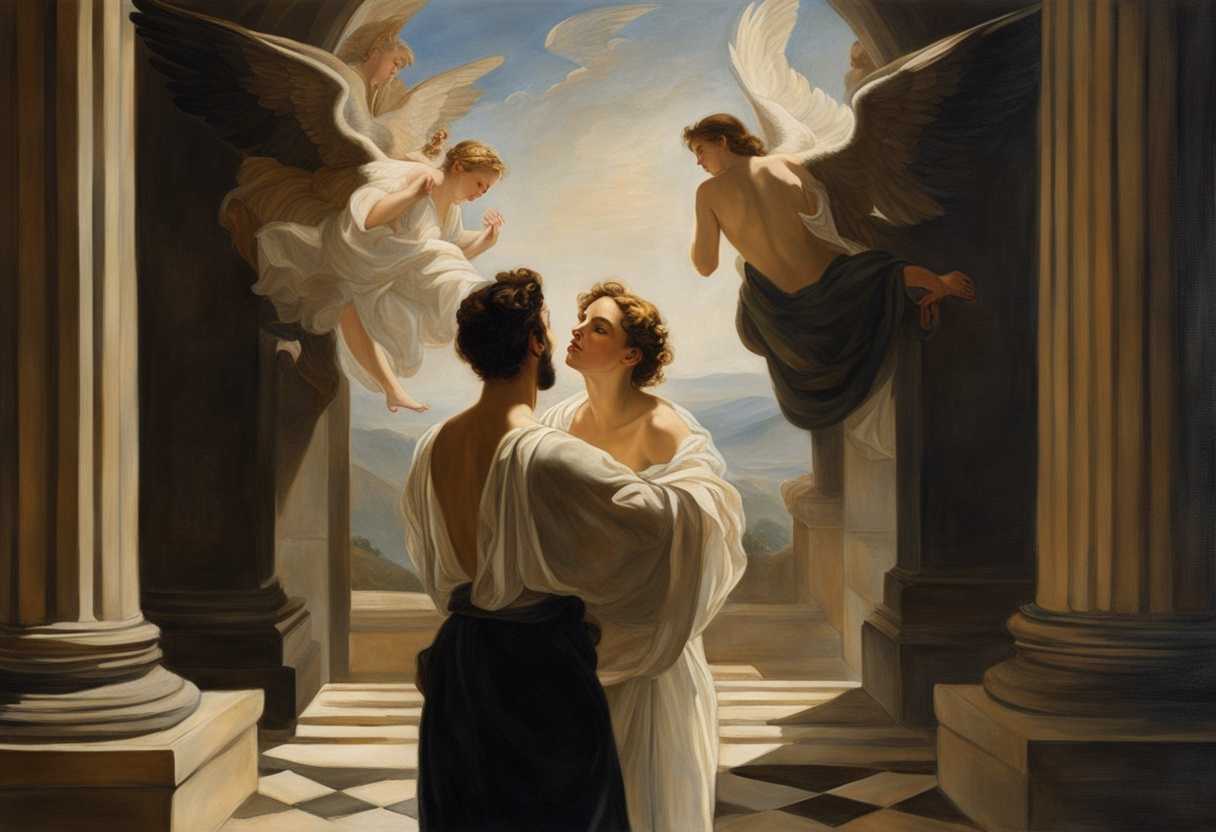
Setting the Scene for Judges 13:15-18
In Judges chapter 13, we find the scene where the Angel of the Lord appears to Manoah and his wife. Manoah and his wife, who are childless, are visited by the Angel of the Lord who tells them that they will have a son who will be a Nazirite dedicated to God from birth. The couple is astonished by this divine visitation and seeks guidance on how to raise this special child.
The scene takes place in the couple’s home, a humble dwelling in the land of Zorah. The room is filled with a sense of awe and reverence as the Angel of the Lord reveals the miraculous news to Manoah and his wife. The couple is overwhelmed by the presence of the divine messenger and listens intently as he gives them instructions on how to care for their future son.
Manoah and his wife are portrayed as faithful and obedient servants of God, chosen for a special purpose. The atmosphere is charged with a sense of wonder and anticipation as they come to terms with the extraordinary news of the impending birth of their son. The setting is simple yet profound, as the couple grapples with the weight of the responsibility that comes with raising a child destined for a unique and significant role in God’s plan.
What is Judges 13:15-18 about?
Samson’s parents are responding in a deeply spiritual and reverent way after receiving a visit from an angel of the Lord in this verse. They are demonstrating their gratitude, faith, and obedience to God by offering a sacrifice. This act of sacrifice is a common practice in many cultures and religions as a way to show devotion and submission to a higher power. It symbolizes a willingness to give up something of value as an offering to express love, honor, or thanksgiving. We can reflect on the significance of sacrifices in our own lives as we ponder this verse. Do we have the same level of faith and devotion as Samson’s parents? Are we willing to make sacrifices for the things and people we believe in? What sacrifices have we made to show our commitment to our faith, values, or relationships? Contemplating these questions can align our actions with our beliefs and deepen our spiritual connection with the divine. We should seek opportunities to demonstrate our faith and dedication in tangible ways, just as Samson’s parents offered a sacrifice to the Lord.
Understanding what Judges 13:15-18 really means
The Book of Judges provides a historical account of Israel’s time under judges before the era of kings, offering insights into the nation’s spiritual journey. In Judges 13, we delve into the narrative surrounding the birth of Samson, a pivotal figure in Israel’s history, and the encounter between his parents and the Angel of the Lord. Within this context, verses 15-18 capture a poignant moment as Manoah engages with the Angel, expressing a desire to honor Him and understand His identity.
Manoah’s gesture of hospitality, requesting to detain the Angel and prepare a meal, reflects the cultural norms of the time, where offering hospitality to guests, especially divine messengers, was a sign of respect and honor. This act sets the stage for a deeper interaction between Manoah and the Angel, revealing profound truths about the divine nature of the messenger. When Manoah inquires about the Angel’s name, the response, “Why do you ask my name, seeing it is wonderful?” conveys a sense of awe and mystery. The term “wonderful” hints at the extraordinary and miraculous nature of the Angel, suggesting a divine essence beyond human comprehension.
Drawing parallels to other biblical passages enriches our understanding of the significance of the Angel’s response. In Isaiah 9:6, where the Messiah is described as “Wonderful,” we see a connection between the Angel of the Lord and the divine nature of Christ. Similarly, in Exodus 3:14, God’s revelation of His name to Moses as “I AM WHO I AM” underscores the ineffable and transcendent quality of God, mirroring the Angel’s enigmatic response to Manoah.
The relevance of this passage extends to contemporary life, prompting us to reflect on our approach to the divine. In a world that often seeks to demystify and control everything, the encounter between Manoah and the Angel reminds us of the importance of humility, trust, and reverence before God. It invites us to embrace the mystery of God’s nature, acknowledging that there are aspects of Him that surpass our understanding, yet calling us to trust in His wisdom and sovereignty.
Anecdotes can further illuminate the message of this passage. Just as a child may struggle to grasp the complexities of the internet, we too may find God’s ways beyond our comprehension. Yet, like the woman who learned to trust in God’s plan despite life’s uncertainties, we are encouraged to lean into faith, finding peace and deeper connection with the divine. Ultimately, the interaction between Manoah and the Angel in Judges 13:15-18 serves as a poignant reminder of the beauty and depth found in reverent trust and humility before the wondrous nature of God.
What does it mean to encounter the presence of God?
To encounter the presence of God is to feel a sense of reverence, awe, and humility in His presence. It is a profound experience where one’s heart is deeply moved by the Almighty’s divine presence. This encounter often brings about a deep awareness of God’s power and sovereignty, leading to a recognition of one’s own smallness and dependence on Him. Manoah and his wife encounter the presence of God through the visitation of an angel in Judges 13:15-18. The presence of God brings a sense of fear and wonder, prompting Manoah and his wife to respond with humility and reverence. This encounter serves as a reminder of God’s holiness and the need for human beings to approach Him with a sense of respect and awe.
Encountering the presence of God can be a life-changing experience that leaves a lasting impact on an individual. It often leads to a deeper understanding of God’s character, a greater sense of intimacy with Him, and a renewed commitment to serving and following Him faithfully.
Application
In this digital age, let’s learn from Manoah’s example of humility and obedience. Trust in God’s plan, listen to His guidance, and act decisively. Will you also answer with a heart ready to serve, like Manoah did?

Reverend Michael Johnson is an experienced Church Minister with a profound expertise in spirituality and guidance. With a serene presence and a compassionate heart, he has faithfully served his congregation for over 20 years, leading them on a spiritual journey towards inner peace and enlightenment. Reverend Johnson’s extensive knowledge of religious philosophies and profound understanding of human nature have made him a trusted confidant and mentor to many, as he seamlessly weaves his profound wisdom into life teachings. Reverend Johnson’s calming demeanor and empathetic nature continue to uplift and heal souls, nurturing a sense of unity and tranquility within his community.