
1 After some days, at the time of wheat harvest, Samson went to visit his wife with a young goat. And he said, “I will go in to my wife in the chamber.” But her father would not allow him to go in.
2 And her father said, “I really thought that you utterly hated her, so I gave her to your companion. Is not her younger sister more beautiful than she? Please take her instead.”
3 And Samson said to them, “This time I shall be innocent in regard to the Philistines, when I do them harm.”
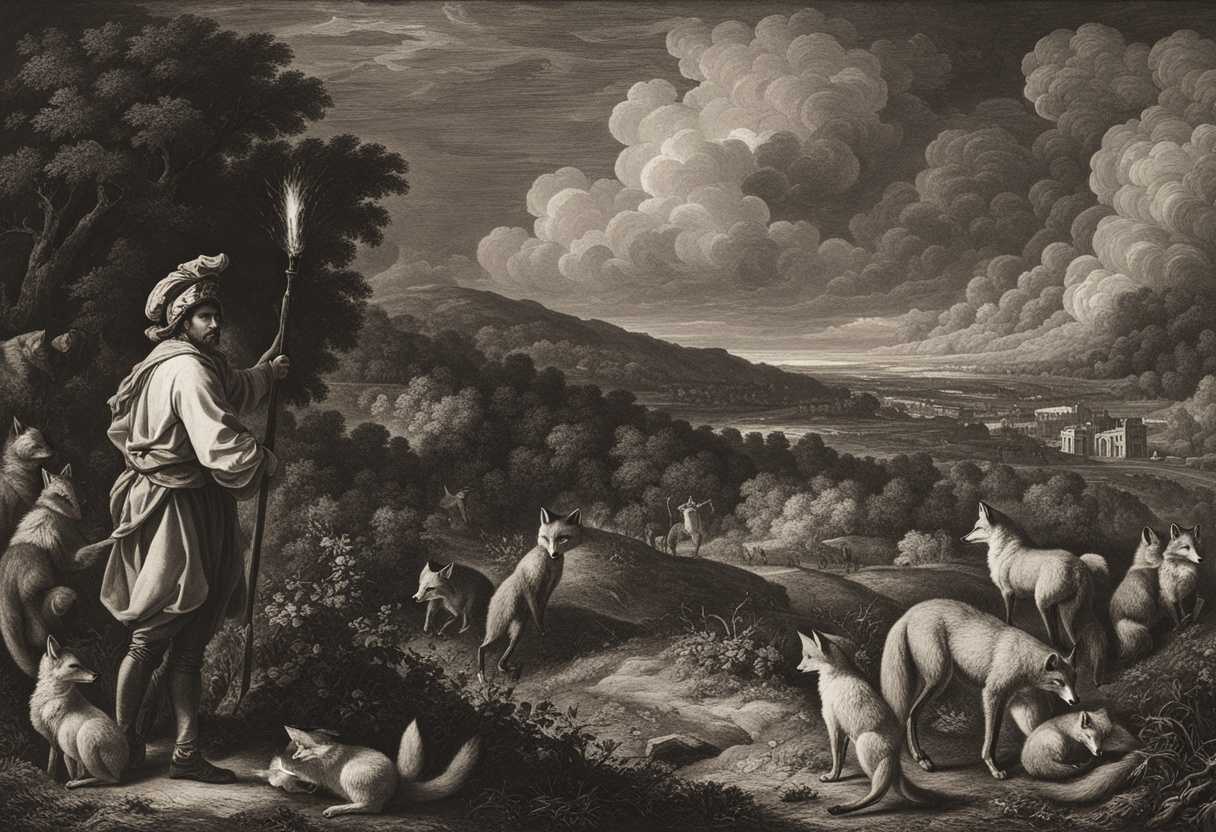
4 So Samson went and caught 300 foxes and took torches. And he turned them tail to tail and put a torch between each pair of tails.
5 And he set the torches on fire and let them go into the standing grain of the Philistines and set fire to the stacked grain and the standing grain, as well as the olive orchards.
6 Then the Philistines said, “Who has done this?” And they said, “Samson, the son-in-law of the Timnite, because he has taken his wife and given her to his companion.” And the Philistines came up and burned her and her father with fire.
7 And Samson said to them, “If this is what you do, I swear I will be avenged on you, and after that I will quit.”
8 And he struck them hip and thigh with a great blow, and he went down and stayed in the cleft of the rock of Etam.
9 Then the Philistines went up and encamped in Judah and made a raid on Lehi.
10 And the men of Judah said, “Why have you come up against us?”
11 Then 3,000 men of Judah went down to the cleft of the rock of Etam, and said to Samson, “Do you not know that the Philistines are rulers over us? What then is this that you have done to us?” And he said to them, “As they did to me, so have I done to them.”
12 And they said to him, “We have come down to bind you, that we may give you into the hands of the Philistines.” And Samson said to them, “Swear to me that you will not attack me yourselves.”
13 And they said to him, “No; we will bind you fast and give you into their hand, but we will surely not kill you.” So they bound him with two new ropes and brought him up from the rock.
14 When he came to Lehi, the Philistines came shouting to meet him. Then the Spirit of the Lord rushed upon him, and the ropes that were on his arms became as flax that has caught fire, and his bonds melted off his hands.
15 And he found a fresh jawbone of a donkey, and put out his hand and took it, and with it he struck 1,000 men.
16 Then Samson said, “With the jawbone of a donkey, heaps upon heaps, with the jawbone of a donkey have I struck down a thousand men.”
17 And when he had finished speaking, he threw away the jawbone out of his hand. And that place was called Ramath-lehi.
18 And he was very thirsty, and he called upon the Lord and said, “You have granted this great salvation by the hand of your servant, and shall I now die of thirst and fall into the hands of the uncircumcised?”
19 And God split open the hollow place that is at Lehi, and water came out from it. And when he drank, his spirit returned, and he revived. Therefore the name of it was called En-hakkore; it is at Lehi to this day.
20 And he judged Israel in the days of the Philistines twenty years.
The True Meaning of Judges 15
The book of Judges was written by an unknown author, likely a prophet or scribe, who chronicled the history of the Israelites after the death of Joshua. This chapter focuses on the continued conflict between the Israelites and the Philistines, and the pivotal role played by the mighty judge Samson. Samson’s thirst for vengeance against the Philistines leads to a series of dramatic events in this passage. The chapter foreshadows Samson’s remarkable strength and his unwavering determination to defend his people, even in the face of overwhelming odds. We delve into the text as Samson’s actions, both heroic and reckless, shape the course of the Israelites’ struggle for independence.
The chapter also highlights the complex relationship between Samson and the Philistines, as well as the spiritual implications of his choices. We’ll find echoes of earlier biblical narratives, such as the story of Samson’s birth and the prophecy concerning his role as a deliverer of Israel (Judges 13). By examining this passage, a deeper understanding of the challenges faced by the Israelites during this tumultuous period and the pivotal role of Samson in their journey towards freedom can be gained.
Judges 15:1-5
Samson took a young goat and went to visit his wife at the time of wheat harvest in Judges 15:1-5. He said, ‘I’m going to my wife’s room.’ But her father would not let him go in. ‘I was so sure you hated her,’ he said, ‘that I gave her to your companion. Isn’t her younger sister more attractive? Take her instead.’ Samson said to them, ‘This time I have a right to get even with the Philistines; I will really harm them.’ So he went out and caught three hundred foxes and tied them tail to tail in pairs. He then fastened a torch to every pair of tails, lit the torches and let the foxes loose in the standing grain of the Philistines. He burned up the shocks and standing grain, together with the vineyards and olive groves. Samson, one of the judges of Israel, faces a personal betrayal from his wife’s father and seeks revenge on the Philistines in this section of Judges 15. The story begins with Samson wanting to see his wife, but her father deceives him by giving her away to another man, thinking Samson had rejected her. This act not only dishonors Samson but also showcases the lack of regard for the sanctity of marriage and relationships during that time.
Samson’s reaction to this betrayal is significant as it demonstrates his fiery temperament and his desire for retaliation. He inflicts severe damage on the crops of the Philistines by catching 300 foxes and setting them on fire. This action highlights Samson’s strength and his ability to use unconventional methods to defeat his enemies. However, it also reveals a reckless side to him, as he causes harm not only to the Philistines but also to their property.
This event in Samson’s life showcases a cycle of vengeance and retaliation that runs throughout the book of Judges. It reflects the theme of the Israelites’ struggle with obedience to God’s laws and their tendency to seek revenge rather than relying on God for justice. Samson’s actions emphasize the consequences of acting out of anger and the importance of seeking God’s guidance in times of conflict.
Furthermore, this incident foreshadows Samson’s later interactions with the Philistines, culminating in his ultimate downfall due to his relationship with Delilah and his pride. The story of Samson serves as a cautionary tale about the dangers of uncontrolled passion and the necessity of relying on God’s strength rather than our own. It also prompts readers to reflect on the consequences of our actions and the importance of forgiveness and reconciliation in resolving conflicts, rather than perpetuating cycles of violence and retribution.
Judges 15:6-8
Samson, a prominent figure in the Book of Judges, experiences a dramatic and intense event in Judges 15:6-8. The section begins with the Philistines learning that Samson had retaliated against them for the treachery they had inflicted upon him and his wife. The Philistines, seeking vengeance, incited the men of Judah to hand over Samson to them. This demonstrates the complex relationship between the Israelites and the Philistines during this period of biblical history, marked by animosity and conflict.
Samson’s own people, the men of Judah, are in a position of leadership and authority, yet they choose to act in a way that goes against the interest and well-being of one of their own. This betrayal by his own countrymen accentuates the isolation and the burden Samson carries as a reluctant and flawed hero chosen by God to deliver his people. It also serves as a cautionary tale about the dangers of turning against one’s own kin and failing to stand in solidarity with those in need.
The men of Judah tie up Samson with new ropes and prepare to hand him over to the Philistines. The Spirit of the Lord comes powerfully upon Samson as they approach him, empowering him to break free from the ropes and wield the jawbone of a donkey as a weapon against his enemies. This event underscores the recurring theme of divine intervention in the Book of Judges, where God raises up individuals like Samson to overcome seemingly insurmountable challenges and accomplish great feats through His strength.
Samson’s use of the jawbone as a weapon not only showcases his physical strength but also serves as a symbolic reminder of the unconventional ways in which God works through His chosen instruments. God demonstrates His power to work through the weak and the unlikely to achieve His purposes by utilizing a seemingly ordinary and insignificant object like a jawbone, ultimately pointing to the overarching theme of God’s sovereignty and His ability to use the foolish things of the world to shame the wise (1 Corinthians 1:27). Judges 15:6-8 captures a pivotal moment in the life of Samson, highlighting themes of betrayal, divine intervention, and the unconventional ways in which God fulfills His plans through flawed individuals. It serves as a reminder of the importance of staying faithful to one another, relying on God’s strength in times of adversity, and trusting in His ability to bring about deliverance in unexpected ways.
Judges 15:9-13
Samson retaliated against the Philistines for their deceitful actions in Judges 15:9-13. The verse begins with the Philistines gathering to seek retribution from the tribe of Judah for Samson’s actions against them. They are poised for battle, ready to bring harm to the people of Judah who were essentially shielding Samson, their deliverer appointed by God. The men of Judah, fearing the military might of the Philistines, seem to choose their own safety and protection over standing by Samson, which leads to them betraying him to the enemies.
Samson allows himself to be bound by his fellow Israelites from Judah to be handed over to the Philistines. It is a situation where the very people Samson was raised to protect betray him to his enemies. The image of Samson willingly allowing himself to be bound and handed over to the Philistines is symbolic of Jesus Christ’s submission to His captors before His crucifixion. Despite having the power to fight back, Samson chooses to submit to the unjust actions of his own people, ultimately fulfilling God’s plan for him to confront the Philistines and deliver Israel.
When the Philistines come to hand him over, the Spirit of the Lord rushes upon Samson, empowering him to break free from the ropes that bound him. This moment highlights the divine strength that is with Samson, showing that his supernatural abilities are not merely physical but are a direct result of God’s presence with him. The breaking of the ropes signifies not just a physical release but also a symbol of God’s deliverance and freedom in the face of betrayal and oppression.
With the jawbone of a donkey, Samson strikes down a thousand men of the Philistines. This incredible feat demonstrates the extraordinary strength and power that God has bestowed upon Samson. The choice of weapon, a humble jawbone of a donkey, also underscores the idea that it is not through conventional weapons or human strength that victory is won, but through the strength and power of God alone. This event echoes other instances in the Bible where God uses unconventional means and unlikely individuals to achieve His purposes, emphasizing that His ways are beyond human understanding. Samson’s physical strength and unwavering faith in God’s provision, as well as his commitment to fulfilling the purpose for which he was called, are evident in this passage. Despite betrayal and being outnumbered, Samson emerges victorious through the empowerment of the Spirit of the Lord. The timeless message here is that God is faithful to His promises and will empower and deliver His chosen ones, even in the face of betrayal and seemingly insurmountable odds. Samson’s story reminds us of the importance of staying true to our calling, relying on God’s strength rather than our own, and trusting in His faithfulness to bring about deliverance.
Judges 15:14-17
Samson demonstrates his incredible strength in Judges 15:14-17. Let’s break down these verses into important sections to provide a more in-depth commentary.
Verse 14 begins with Samson finding a fresh jawbone of a donkey, and he uses it as a weapon to strike down a thousand men. This scene is a vivid demonstration of God’s empowerment of Samson. The fact that Samson uses the jawbone of a donkey, which is an unconventional weapon, underscores the miraculous nature of his strength. It also echoes the theme of God using the weak or the unlikely to achieve great things, a motif seen throughout the Bible. Despite the odds being against him, Samson emerges victorious through the strength God has bestowed upon him.
Moving on to verse 15, we see that after this remarkable feat, Samson composes a poetic tribute to his victory. This moment not only showcases Samson’s physical strength but also his artistic ability and creativity in composing poetry. It’s interesting to note this dual aspect of Samson – not just a warrior, but also a poet. This demonstrates that God’s gifts to individuals are multi-faceted, and He equips them with various talents to fulfill His purposes. Samson acknowledges in verse 16 that his victory was only possible because God provided him with the strength to achieve it. This acknowledgment of God’s role in his triumph is crucial. It shows humility on Samson’s part and recognizes that his strength is not merely his own, but a gift from God. This serves as a reminder to us all that our abilities and accomplishments ultimately come from God, and we should always give Him the glory.
Finally, verse 17 ends with a poignant statement that Samson throws down the jawbone after the battle and names the place Ramath Lehi, which means “Jawbone Hill.” This act of throwing down the jawbone signifies the end of the battle and also perhaps symbolizes Samson letting go of the violence and destruction that accompanied it. The naming of the place Ramath Lehi serves as a memorial to this event, reminding future generations of God’s deliverance through Samson’s hands. Samson’s incredible strength and victory showcased in Judges 15:14-17 highlight themes of God’s empowerment, using the unlikely for His purposes, acknowledging God’s role in our successes, and giving Him the glory. These timeless messages continue to resonate with readers today, encouraging us to rely on God’s strength, talents, and guidance in all our endeavors.
Judges 15:18-20
He cried out to the Lord because he was very thirsty, saying, “You have given your servant this great victory.” Must I now die of thirst and fall into the hands of the uncircumcised?’ Then God opened up the hollow place in Lehi, and water came out of it. When Samson drank, his strength returned and he revived. So the spring was called En Hakkore, and it is still there in Lehi. Samson led Israel for twenty years in the days of the Philistines.”
This passage provides a glimpse into the character of Samson, a judge chosen by God to deliver the Israelites from the oppression of the Philistines. Despite his many flaws and impulsive decisions, such as his marriage to foreign women, Samson is depicted here as a man who acknowledges his dependence on God. Samson cries out to the Lord for help in his moment of need when faced with thirst and the prospect of falling into enemy hands. This illustrates the importance of turning to God in times of trouble and trusting in His provision.
The miracle of water gushing forth from the hollow place in Lehi serves as a direct answer to Samson’s plea for help. God not only provides for Samson’s physical need by quenching his thirst but also restores his strength. This water source is named En Hakkore, which means “caller’s spring” or “spring of the one who called,” commemorating the moment when Samson called upon the Lord and received His intervention.
The significance of this event goes beyond just the physical provision of water. It also symbolizes God’s faithfulness to His chosen servant and His readiness to come to the aid of those who trust in Him. The fact that the spring was still there in Lehi even after the events of Samson’s time implies a lasting impact of God’s intervention and blessings.
Furthermore, the closing statement that Samson led Israel for twenty years in the days of the Philistines highlights the period of peace and freedom that the Israelites experienced under Samson’s leadership. Despite his personal shortcomings, God used Samson to deliver His people and grant them a reprieve from their enemies for a significant period. This demonstrates God’s ability to work through imperfect individuals to achieve His purposes and bring about deliverance for His people. God provides for His people in their time of need in similar instances echoed by this passage in the broader context of the Bible. For instance, in Exodus 17:6, God miraculously brings forth water from a rock to quench the thirst of the Israelites in the wilderness. These instances serve as reminders of God’s power, faithfulness, and willingness to intervene on behalf of those who call upon Him in faith.
After Judges 15
Samson’s anger burned, and he unleashed a devastating attack on the Philistines. He caught three hundred foxes, tied their tails together in pairs, and set them ablaze. The fire swept through the Philistine fields, destroying their crops and vineyards. The Philistines retaliated, burning Samson’s wife and her father to death. Samson’s thirst for vengeance only grew stronger.
Yet, even in the midst of this cycle of violence, the hand of the Lord was at work. For as the Philistines sought to capture Samson, the Spirit of the Lord empowered him to slay a thousand men with the jawbone of a donkey. Samson’s strength and the Lord’s protection manifested in that moment. But the story does not end there. The Lord had a new plan in store as Samson’s triumph turned to despair, one that would test Samson’s faith and lead him down an unexpected path.

Reverend Michael Johnson is an experienced Church Minister with a profound expertise in spirituality and guidance. With a serene presence and a compassionate heart, he has faithfully served his congregation for over 20 years, leading them on a spiritual journey towards inner peace and enlightenment. Reverend Johnson’s extensive knowledge of religious philosophies and profound understanding of human nature have made him a trusted confidant and mentor to many, as he seamlessly weaves his profound wisdom into life teachings. Reverend Johnson’s calming demeanor and empathetic nature continue to uplift and heal souls, nurturing a sense of unity and tranquility within his community.