
Judges 15:9-13 is about Samson retaliating against the Philistines for burning his wife and her father by striking them with great vengeance and delivering retribution for the harm done to him.
9 Then the Philistines went up and encamped in Judah and made a raid on Lehi.
10 And the men of Judah said, “Why have you come up against us?” They said, “We have come up to bind Samson, to do to him as he did to us.”
11 Then 3,000 men of Judah went down to the cleft of the rock of Etam, and said to Samson, “Do you not know that the Philistines are rulers over us? What then is this that you have done to us?” And he said to them, “As they did to me, so have I done to them.”
12 And they said to him, “We have come down to bind you, that we may give you into the hands of the Philistines.”
13 And they said to him, “No; we will bind you fast and give you into their hand, but we will surely not kill you.” So they bound him with two new ropes and brought him up from the rock.
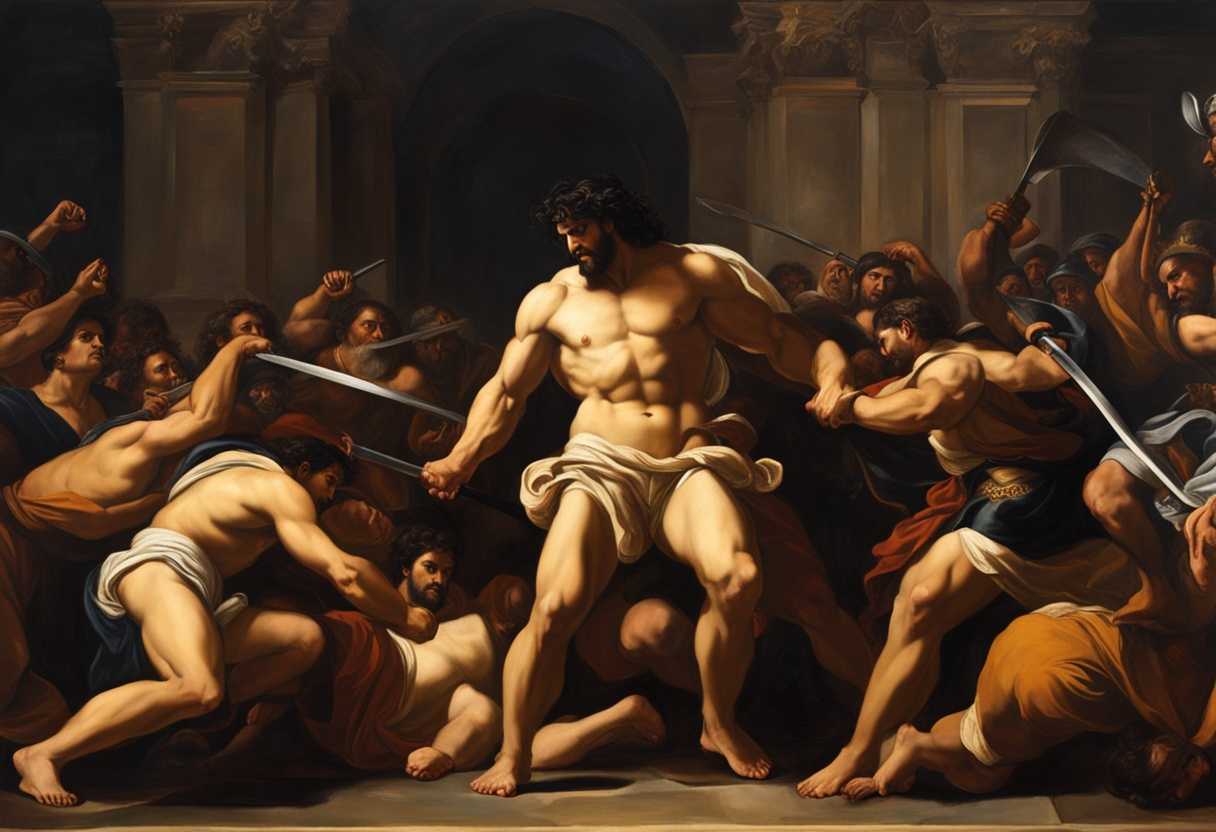
Setting the Scene for Judges 15:9-13
In the scene described in Judges 15:9-13, we find Samson, a powerful and impulsive judge of Israel, in a tense situation. Samson had recently set foxes on fire and released them into the Philistines’ fields, causing destruction and retaliation from the Philistines. Seeking to capture Samson, the Philistines gathered a large army and marched into the territory of Judah.
As the Philistines approached, the men of Judah, feeling the pressure of the impending conflict, decided to take matters into their own hands. They sought to appease the Philistines by capturing Samson and handing him over to them. In a display of betrayal, three thousand men of Judah went to the rock of Etam where Samson was staying and bound him with two new ropes. Despite being outnumbered and betrayed by his own people, Samson’s strength and determination remained unwavering.
The scene is set in the rocky terrain near the town of Etam, with the Philistine army looming in the distance. The tension is palpable as Samson, bound and surrounded by his own countrymen who have turned against him, prepares to face the Philistine threat head-on. The betrayal and impending battle create a dramatic backdrop for the unfolding events, showcasing the complex dynamics of power, loyalty, and divine intervention in the narrative of Samson’s life.
What is Judges 15:9-13 about?
This verse is a powerful example of the unexpected ways in which God can work through individuals to achieve great victories. Samson, a strong and fearless warrior chosen by God, demonstrates that with faith and obedience, even the most unconventional weapons can be used to defeat seemingly insurmountable enemies. The jawbone of a donkey, a simple and unassuming object, becomes a tool in the hands of God to bring about a miraculous victory.
Imagine the courage and faith it must have taken for Samson to face an entire army armed with only a jawbone. This verse reminds us that God can use ordinary people to accomplish extraordinary things when they trust in Him completely. It challenges us to consider what “jawbones” we may possess in our own lives – seemingly insignificant talents or resources – that God could use to bring about his purposes in ways we never imagined. This verse ultimately serves as a powerful reminder of the limitless power of God and the importance of trusting in His plan, even when it seems impossible or illogical to our human understanding.
Understanding what Judges 15:9-13 really means
In the story of Samson, a powerful judge of Israel, we witness a tale of conflict and strategy. After Samson’s act of burning the Philistines’ crops, tensions escalate, leading to the Philistines’ pursuit of him. The Philistines’ aggressive move to camp near Lehi in Judah sets the stage for a confrontation that the men of Judah fear. Their question, “Why have you come to fight us?” reveals their apprehension and desire to avoid further conflict by handing over Samson. This moment captures the complexities of power dynamics and the fear that can drive people to make difficult decisions.
The Philistines’ singular focus on capturing Samson underscores his significance as a threat to them. Samson’s plea to the men of Judah not to kill him themselves showcases his strategic thinking and the trust issues he faces. This negotiation for his safety amidst the looming threat demonstrates the delicate balance between strength and vulnerability. It prompts us to consider how we navigate trust and betrayal in our own relationships, both personal and professional.
In the broader biblical context, Samson’s actions echo themes of conflict and divine intervention seen throughout the Old Testament. His story intertwines with other narratives of struggle and triumph, such as his earlier acts of vengeance against the Philistines and his ultimate sacrifice for his people. The passage resonates with Exodus 14:14, reminding believers of God’s promise to fight for them, emphasizing the importance of faith and reliance on divine strength in times of trouble.
Reflecting on Samson’s predicament, we can draw parallels to contemporary challenges. Imagine a leader facing opposition from a formidable adversary, with their own community hesitant to support them out of fear. The leader’s negotiation for safety mirrors Samson’s actions, illustrating the complexities of leadership and the necessity of wisdom in navigating conflicts. This anecdote serves as a poignant reminder of the enduring lessons embedded in biblical narratives and their relevance to our lives today.
In conclusion, Judges 15:9-13 offers insights into the dynamics of conflict, the significance of strategic decision-making, and the essential role of trust in leadership. It encourages us to seek divine guidance and strength when faced with adversity, reminding us that faith and wisdom can pave the way to victory even in the most challenging circumstances. Samson’s story serves as a timeless reminder of the intricate interplay between human agency and divine providence, urging us to approach our own trials with courage, discernment, and a steadfast reliance on God’s guidance.
How can we use our spiritual gifts for good?
One way we can use our spiritual gifts for good is by recognizing and embracing them wholeheartedly. We can harness our spiritual gifts and talents to accomplish great things for the betterment of ourselves and others, as the verse suggests. We can become more effective in serving our communities and fulfilling our purpose by acknowledging and utilizing our gifts. We can use our spiritual gifts for good by relying on faith and trusting in the guidance of a higher power. We too can lean on our faith to provide us with the courage, wisdom, and perseverance needed to utilize our gifts for the greater good, just as Samson called upon the Lord for strength in the verse. We can navigate challenges and obstacles with grace and humility by surrendering to divine guidance, ultimately allowing our spiritual gifts to shine through in all that we do.
Lastly, we can use our spiritual gifts for good by being open to collaboration and partnership with others. Samson’s family handed him over to the enemy in the verse, teaching us the importance of surrounding ourselves with a supportive community that uplifts and encourages us in our endeavors. We can amplify the impact of our collective abilities and contribute positively to the world around us by working together with others who complement our gifts and strengths.
Application
In the fast-paced world we live in, facing uncertainties is like tackling hurdles at work or in our families. Just as Samson sought God’s guidance in a time of chaos, we too can find strength and clarity by trusting in His power. Will you choose to stand firm in faith like Samson and take action today? Let’s embrace the unshakeable strength that comes from putting our trust in God, and bravely confront life’s challenges head-on.

Reverend Michael Johnson is an experienced Church Minister with a profound expertise in spirituality and guidance. With a serene presence and a compassionate heart, he has faithfully served his congregation for over 20 years, leading them on a spiritual journey towards inner peace and enlightenment. Reverend Johnson’s extensive knowledge of religious philosophies and profound understanding of human nature have made him a trusted confidant and mentor to many, as he seamlessly weaves his profound wisdom into life teachings. Reverend Johnson’s calming demeanor and empathetic nature continue to uplift and heal souls, nurturing a sense of unity and tranquility within his community.