
Judges 9:6-15 is about the parable of the trees, where the trees go to choose a king and the olive tree, fig tree, and vine decline the offer, while the bramble accepts, symbolizing the selfish ambition and destructive nature of power seekers.
6 And all the leaders of Shechem came together, and all Beth-millo, and they went and made Abimelech king, by the oak of the pillar at Shechem.
7 Now when they told Jotham, he went and stood on top of Mount Gerizim and lifted his voice and cried out.
8 The trees once went out to anoint a king over them, and they said to the olive tree, ‘Reign over us.’
9 But the olive tree said to them, ‘Shall I leave my abundance, by which gods and men are honored, and go hold sway over the trees?’
10 And the trees said to the fig tree, ‘You come and reign over us.’
11 But the fig tree said to them, ‘Shall I leave my sweetness and my good fruit and go hold sway over the trees?’
12 And the trees said to the vine, ‘You come and reign over us.’
13 “But the vine said to them, ‘Shall I leave my wine that cheers God and men and go hold sway over the trees?’”
14 Then all the trees said to the bramble, ‘You come and reign over us.’
15 And the bramble said to the trees, ‘If in good faith you are anointing me king over you, then come and take refuge in my shade, but if not, let fire come out of the bramble and devour the cedars of Lebanon.’
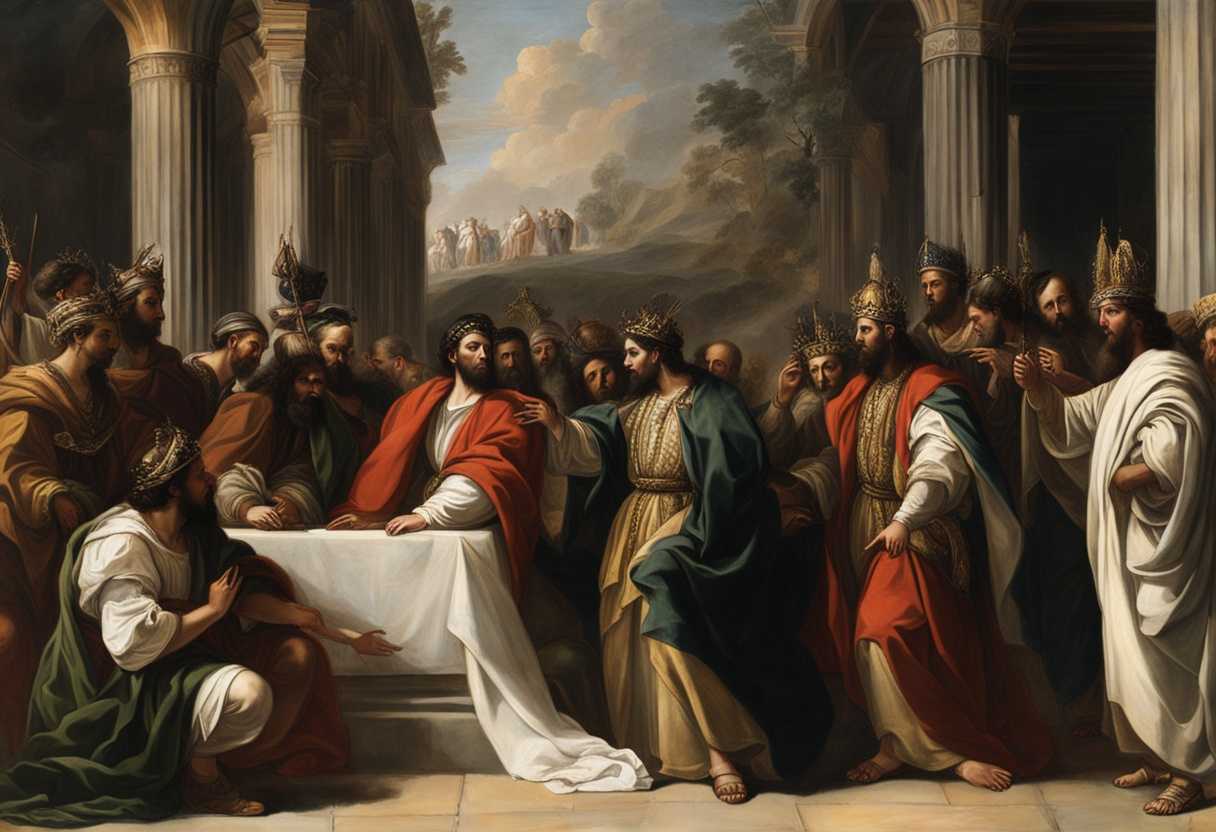
Setting the Scene for Judges 9:6-15
In Judges chapter 9, we find the scene set in the city of Shechem, a significant location in ancient Israel. The leaders of Shechem and the surrounding region have gathered at the oak of the pillar in Shechem to discuss the future leadership of their land. Among those present are Abimelech, the son of Gideon, and his brothers. Abimelech is ambitious and seeks to become the ruler of Shechem, following in his father’s footsteps.
The leaders are deliberating on who should lead them when Abimelech steps forward with a cunning plan. He convinces the people of Shechem that it would be better for one ruler to govern them rather than the seventy sons of Gideon. Abimelech’s persuasive speech wins over the crowd, and they agree to support him in his bid for power. The atmosphere is tense as alliances are formed and loyalties are tested in the shade of the ancient oak tree.
As the discussion unfolds, the leaders are swayed by Abimelech’s promises of prosperity and security under his rule. The scene is filled with intrigue and political maneuvering as Abimelech lays the groundwork for his ascent to power, setting the stage for the events that will follow in the narrative of Judges chapter 9.
What is Judges 9:6-15 about?
The parable of the trees is a powerful metaphor that conveys a profound message about leadership and authority. The trees in this parable seek a king to rule over them, showing their desire for guidance and structure. However, when the trees approach the olive tree, the fig tree, and the vine, each of these trees refuses to take on the role of king. This rejection of leadership from unworthy sources ultimately results in the trees turning to the bramble to rule over them. The bramble is a symbol of lack of authority, weakness, and pride. The bramble brings destruction and harm to the trees.
This parable serves as a cautionary tale about the importance of choosing leaders wisely and being wary of those who seek power for selfish or malicious purposes. It illustrates the consequences of putting trust in unworthy and unqualified leaders, as they can lead to chaos, devastation, and harm. We can avoid the destructive outcomes that come from placing power in the wrong hands by rejecting leadership from sources that do not have the best interests of the community at heart. Reflect on the parable of the trees and consider the qualities and intentions of those in leadership positions around you. Who are the olive trees, fig trees, vines, and brambles in your life and society? And most importantly, what kind of leader are you choosing to follow or become?
Understanding what Judges 9:6-15 really means
In the narrative of Abimelech’s quest for kingship in Judges 9:6-15, we witness a tale of ambition, betrayal, and consequences. Abimelech, the son of Gideon, eliminates his seventy brothers to secure power, except for Jotham, who escapes to deliver a cautionary parable. The imagery of trees anointing a king symbolizes the people of Shechem seeking leadership, with the olive tree, fig tree, vine, and bramble representing different types of leaders. The refusal of the fruitful trees to rule contrasts with the bramble’s acceptance, highlighting the folly of choosing a harmful leader who offers no real protection.
Drawing parallels with other biblical passages enhances our understanding of the significance of Jotham’s parable. In 1 Samuel 8:10-18, Samuel warns about the perils of appointing a king, echoing Jotham’s message. Proverbs 29:2 emphasizes the impact of righteous leadership on the well-being of a community, resonating with the themes in Judges. Similarly, Jesus’ warning about false prophets in Matthew 7:15-20 aligns with the symbolism of trees bearing good or bad fruit, reinforcing the importance of discerning true leaders from deceivers.
The timeless relevance of this passage lies in its warning against choosing unworthy leaders and the enduring need for integrity in leadership across various spheres of life. Whether in politics, business, or community organizations, the lesson of seeking virtuous and capable leaders remains paramount. Consider a scenario where a community elects a charismatic but unethical leader over more qualified candidates, leading to chaos and regret. This scenario mirrors the cautionary tale in Jotham’s parable, illustrating the dangers of prioritizing superficial qualities over genuine merit and ethical conduct.
In conclusion, Judges 9:6-15 serves as a poignant reminder of the critical role of wise and righteous leadership. It prompts us to look beyond outward appearances and prioritize qualities of competence and integrity in our leaders. By reflecting on this passage and related scriptures, we gain insight into the attributes that define good leadership and the potential repercussions of our choices. Let us heed the lessons of Jotham’s parable, striving to select leaders who embody the virtues of wisdom, righteousness, and genuine care for those they lead.
How can we guard against the dangers of pride?
To guard against the dangers of pride as shown in Judges 9:6-15, it is important to remember that pride often leads to an inflated sense of self-worth and a disregard for others. One way to guard against pride is by cultivating humility and recognizing that our abilities and accomplishments are not solely our own, but are often the result of the support and contributions of others. We can prevent pride from distorting our perspective by acknowledging our limitations and strengths.
Another way to guard against pride is by practicing gratitude and giving credit where it is due. Recognizing and appreciating the efforts and contributions of others helps us stay grounded and humble. It is essential to remember that true success is not about elevating ourselves above others, but about working collaboratively and acknowledging the role of others in our achievements.
Additionally, seeking feedback and embracing constructive criticism can help guard against pride. We can prevent pride from hindering our personal and professional development by being open to different perspectives and realizing that there is always room for growth and improvement. This mindset shift can help us stay humble, grounded, and focused on continuous self-improvement.
Application
In a world where power struggles and deceit lurk like shadows in the darkness, we must be the beacons of light, standing firm against greed and ambition. Let our actions speak of integrity and righteousness, painting a path of honesty and virtue in all that we do. Like the trees in the parable, let us seek leaders who are worthy of our trust, guiding us with wisdom and grace. Will you rise to this challenge, choosing the righteous path in your journey through the labyrinth of life?

Reverend Michael Johnson is an experienced Church Minister with a profound expertise in spirituality and guidance. With a serene presence and a compassionate heart, he has faithfully served his congregation for over 20 years, leading them on a spiritual journey towards inner peace and enlightenment. Reverend Johnson’s extensive knowledge of religious philosophies and profound understanding of human nature have made him a trusted confidant and mentor to many, as he seamlessly weaves his profound wisdom into life teachings. Reverend Johnson’s calming demeanor and empathetic nature continue to uplift and heal souls, nurturing a sense of unity and tranquility within his community.