
Leviticus 11:3-8 is about the Jewish dietary laws outlining which animals are considered clean and unclean for consumption, serving as a symbolic reminder of the importance of spiritual cleanliness and separation from worldly impurities.
3 Whatever parts the hoof and is cloven-footed and chews the cud, among the animals, you may eat.
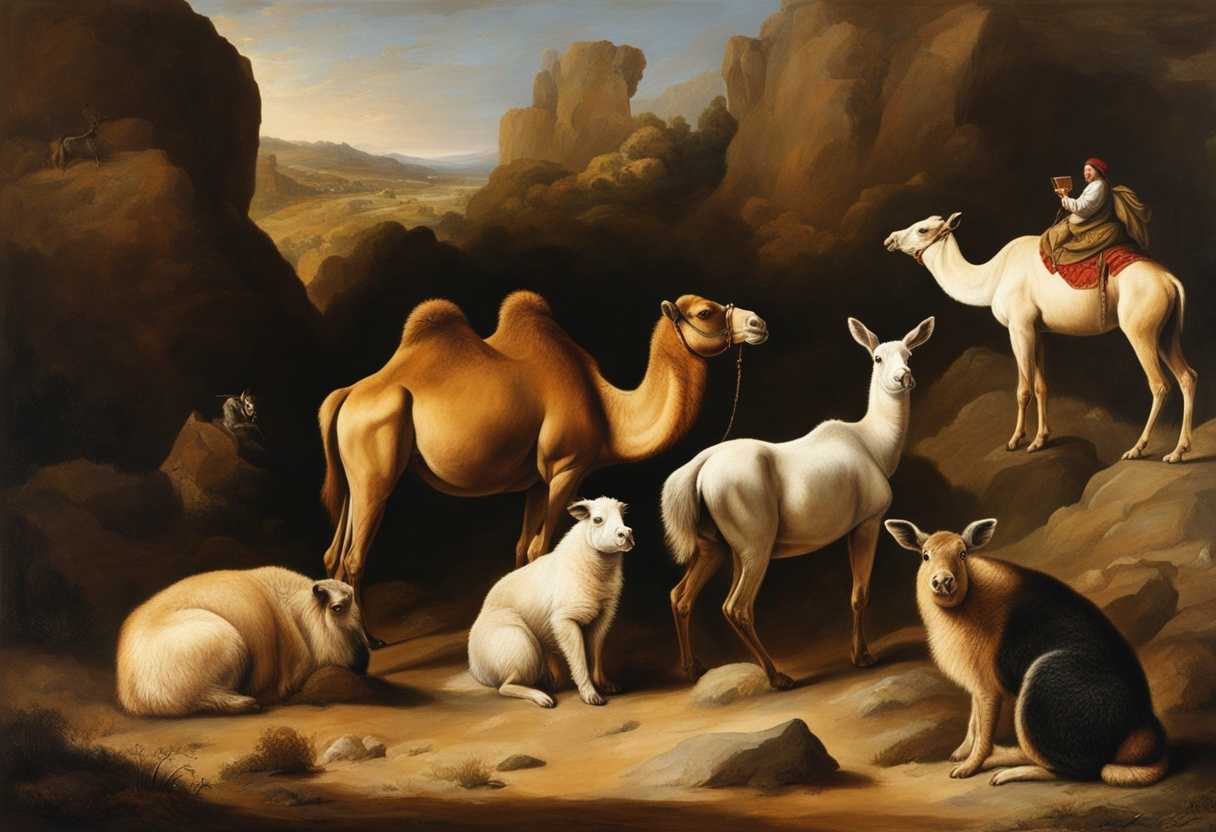
4 Nevertheless, among those that chew the cud or part the hoof, you shall not eat these: The camel, because it chews the cud but does not part the hoof, is unclean to you.
5 And the rock badger, because it chews the cud but does not part the hoof, is unclean to you.
6 And the hare, because it chews the cud but does not part the hoof, is unclean to you.
7 And the pig, because it parts the hoof and is cloven-footed but does not chew the cud, is unclean to you.
8 You shall not eat any of their flesh, and you shall not touch their carcasses; they are unclean to you.
Setting the Scene for Leviticus 11:3-8
In the scene described in Leviticus 11:3-8, we find Moses, the leader of the Israelites, standing in the midst of the camp. Surrounding him are a group of curious and attentive Israelites who have gathered to hear the laws and commandments that God has given to them through Moses. The sun is setting, casting a warm glow over the camp, and the smell of cooking fires fills the air as families prepare their evening meals.
As Moses begins to speak, his voice carries across the camp, drawing the attention of those nearby. He explains to the people the dietary laws that God has set out for them, detailing which animals are considered clean and which are unclean. The Israelites listen intently, some nodding in understanding while others furrow their brows in concentration. The scene is one of community and learning, as the people come together to receive the teachings that will guide their daily lives and strengthen their relationship with God.
The atmosphere is one of reverence and respect, as the Israelites hang on Moses’ every word, eager to follow the laws that will set them apart as God’s chosen people. The scene is a reminder of the importance of obedience and faithfulness in the lives of the Israelites, as they strive to live in accordance with God’s will and honor Him in all that they do.
What is Leviticus 11:3-8 about?
Leviticus provides guidance on what animals are considered clean and appropriate for the Israelites to eat, according to their religious laws. The distinction between clean and unclean animals serves to promote purity and obedience to God’s commands. The Israelites demonstrate their faith and commitment to upholding the laws set forth by God by following these guidelines.
Have you ever considered the significance of these dietary laws in the context of the Israelites’ relationship with God? How do these rules shape their identity as a chosen people set apart for God’s purpose? Reflecting on these verses can help us gain a deeper understanding of the spiritual and cultural significance of these ancient dietary laws and appreciate the importance of obedience and faithfulness in honoring God’s commandments.
Understanding what Leviticus 11:3-8 really means
Leviticus 11:3-8 delves into the dietary laws set forth for the Israelites, delineating which animals are deemed clean and unclean for consumption. The criteria for clean animals are described as those that “part the hoof and are cloven-footed” and “chew the cud,” highlighting specific characteristics that determine their acceptability for consumption. However, exceptions are noted within the passage, such as the camel, rock badger, hare, and pig, which, despite meeting one criterion, are considered unclean. These regulations form part of the holiness code outlined in Leviticus, emphasizing the importance of obedience and adherence to God’s instructions.
In exploring related biblical passages, Deuteronomy 14:3-21 reinforces the dietary laws while providing additional insights into their significance. Acts 10:9-16 showcases Peter’s vision where God declares all foods clean, symbolizing a shift in understanding dietary restrictions in the New Testament era. Mark 7:18-19 further elucidates this shift, with Jesus emphasizing that true defilement stems not from external factors like food but from the heart and one’s actions.
While contemporary Christians may not adhere to these specific dietary laws, the underlying principles of holiness and obedience to God remain pertinent. The dietary regulations served as a means for the Israelites to uphold their identity and purity as God’s chosen people, reflecting the importance of spiritual cleanliness and honoring God in daily living. Just as a family might adopt a special diet for health reasons, the Israelites followed these laws to nurture their spiritual well-being and demonstrate their commitment to God.
Leviticus 11:3-8 prompts us to consider the significance of discernment and obedience in our walk with God. Though the dietary restrictions may not directly apply today, the essence of consecrating our lives to God endures. Reflect on how you can align your choices and actions with God’s will, mirroring the Israelites’ dedication through their dietary practices. Let this passage serve as a reminder of the timeless call to live a life that honors and glorifies God in all aspects.
What significance does the concept of clean and unclean hold?
The concept of clean and unclean holds significant importance in Leviticus 11:3-8 in the context of maintaining purity and adhering to God’s commandments. Specific animals in this passage are classified as either clean or unclean, separating what is considered acceptable for consumption and what is not. The distinction between clean and unclean animals reflects a symbolic representation of God’s holiness and the need for His people to distinguish between what is pure and impure in their daily lives.
The categorization of clean and unclean animals serves as a way for the Israelites to demonstrate their obedience and reverence towards God by following His dietary laws. They are not only showing respect for God’s instructions but also emphasizing the importance of maintaining spiritual cleanliness and purity in all aspects of their lives by adhering to these guidelines. Through these distinctions, the Israelites were reminded of the need to make deliberate choices that align with God’s will and reflect their commitment to living in accordance with His commandments. The concept of clean and unclean in Leviticus 11:3-8 serves as a reminder of the importance of obedience, reverence, and purity in the eyes of God. It reinforces the idea of making intentional choices that reflect a desire to align with God’s holiness and live a life dedicated to following His commands. This distinction provides a framework for the Israelites to demonstrate their faithfulness and commitment to God by upholding His standards of cleanliness and purity in all aspects of their lives.
Application
Embrace the wisdom of Leviticus 11:3-8 and embody the purity God instills in your spirit. Just as at work we strive for excellence and in our families we cherish love, let us also uphold God’s standards for a fulfilling and obedient life. Like carefully selecting the best tools for our jobs and nurturing our loved ones with care, let us discern what we allow into our hearts and minds. Will you prioritize your spiritual well-being by following God’s instructions and nurturing a holy existence?

Reverend Michael Johnson is an experienced Church Minister with a profound expertise in spirituality and guidance. With a serene presence and a compassionate heart, he has faithfully served his congregation for over 20 years, leading them on a spiritual journey towards inner peace and enlightenment. Reverend Johnson’s extensive knowledge of religious philosophies and profound understanding of human nature have made him a trusted confidant and mentor to many, as he seamlessly weaves his profound wisdom into life teachings. Reverend Johnson’s calming demeanor and empathetic nature continue to uplift and heal souls, nurturing a sense of unity and tranquility within his community.