
Leviticus 12:12 is about the purification rituals for a woman after childbirth, symbolizing the importance of spiritual and physical cleansing for new beginnings and renewal.
12 But if she cannot afford a lamb, then she shall take two turtledoves or two pigeons, one for a burnt offering and the other for a sin offering. And the priest shall make atonement for her, and she shall be clean.”
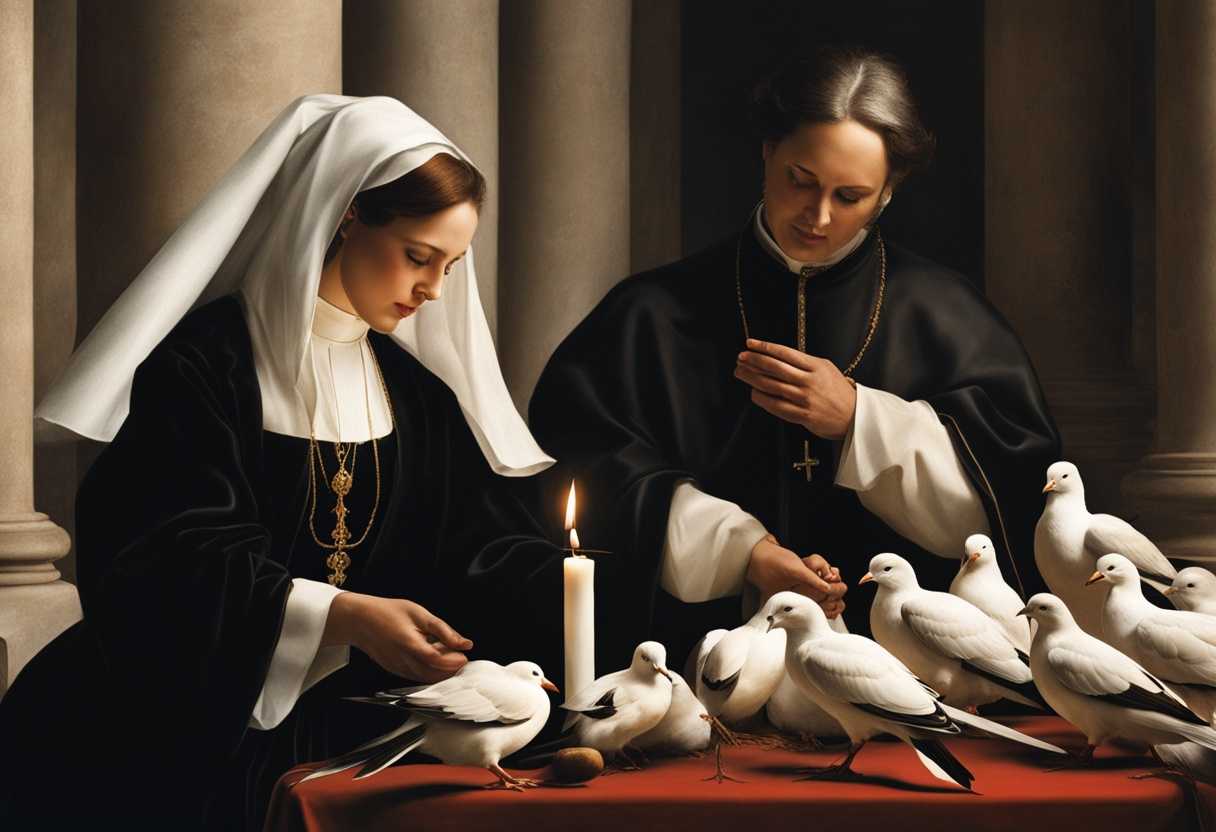
Setting the Scene for Leviticus 12:12
In Leviticus chapter 12, we find a scene set in ancient Israel during the time of Moses. The chapter discusses the purification rituals for women after childbirth. The scene takes place in the outskirts of the camp, where a new mother, named Miriam, has just given birth to a baby boy. Miriam is surrounded by her female relatives and friends, who have come to support her during this significant time.
The women have gathered around Miriam, bringing with them the necessary items for the purification process as outlined in Leviticus 12. They have brought olive oil, a pair of turtledoves or young pigeons for the burnt offering, and a lamb for the sin offering. The surroundings are filled with the sounds of the women’s voices, offering words of encouragement and prayers for the new mother and her baby.
As the rituals are performed, there is a sense of reverence and solemnity in the air, as the women follow the instructions given in the Law. The scene is a beautiful display of community support and faithfulness to God’s commands, as they come together to ensure that Miriam is ceremonially clean and able to rejoin the community after the prescribed period of purification.
What is Leviticus 12:12 about?
Leviticus 12:12 serves as a reminder of the significance of both spiritual and physical cleanliness in the eyes of the Lord. The act of purifying oneself after childbirth highlights the idea of starting anew, shedding the old and embracing the new. By following these purification rituals, individuals ensure not only their physical well-being but also their spiritual connection with God. It signifies a fresh beginning, free from any impurities or sins that may have occurred during childbirth.
Have you ever considered the deeper meaning behind purification rituals in various cultures and religions? The act of cleansing oneself serves as a symbolic gesture of readiness and renewal. Similarly, in Leviticus 12:12, the purification after childbirth symbolizes a new chapter in the life of the mother and the newborn, embodying a sense of purity and devotion to God. Individuals who adhere to these practices care for their physical bodies and nurture their souls, ultimately fostering a closer relationship with their faith and beliefs.
Understanding what Leviticus 12:12 really means
Leviticus 12:6 is part of a chapter that outlines the purification process for a woman after childbirth. This verse specifies the offerings she must bring to the priest. In ancient Israel, purification rituals were essential for maintaining ceremonial cleanliness. After childbirth, a woman was considered ceremonially unclean and needed to undergo a purification process to re-enter the community’s religious life. The priest played a crucial role in mediating between the individual and God, ensuring that the offerings were made correctly.
In Luke 2:22-24, Mary and Joseph bring Jesus to the temple to fulfill the purification rites, showing their adherence to the Law of Moses. Hebrews 10:1-4 discusses how the old sacrificial system was a shadow of the good things to come, ultimately pointing to Jesus’ perfect sacrifice. While we no longer follow the Levitical purification laws, the underlying principle of seeking spiritual cleanliness remains relevant. In a world filled with distractions and moral challenges, the idea of dedicating oneself to God and seeking renewal is timeless. Spiritual renewal can be seen as a way to refocus our lives on what truly matters, aligning our actions and thoughts with God’s will.
I once met a woman who, after a period of personal struggle, decided to rededicate her life to God. She described it as a purification process, where she let go of past mistakes and sought a fresh start. This act of spiritual renewal brought her peace and a renewed sense of purpose. Her story illustrates the timeless need for purification and dedication, echoing the principles found in Leviticus 12:6. “When the days of her purification are completed”: This phrase signifies a period of waiting and preparation, symbolizing the importance of taking time to reflect and renew oneself spiritually. “She shall bring to the priest”: The priest’s role as a mediator highlights the importance of seeking guidance and intercession in our spiritual journey. In the New Testament, Jesus is our ultimate High Priest, bridging the gap between us and God. “A lamb… and a pigeon or a turtledove”: These offerings symbolize different aspects of atonement and dedication. The lamb represents a more substantial sacrifice, while the pigeon or turtledove offers an option for those who are less affluent, showing that God values the heart behind the offering more than its material value.
How can we purify ourselves after sinning?
Leviticus 12:12 mentions that one way to purify oneself after sinning is through an offering. This offering demonstrates a tangible act of acknowledging one’s wrongdoing and seeking forgiveness from God. One shows genuine repentance and desire to be cleansed from sin by presenting an offering. Purifying oneself after sinning can also involve seeking forgiveness through prayer and seeking guidance from religious leaders. We demonstrate our commitment to rectifying our wrongdoings and seeking reconciliation with God by confessing our sins openly and sincerely praying for forgiveness.
Additionally, purifying oneself may involve reflecting on one’s actions, making amends for any harm caused, and taking steps to avoid repeating the same mistakes in the future. This introspection and commitment to self-improvement are important aspects of purifying oneself after sinning and seeking to live a more righteous and virtuous life.
Application
Embrace the wisdom found in Leviticus 12:12 as your guide in the hustle and bustle of modern life. Just as you dedicate yourself to your work and family, commit to honoring God’s laws with the same zeal. Let these divine teachings shape your actions and decisions, leading you towards a life filled with purpose and goodness. How will you align your path with God’s will today?

Reverend Michael Johnson is an experienced Church Minister with a profound expertise in spirituality and guidance. With a serene presence and a compassionate heart, he has faithfully served his congregation for over 20 years, leading them on a spiritual journey towards inner peace and enlightenment. Reverend Johnson’s extensive knowledge of religious philosophies and profound understanding of human nature have made him a trusted confidant and mentor to many, as he seamlessly weaves his profound wisdom into life teachings. Reverend Johnson’s calming demeanor and empathetic nature continue to uplift and heal souls, nurturing a sense of unity and tranquility within his community.