
Leviticus 14:17 is about the ritual of using the blood of a sacrificed bird to cleanse a person from a skin disease, symbolizing purification and restoration of spiritual well-being through sacrifice and atonement.
17 And of the rest of the oil that is in the priest’s hand he shall put on the head of him who is to be cleansed.
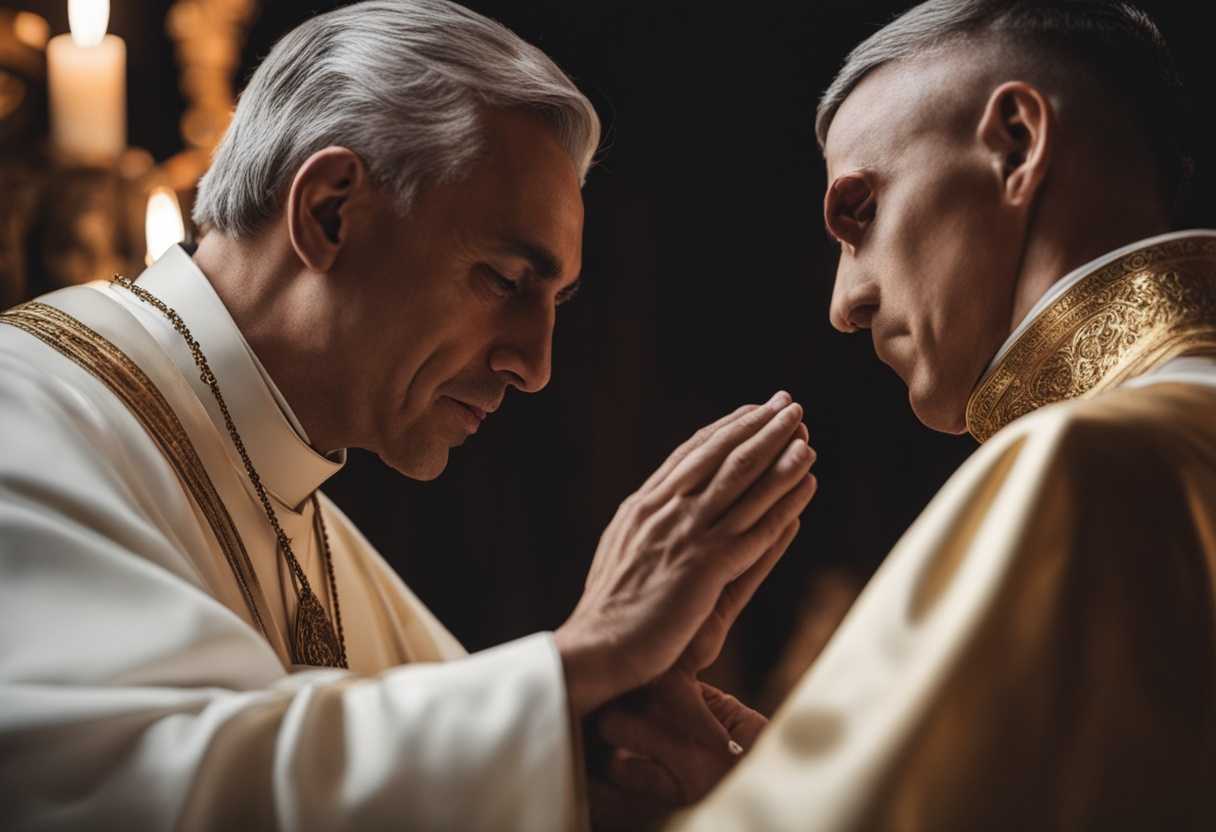
Setting the Scene for Leviticus 14:17
In Leviticus 14:17, we find ourselves in the midst of a purification ritual for a person who has been healed from a skin disease. The scene is set in the courtyard of the tabernacle, with the priest, the person who was healed, and two live clean birds, cedar wood, scarlet yarn, and hyssop present. The person who was healed had previously been isolated outside the camp due to their skin disease, but now they have been declared clean by the priest after a period of observation.
The priest takes one of the live birds, along with the cedar wood, scarlet yarn, and hyssop, and dips them into the blood of the bird that was sacrificed for the person’s cleansing. The priest then sprinkles the blood seven times on the person who was healed, symbolizing their purification and restoration to the community. The live bird is set free, signifying the person’s release from their past affliction and their newfound freedom and cleanliness. This ritual not only cleanses the person physically but also spiritually, allowing them to rejoin their community and worship in the tabernacle once again.
What is Leviticus 14:17 about?
The ritual for cleansing from skin diseases in Leviticus 14:17 serves as a powerful symbol of restoration and purification in the eyes of God. Think about it as a physical manifestation of cleansing the soul and renewing one’s connection with the divine. The ritual washes away physical impurities, symbolizing the cleansing of spiritual impurities from one’s being. It is a ritual that emphasizes the opportunity for renewal and a fresh start, leaving behind the weight of past sins or struggles.
Reflect on the significance of this verse in your own life. Have you ever experienced a need for spiritual cleansing or a desire for renewal? The ritual described here reminds us of the possibility for transformation and the grace of being purified in the eyes of the divine. Consider how you can apply this concept of restoration and purification in your own spiritual journey, just as this ritual in Leviticus offered a fresh beginning for those with skin diseases. Embrace the symbolism of letting go of past burdens and stepping into a new season of spiritual growth and connection with the divine.
Understanding what Leviticus 14:17 really means
Leviticus 14:17 delves into the intricate details of a purification ritual outlined in the book of Leviticus, a section dedicated to laws of cleanliness and sanctification. This particular verse focuses on the anointing of a person healed from a skin disease, emphasizing the role of the priest in declaring the individual clean before God. The priest’s actions of anointing with oil on specific body parts carry symbolic meanings that resonate beyond the physical act itself.
The anointing of the right ear signifies the importance of listening to God’s word and obeying His commands. It serves as a reminder for the individual to be attentive to divine guidance and to align their actions with God’s will. Similarly, anointing the thumb of the right hand symbolizes dedicating one’s work and deeds to God, highlighting the significance of living a life that reflects God’s values and principles. The anointing of the big toe of the right foot underscores the idea of walking in righteousness and following a path that aligns with God’s purposes.
Drawing parallels with other biblical passages, such as Exodus 29:20 and James 5:14-15, reveals a continuity in the practice of anointing for consecration and healing. These connections emphasize the spiritual significance of anointing with oil as a means of seeking God’s blessing, purification, and guidance. The ritual described in Leviticus 14:17 transcends its historical context, offering timeless principles that speak to the holistic nature of God’s care for His people.
In a contemporary context, Leviticus 14:17 prompts reflection on how we can dedicate every aspect of our lives to God. It challenges us to consider how our listening, actions, and life’s journey can be aligned with God’s will, seeking His presence and guidance in all that we do. The ritual serves as a poignant reminder that healing and purification extend beyond the physical realm to encompass our spiritual well-being and our relationship with God.
Consider a scenario where someone experiences a profound healing or recovery. This individual may feel a deep sense of gratitude and purpose, akin to the renewed dedication symbolized in Leviticus 14:17. Just as the healed person in the verse marks a new beginning by being anointed, we too can view moments of healing and restoration as opportunities to recommit our lives to God. Whether through acts of service, expressions of gratitude, or intentional living, we can emulate the spirit of dedication and thanksgiving exemplified in this ancient ritual.
In conclusion, Leviticus 14:17 invites us to contemplate the significance of consecration, gratitude, and holistic living in our relationship with God. It encourages us to consider how we can consecrate our lives daily, not just in times of crisis or healing, but in the ordinary moments of our lives. By reflecting on the symbolic meanings embedded in this verse, we are prompted to seek a deeper connection with God, dedicating ourselves wholly to His purposes and walking in alignment with His will.
How can we be purified from sin?
Leviticus 14:17 explains that to be purified from sin, one must use the blood of a sacrificed animal. This act symbolizes the transfer of sin from the person to the animal, which then carries away the sin, purifying the individual. Following this ritual can cleanse a person from their sins and restore them to a state of purity.
The act of sacrificing an animal for purification purposes was a common practice in ancient times and was considered necessary for atonement. The shedding of blood was seen as a way to cleanse oneself of sin and make amends with God. Individuals seeking forgiveness and purification for their transgressions were able to participate in this ritual.
While the specific practice of sacrificing animals for purification is no longer commonly practiced today, the underlying principle of seeking forgiveness and purification from sin remains relevant. Many religious traditions emphasize the importance of repentance, seeking forgiveness, and striving to live a righteous life in order to be purified from sin. Through sincere repentance and a commitment to living a life in accordance with moral and ethical principles, individuals can seek purification from sin in a spiritual sense.
Application
Let’s dive into Leviticus 14:17’s message and embrace the power of spiritual cleansing. It’s time to be the guiding light for those seeking healing and redemption within our communities. Let’s roll up our sleeves and together, let’s spread love and hope to those around us. Will you step up and join me in this mission to be beacons of light in a world that often feels shattered?

Reverend Michael Johnson is an experienced Church Minister with a profound expertise in spirituality and guidance. With a serene presence and a compassionate heart, he has faithfully served his congregation for over 20 years, leading them on a spiritual journey towards inner peace and enlightenment. Reverend Johnson’s extensive knowledge of religious philosophies and profound understanding of human nature have made him a trusted confidant and mentor to many, as he seamlessly weaves his profound wisdom into life teachings. Reverend Johnson’s calming demeanor and empathetic nature continue to uplift and heal souls, nurturing a sense of unity and tranquility within his community.