
Deuteronomy 1:1-3 is about Moses recounting the journey and experiences of the Israelites in the wilderness, highlighting the significance of God’s guidance and faithfulness despite their hardships and failures.
1 These are the words that Moses spoke to all Israel beyond the Jordan in the wilderness, in the Arabah opposite Suph, between Paran and Tophel, Laban, Hazeroth, and Dizahab.
2 It is eleven days’ journey from Horeb by the way of Mount Seir to Kadesh-barnea.
3 In the fortieth year, on the first day of the eleventh month, Moses spoke to the people of Israel according to all that the Lord had given him in commandment to them,
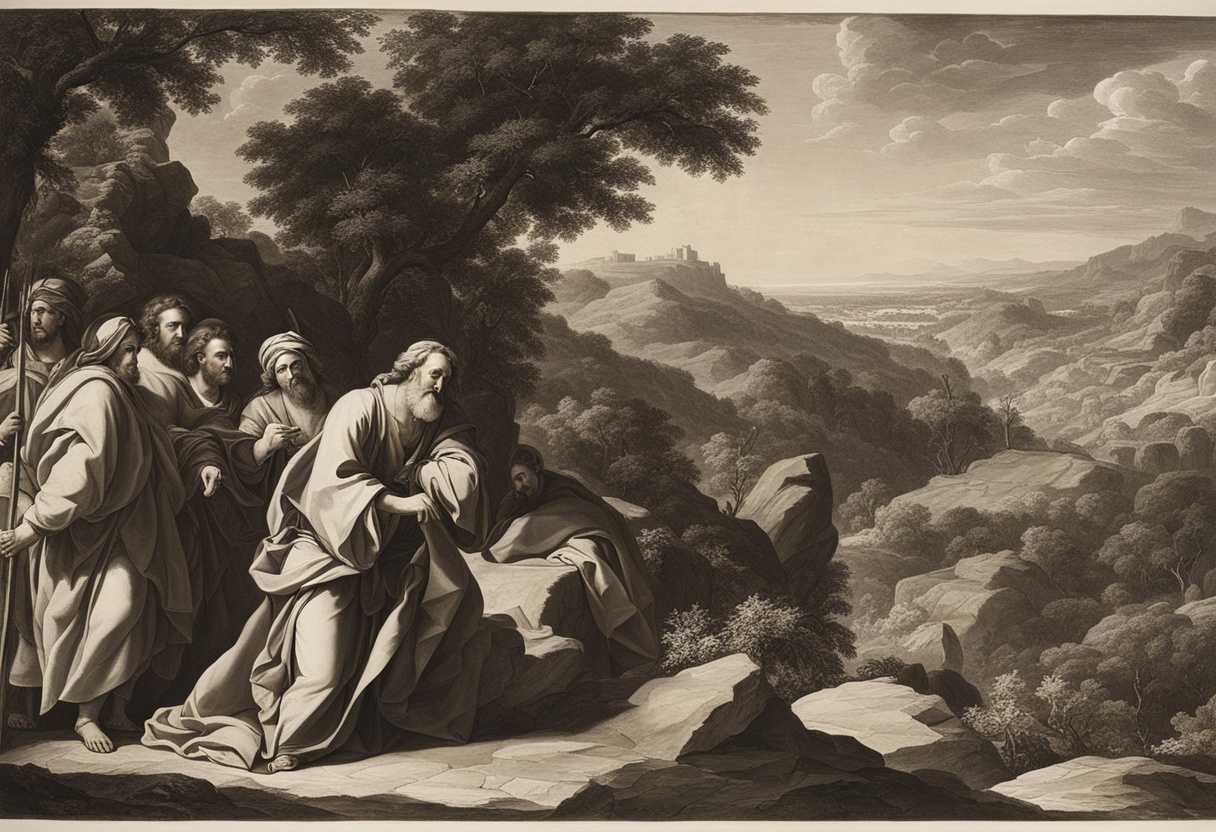
Setting the Scene for Deuteronomy 1:1-3
The scene opens with the Israelites gathered at the edge of the Promised Land, just east of the Jordan River. Moses, the revered leader of the Israelites, stands before the multitude, his weathered face reflecting years of trials and triumphs. The people are restless yet expectant, their eyes fixed on the lush land stretching out before them, a land flowing with milk and honey as promised by the Lord.
As Moses begins to speak, recounting the journey of the Israelites from Egypt to this pivotal moment, the crowd falls silent, hanging on his every word. He reminds them of the trials they have faced, the miracles they have witnessed, and the faithfulness of the Lord throughout their wanderings in the wilderness. The names of the tribes are called out, each representing a unique part of the nation, united in their shared history and destiny.
Surrounded by the rugged beauty of the desert landscape, with the Jordan River glistening in the distance, the Israelites stand on the cusp of a new chapter in their history. The air is charged with anticipation and reverence as they prepare to cross over into the land promised to their ancestors. The scene is set for a powerful moment of reflection, gratitude, and renewal as the Israelites stand poised to fulfill their divine destiny.
What is Deuteronomy 1:1-3 about?
Imagine standing before the vast desert expanse, feeling the weight of history and promise in the air. Moses is not just sharing a mere geographic trek as he recounts the journey of the Israelites from the sacred mountain of Horeb to the long-awaited Promised Land. He is weaving a tapestry of faith, struggle, and redemption that shaped the identity and destiny of a nation. Through his words, we are invited to reflect on the trials and triumphs of a people chosen by the divine, journeying through the wilderness of life towards a land flowing with milk and honey.
This verse is not just a historical account but a spiritual allegory for our own journeys through life. It poses questions for us to ponder: What mountains must we climb, what valleys must we traverse to reach our own promised lands? What lessons can we draw from the Israelites’ wandering in the desert, their moments of doubt and faith, their victories and setbacks? May we find solace and inspiration in Moses’ retelling as we navigate our personal wilderness, knowing that our journey is part of a larger cosmic narrative guided by a higher purpose. May we too find our path to fulfillment, guided by faith and perseverance, just as the Israelites found their way to the Promised Land.
Understanding what Deuteronomy 1:1-3 really means
These verses mark the beginning of the book of Deuteronomy, where Moses recounts the Israelites’ journey from Egypt to the Promised Land. Picture this scene: Moses stands on the plains of Moab, addressing the Israelites before they enter Canaan. It’s a moment of reflection and preparation, a time to look back on their history and God’s commandments. “These are the words Moses spoke to all Israel,” a powerful phrase emphasizing the collective nature of Moses’ message. It’s a call to remember and obey, a reminder of their shared responsibility as a nation.
“In the wilderness, east of the Jordan,” these words not only locate the Israelites geographically but also spiritually. They are in a transitional state, moving from slavery in Egypt to freedom in the Promised Land. The mention of the journey from Horeb to Kadesh Barnea in eleven days contrasts sharply with the 40 years of wandering. It highlights the consequences of disobedience and lack of faith, a cautionary tale for us all. And then, “In the fortieth year, on the first day of the eleventh month,” a significant moment marking new beginnings and God’s unwavering faithfulness despite their past failures.
Consider related passages like Numbers 14:33-34, explaining the Israelites’ 40-year wandering due to lack of faith. Exodus 19:1-2 describes their arrival at Mount Sinai, where they received the Ten Commandments, initiating their covenant with God. Joshua 1:1-2 shows the continuation of God’s plan through Joshua after Moses’ death. These verses resonate with us today, urging us to reflect on our spiritual journey and God’s guidance in our lives. Just as the Israelites needed to remember, learn, and obey, we too must heed the lessons of our past.
Think of a student preparing for a final exam after years of study. The exam day arrives, prompting reflection on the journey, lessons learned, and guidance received. This moment of reflection is crucial, highlighting the significance of perseverance and faith. Similarly, the Israelites’ journey and Moses’ words remind us that our own paths, though challenging, are guided by a divine plan. These verses from Deuteronomy call us to remember, reflect, and prepare for the future with faith and obedience. Through studying them and related passages, we gain insight into trusting God’s timing and learning from our past experiences.
What lessons can we learn from our past experiences?
One important lesson we can learn from our past experiences is the significance of remembering where we have come from. We can gain valuable insights that can guide us in the present and future by reflecting on our journey, the challenges we have faced, and the victories we have achieved. This reflection can help us appreciate the lessons learned, the growth experienced, and the faithfulness of God throughout our lives.
Furthermore, looking back on our past experiences can serve as a reminder of the consequences of our actions. We can learn from both our successes and our mistakes by observing the outcomes of our decisions and behaviors. This awareness can shape our choices and behaviors going forward, enabling us to make wiser decisions and avoid repeating past errors.
Additionally, remembering our past experiences can foster a sense of gratitude for the blessings we have received and the ways in which God has been present and faithful in our lives. This gratitude can inspire us to trust in God’s faithfulness and provision as we face new challenges and uncertainties, knowing that the same God who has brought us through difficult times in the past will continue to sustain us in the future.
Application
Reflect on God’s promises and remember His unwavering love and guidance in your life. Let the stories in the Bible challenge and inspire you to deepen your faith and step out in obedience. Will you answer the call to walk in faith and obedience as you meditate on these words?

Reverend Michael Johnson is an experienced Church Minister with a profound expertise in spirituality and guidance. With a serene presence and a compassionate heart, he has faithfully served his congregation for over 20 years, leading them on a spiritual journey towards inner peace and enlightenment. Reverend Johnson’s extensive knowledge of religious philosophies and profound understanding of human nature have made him a trusted confidant and mentor to many, as he seamlessly weaves his profound wisdom into life teachings. Reverend Johnson’s calming demeanor and empathetic nature continue to uplift and heal souls, nurturing a sense of unity and tranquility within his community.