
Leviticus 16:12 is about the high priest entering the Most Holy Place with a burning incense, symbolizing the prayers of the people ascending to God and seeking atonement for their sins.
12 And he shall take a censer full of coals of fire from the altar before the Lord, and two handfuls of sweet incense beaten small, and he shall bring it inside the veil
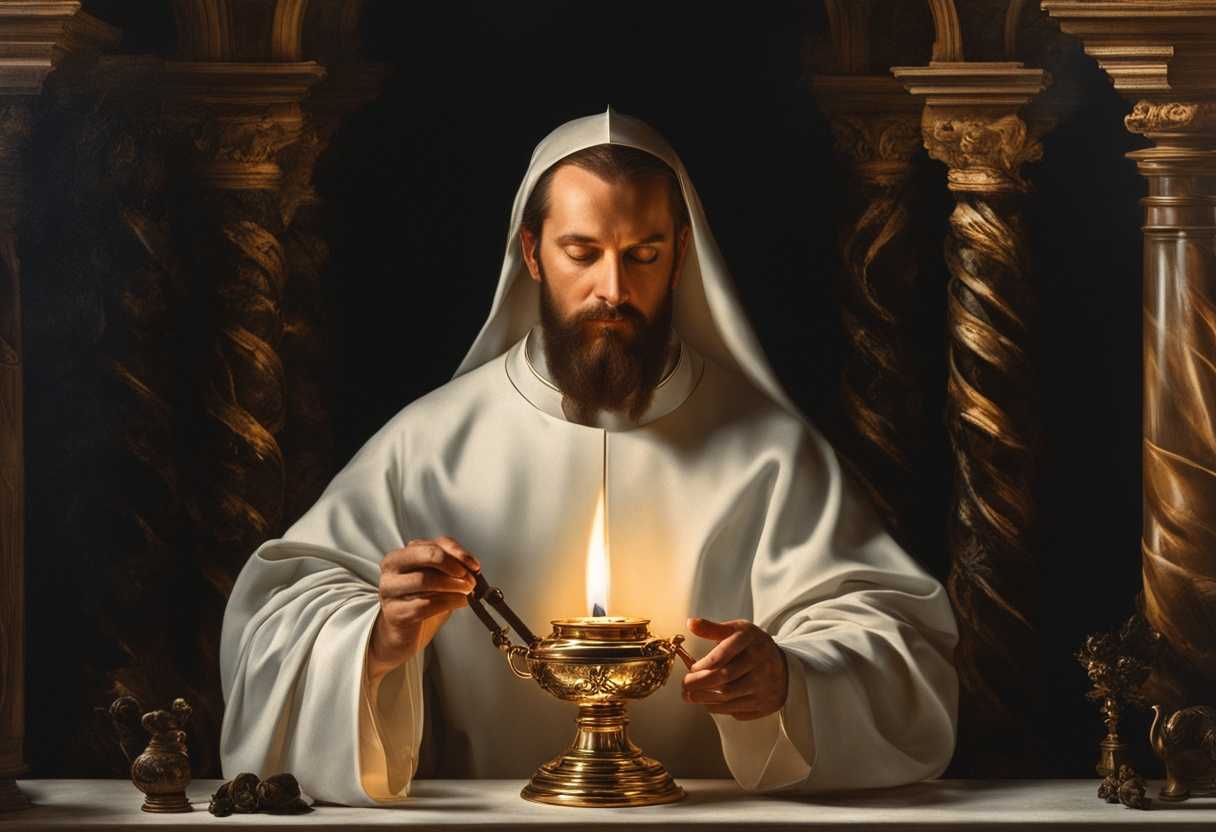
Setting the Scene for Leviticus 16:12
In Leviticus chapter 16, we find ourselves in the Tabernacle in the wilderness, a sacred and elaborate tent constructed by the Israelites as a place of worship and sacrifice. The High Priest, Aaron, is at the center of the scene, dressed in his sacred garments and preparing to perform the annual Day of Atonement ritual. This ritual is a crucial event in the Israelite calendar, where sins are confessed and atoned for through the sacrifice of animals.
Surrounding Aaron are his sons, who assist him in the various tasks required for the ceremony. The atmosphere is tense yet reverent as the people of Israel gather outside the Tabernacle, awaiting the outcome of the ritual. The air is heavy with the smell of incense and the sounds of prayers and chants fill the sacred space.
As Aaron follows the detailed instructions outlined in Leviticus 16, he enters the Most Holy Place, the inner sanctum of the Tabernacle where the presence of God is believed to dwell. Here, he sprinkles the blood of the sacrificial animals on the mercy seat of the Ark of the Covenant, seeking forgiveness and reconciliation for the sins of the people. The scene is one of solemnity and awe, as the fate of the entire community hangs in the balance during this sacred and pivotal moment in their religious calendar.
What is Leviticus 16:12 about?
This verse from Leviticus provides detailed instructions for the Day of Atonement, a significant event in the Old Testament. The act of the high priest taking the censer with burning coals and sweet incense inside the veil symbolizes a powerful moment of connection with God. The burning coals represent the purity of God’s presence, while the sweet incense symbolizes prayers rising up to the heavens. This ritual signifies the importance of approaching God with reverence, humility, and a sincere heart. We can ponder on the significance of our own approach to God as we reflect on this verse. Do we come before Him with a heart full of sincerity and humility? Are we willing to let go of our own desires and surrender to His will? Just like the high priest had to carry the censer and incense inside the veil, we too must be willing to step into the holy presence of God with reverence and respect. Let this verse serve as a reminder to approach God with a pure heart, seeking His forgiveness and grace in our lives.
Understanding what Leviticus 16:12 really means
Leviticus 16:12 delves into the intricate rituals of the Day of Atonement, a pivotal event in the Jewish faith. Here, the high priest is depicted carrying a censer filled with burning coals and two handfuls of finely ground incense into the Holy of Holies, symbolizing a profound act of entering the presence of God Himself. This sacred act was not merely a ritual but a profound representation of the need for mediation between humanity and the divine.
In Exodus 30:34-38, the sacredness of the incense is emphasized, highlighting its exclusivity for divine purposes. This exclusivity underscores the reverence and holiness associated with the act of offering incense before God. The connection between the Old Testament practices and the New Testament understanding of Christ’s atonement is further elucidated in Hebrews 9:3-4, where the items within the Holy of Holies are described, drawing parallels between the ancient rituals and the ultimate sacrifice of Jesus.
Revelation 8:3-4 paints a vivid picture of an angel offering incense with the prayers of the saints, symbolizing the continuous intercession and communication between believers and God. This imagery reinforces the significance of prayer and the spiritual connection it fosters between individuals and the divine. The act of burning incense in ancient times mirrors the modern practice of lighting a scented candle, both serving as tangible reminders of the sacredness of approaching God in prayer.
The phrases within Leviticus 16:12 hold profound symbolism. The “censer full of burning coals” signifies the fervent prayers of the people, purified by the fire of God’s presence. The coals from the altar before the Lord emphasize the necessity of worship and prayer originating from a place of holiness and consecration. The “two handfuls of finely ground fragrant incense” symbolize the abundance and purity of prayers offered to God, reflecting the pleasing aroma of sincere worship.
The act of bringing the incense “inside the veil” signifies entering the most sacred space, the Holy of Holies, where God’s presence dwells. This action foreshadows the tearing of the veil at Christ’s crucifixion, granting believers direct access to God. By delving into these symbolic elements, individuals can deepen their spiritual practices, understanding the reverence and sincerity required in approaching the divine. Leviticus 16:12 serves as a poignant reminder of the sacredness of prayer and the profound connection it fosters between humanity and God.
How can we approach God in purity?
One way we can approach God in purity is by acknowledging our own imperfections and confessing our sins to Him. This verse from Leviticus describes the ritual of the Day of Atonement where the high priest would enter the Most Holy Place with the blood of a sacrifice and purify the sanctuary. We can approach God in purity by seeking forgiveness for our sins and allowing His forgiveness to cleanse us.
Another way to approach God in purity is by living a life that reflects His holiness. We must strive to live a life that is set apart for God, just as the high priest had to consecrate himself before entering the Most Holy Place. This may involve avoiding sinful practices, cultivating a heart of gratitude and worship, and seeking to align our thoughts and actions with God’s will.
Finally, approaching God in purity also involves seeking His presence with a sincere heart. It is not just about outward rituals or actions, but about the condition of our hearts before Him. We can experience the cleansing power of God’s love and grace in our lives by coming to Him with humility, reverence, and a desire to be in His presence.
Application
Let’s ignite our spirits like the incense, enveloping our prayers with passion and devotion. Just as the high priest tended to the ark, let us tend to our spiritual connection with fervor. Your prayers have the potency to uplift and sanctify, resonating with the divine. How will you kindle the flame of your devotion today, presenting your offerings as a sweet aroma before the Divine?

Reverend Michael Johnson is an experienced Church Minister with a profound expertise in spirituality and guidance. With a serene presence and a compassionate heart, he has faithfully served his congregation for over 20 years, leading them on a spiritual journey towards inner peace and enlightenment. Reverend Johnson’s extensive knowledge of religious philosophies and profound understanding of human nature have made him a trusted confidant and mentor to many, as he seamlessly weaves his profound wisdom into life teachings. Reverend Johnson’s calming demeanor and empathetic nature continue to uplift and heal souls, nurturing a sense of unity and tranquility within his community.