
Leviticus 23:1-4 is about the importance of honoring God’s appointed times and festivals as a way to remember His faithfulness and to deepen the relationship between God and His people.
1 The Lord spoke to Moses, saying,
2 “Speak to the people of Israel and say to them, These are the appointed feasts of the Lord that you shall proclaim as holy convocations; they are my appointed feasts.
3 “Six days shall work be done, but on the seventh day is a Sabbath of solemn rest, a holy convocation. You shall do no work. It is a Sabbath to the Lord in all your dwelling places.
4 “These are the appointed feasts of the Lord, the holy convocations, which you shall proclaim at the time appointed for them.
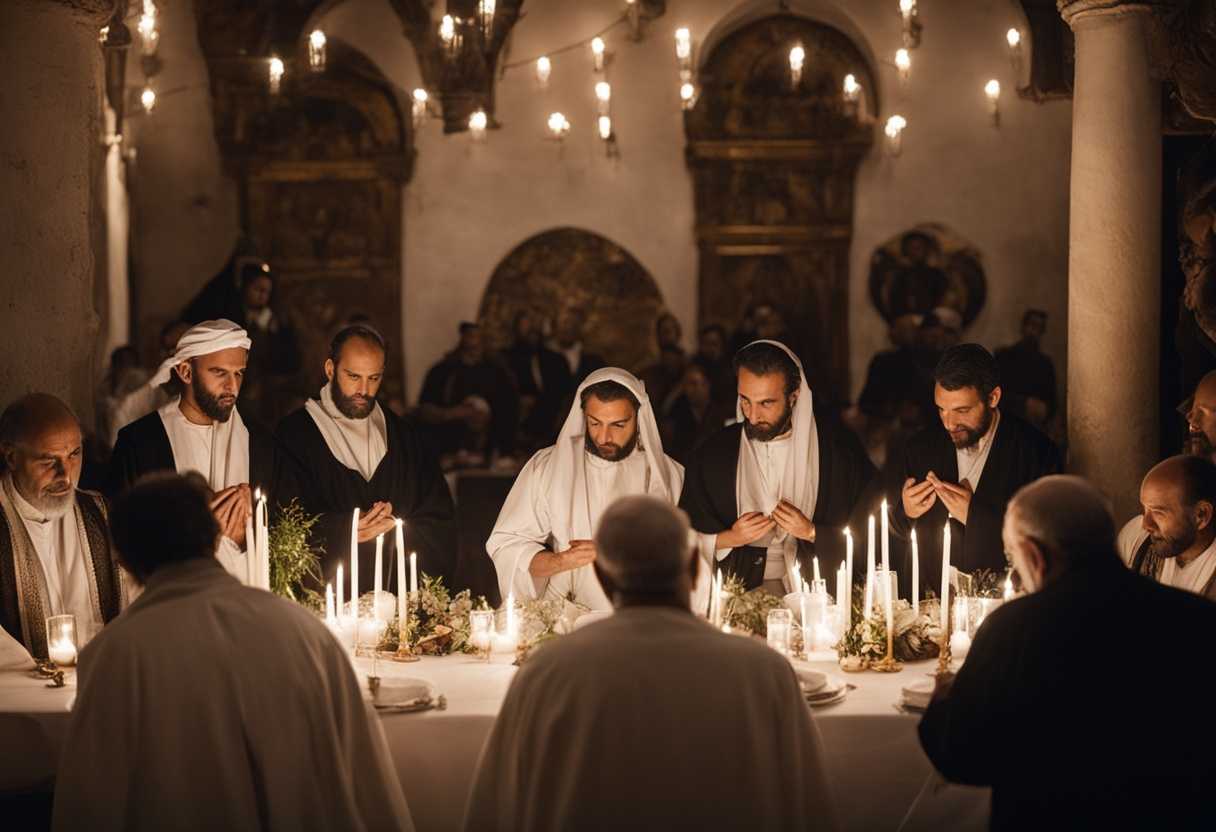
Setting the Scene for Leviticus 23:1-4
In Leviticus chapter 23, we find the scene set in the wilderness of Sinai, where the Israelites have been journeying after their exodus from Egypt. The Israelites have set up camp around the Tabernacle, a portable sanctuary where they worship and make offerings to God. The Tabernacle is surrounded by the twelve tribes of Israel, each with their designated place around the sacred tent.
Moses, the leader chosen by God to guide the Israelites, stands before the people, ready to deliver the instructions given to him by the Lord. The people gather around, eager to hear the laws and regulations that will govern their worship and daily lives. As Moses begins to speak, the people listen attentively, knowing that these teachings are crucial for their relationship with God and for maintaining order and holiness in their community.
The atmosphere is solemn and reverent as Moses outlines the various feasts and holy days that the Israelites are to observe. He explains the significance of each festival and the specific instructions for how they are to be celebrated. The people nod in understanding, recognizing the importance of honoring God in these prescribed ways. As the sun sets over the wilderness, the Israelites prepare to embark on this journey of faith and obedience, following the commands of the Lord as given through Moses.
What is Leviticus 23:1-4 about?
God gives a clear directive in this verse about the designated times for holy gatherings. Each of these appointed times holds significance in the spiritual and religious life of believers. The Sabbath, a day of rest and worship, celebrates the completion of God’s creation. Passover commemorates the Israelites’ liberation from slavery in Egypt, emphasizing God’s faithfulness and deliverance. The Feast of Unleavened Bread symbolizes the purity and sincerity required in the worship of God. Lastly, Firstfruits signifies offering the first and best of our harvest to God, acknowledging His provision and sovereignty.
Reflecting on these appointed times prompts us to ponder the importance of honoring and observing the traditions and rituals that strengthen our faith and connection with God. These holy gatherings not only serve as reminders of God’s faithfulness in the past but also as opportunities to deepen our relationship with Him in the present. We align ourselves with God’s will and rhythm as we abide by these appointed times, finding spiritual nourishment and growth in our journey of faith. So, let us ponder: How can we fully embrace and engage with these holy gatherings to enrich our spiritual lives and draw closer to God’s presence?
Understanding what Leviticus 23:1-4 really means
Leviticus 23:1-4 introduces the concept of sacred assemblies and outlines the appointed festivals of the Lord, setting the stage for understanding the rhythm of worship and rest in the life of the Israelites. The phrase “The Lord said to Moses” emphasizes the divine origin of the instructions, underscoring their importance and authority. These appointed festivals are specific times set apart for worship, reflection, and community gathering, not mere social events but holy convocations dedicated to the Lord. The responsibility to proclaim these times as sacred assemblies highlights the community’s duty to recognize and honor these moments.
In Exodus 20:8-11, the commandment to observe the Sabbath lays the foundation for the sacred times mentioned in Leviticus, emphasizing the importance of rest and worship. Hebrews 10:24-25 encourages believers to gather together, stressing the continued significance of communal worship in the Christian faith. Colossians 2:16-17, through Paul’s words, points to festivals, new moons, and Sabbaths as shadows of things to come, ultimately pointing to Christ as the fulfillment of these practices.
Today, in a world filled with busyness and distractions, the idea of setting aside time for rest and worship remains as relevant as ever. Sacred assemblies offer a structured opportunity for community, reflection, and spiritual renewal, aiding individuals in maintaining a balanced life that prioritizes spiritual health alongside daily responsibilities. Imagine a busy professional overwhelmed by work and family demands; by dedicating time each week to rest and worship, they find peace and renewal, enhancing their ability to manage responsibilities effectively and fostering personal well-being and community ties.
The instructions in Leviticus 23:1-4 are not mere ancient rituals but timeless principles that promote a balanced, spiritually focused life. By embracing and applying these principles, individuals can cultivate a deeper connection with God and experience a more harmonious existence. Sacred assemblies serve as reminders to pause, reflect, and realign our priorities, fostering spiritual growth and community bonds in a world that often pushes us towards constant activity and distraction.
How can we observe and honor the Sabbath?
Observing and honoring the Sabbath involves setting aside a specific day for rest, reflection, and worship. It is a time to cease from our regular work and busyness, and dedicate ourselves to spiritual pursuits and connecting with our faith. We acknowledge His sovereignty and lordship over our lives by refraining from our usual activities and focusing on our relationship with God.
Additionally, observing the Sabbath allows us to experience physical, emotional, and spiritual rejuvenation. It provides a much-needed break from the demands of daily life and offers us an opportunity to recharge and replenish our energy. We demonstrate our trust in God’s provision and acknowledge our value as His beloved children by taking a day of rest. Honoring the Sabbath ultimately prioritizes our spiritual well-being and deepens our relationship with God. It reminds us of the importance of faith and worship in our lives and helps us align our priorities with His. We create space for God to work in our hearts and lead us into greater intimacy with Him by setting aside time for rest and reflection.
Application
Embrace the divine appointments set for you and your spiritual family. Show up with reverence and joy, fostering unity and connection with fellow believers. By engaging in these sacred gatherings, you strengthen your faith and draw closer to the divine. Can you commit to actively participating in these times of assembly, nurturing your soul and deepening your spiritual journey?

Reverend Michael Johnson is an experienced Church Minister with a profound expertise in spirituality and guidance. With a serene presence and a compassionate heart, he has faithfully served his congregation for over 20 years, leading them on a spiritual journey towards inner peace and enlightenment. Reverend Johnson’s extensive knowledge of religious philosophies and profound understanding of human nature have made him a trusted confidant and mentor to many, as he seamlessly weaves his profound wisdom into life teachings. Reverend Johnson’s calming demeanor and empathetic nature continue to uplift and heal souls, nurturing a sense of unity and tranquility within his community.