
Leviticus 27:26-27 is about consecrating offerings to the Lord as holy, signifying the importance of setting aside that which is most valuable to honor and dedicate to God.
26 “But a firstborn of animals, which as a firstborn belongs to the Lord, no man may dedicate; whether ox or sheep, it is the Lord’s.”
27 But if it is among the unclean animals, then he shall redeem it according to the valuation and add a fifth to it; and if it is not redeemed, it shall be sold according to the valuation.
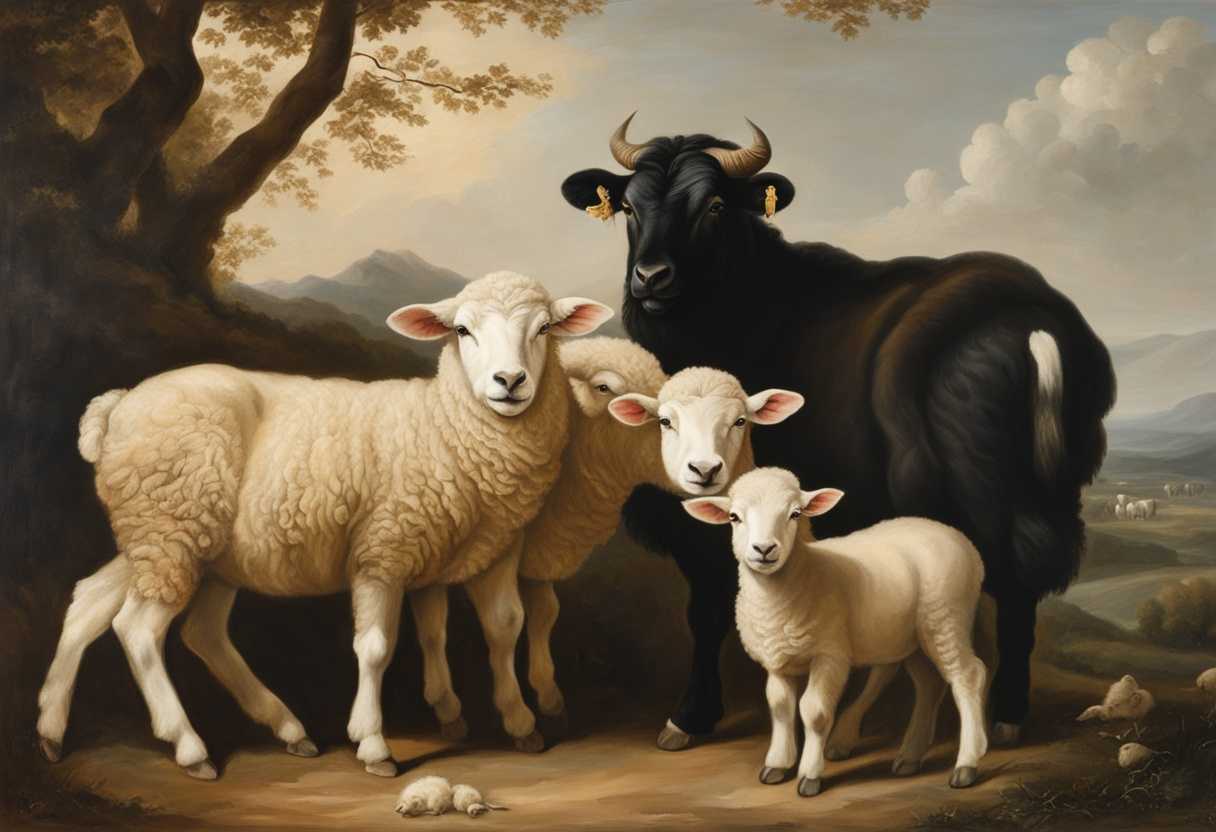
Setting the Scene for Leviticus 27:26-27
In the scene described in Leviticus 27:26-27, we find the Israelites gathered at the foot of Mount Sinai. The setting is awe-inspiring, with the majestic mountain towering above them, shrouded in a cloud of God’s presence. The air is filled with a sense of reverence and anticipation as the people await further instructions from Moses, who had ascended the mountain to commune with God.
Among the crowd are Moses, Aaron, and the elders of Israel, who had been chosen to accompany Moses partway up the mountain. The people are arranged in groups according to their tribes, with each tribe represented by its leaders. The scene is one of order and solemnity, as the people prepare to receive the laws and commandments that will govern their lives and guide their relationship with God.
As Moses descends from the mountain, his face radiant from his encounter with God, he carries with him the tablets of the Law, inscribed with the commandments that will shape the moral and spiritual life of the Israelites. The people listen attentively as Moses relays God’s instructions, including the regulations concerning tithes and offerings, as outlined in Leviticus 27:26-27. The scene is charged with the weight of divine authority, as the Israelites commit themselves to obeying God’s laws and living in accordance with His will.
What is Leviticus 27:26-27 about?
The concept of firstborn animals belonging to the Lord and not being exchanged or redeemed reflects the idea of sanctity and dedication in Leviticus 27:26-27. The firstborn held a special significance in ancient Hebrew culture as a symbol of God’s ownership and provision. Consecrating the firstborn animals to the Lord was a way for the people to acknowledge God’s sovereignty over their lives and resources.
Imagine the powerful message behind this verse – it prompts us to recognize that everything we have ultimately belongs to the divine. The prohibition against exchanging or redeeming the firstborn animals underscores the importance of honoring God’s ownership and commands. It challenges us to consider our own priorities and how we view our possessions – do we see them as gifts from the divine to be used for righteous purposes, or do we cling to them for our own gain and desires?
This verse calls us to reflect on the concept of stewardship and sacrificial giving. How do we acknowledge God’s blessings in our lives, and how do we prioritize dedicating our resources to support His work and honor His name? It urges us to cultivate a mindset of gratitude, humility, and trust in God’s provision. So, let’s ponder on the message of Leviticus 27:26-27 and consider how we can apply this principle of dedicating our “firstborn” – the best of what we have – to serve God and further His kingdom.
Understanding what Leviticus 27:26-27 really means
Leviticus 27:26-27 delves into the intricate laws of vows and dedications to the Lord, shedding light on the sanctity of offerings in the eyes of God. The context of Leviticus as a book of laws bestowed upon the Israelites emphasizes holiness and worship, setting the stage for the meticulous regulations outlined in this chapter. Here, the mention of the “firstborn of the animals” signifies the consecration of the initial offspring of livestock, designating them as sacred possessions belonging solely to the Lord. This directive underscores the significance of honoring God with the best and most precious aspects of one’s possessions.
Moreover, the prohibition against dedicating what is already God’s, as stated in “No man may dedicate,” serves as a poignant reminder of the inherent ownership of all things by the divine. This principle challenges individuals to acknowledge God’s rightful claim over their lives and possessions, prompting a deeper reflection on the concept of stewardship. By recognizing that everything ultimately belongs to God, believers are encouraged to manage their resources in ways that reflect reverence and gratitude towards the Creator.
The notion of redeeming an unclean animal by paying its assessed value, as outlined in the passage, unveils a profound lesson on the act of redemption. This process of buying back what is deemed impure symbolizes the redemptive work of Christ, who offers salvation and restoration to all, regardless of their past shortcomings. Through this lens, the act of redemption extends beyond material possessions to encompass the spiritual realm, highlighting the transformative power of God’s grace in cleansing and renewing lives.
Drawing parallels to contemporary scenarios, envision a farmer with a prized firstborn calf, already dedicated to God. The farmer’s obligation to redeem an unclean animal mirrors the modern-day challenge of recognizing and honoring God-given commitments. Similarly, in the context of volunteer work, individuals may feel compelled to offer more of their time, yet they are reminded of the sanctity of their initial dedication. This narrative underscores the importance of upholding promises and acknowledging the sacredness of what is already devoted to God.
In conclusion, Leviticus 27:26-27 serves as a poignant reminder of the sanctity of dedications to God and the imperative of honoring these commitments with reverence and gratitude. It underscores the overarching principle of stewardship, urging believers to manage their resources in alignment with God’s will. Furthermore, the concept of redemption encapsulated in this passage resonates profoundly with the redemptive work of Jesus Christ, offering hope and renewal to all who seek His grace. As contemporary believers, we are called to emulate the principles of dedication, stewardship, and redemption, embodying a life that reflects God’s love and mercy in all aspects of our existence.
How can we honor God with our possessions?
God emphasizes the importance of consecrating possessions to the Lord in Leviticus 27:26-27. We demonstrate our love, reverence, and obedience to God by setting apart a portion of our belongings for His use. This act of dedication shows that we recognize God’s ownership of all things and our desire to honor Him with our resources.
When we offer our possessions to God, we acknowledge His provision in our lives and express gratitude for all that He has given us. Through this act of consecration, we prioritize God’s kingdom and demonstrate our faith in His faithfulness to provide for our needs. We align our hearts with God’s will and commit to honoring Him in all areas of our lives by choosing to set apart a portion of what we have been blessed with.
Application
Reflect on how you can give your all to the divine purpose. Examine your heart and see what you can offer sincerely. Do not hold back but give with a grateful and obedient spirit. Dedicate your possessions and talents wholeheartedly. How will you step up and offer your best to the divine calling?

Reverend Michael Johnson is an experienced Church Minister with a profound expertise in spirituality and guidance. With a serene presence and a compassionate heart, he has faithfully served his congregation for over 20 years, leading them on a spiritual journey towards inner peace and enlightenment. Reverend Johnson’s extensive knowledge of religious philosophies and profound understanding of human nature have made him a trusted confidant and mentor to many, as he seamlessly weaves his profound wisdom into life teachings. Reverend Johnson’s calming demeanor and empathetic nature continue to uplift and heal souls, nurturing a sense of unity and tranquility within his community.