
Leviticus 2:1-16 is about the various offerings of grain that the Israelites were instructed to bring to the Lord, signifying their gratitude and dedication through the presentation of a portion of their harvest.
1 “When anyone brings a grain offering as an offering to the Lord, his offering shall be of fine flour. He shall pour oil on it and put frankincense on it
2 And he shall bring it to Aaron’s sons the priests, and shall take from it a handful of the fine flour and oil, with all of its frankincense, and the priest shall burn this as its memorial portion on the altar, a food offering with a pleasing aroma to the Lord.
3 And the rest of the grain offering shall be for Aaron and his sons; it is a most holy part of the Lord’s food offerings.
4 “When you bring a grain offering baked in the oven as an offering, it shall be unleavened loaves of fine flour mixed with oil or unleavened wafers smeared with oil.
5 And if your offering is a grain offering baked on a griddle, it shall be of fine flour unleavened, mixed with oil.
6 You shall break it in pieces and pour oil on it; it is a grain offering.
7 And if your offering is a grain offering baked in the oven, it shall be unleavened cakes of fine flour mixed with oil, or unleavened wafers smeared with oil.
8 And you shall bring the grain offering that is made of these things to the Lord, and when it is presented to the priest, he shall bring it to the altar.
9 And the priest shall take from the grain offering its memorial portion and burn this on the altar, a food offering with a pleasing aroma to the Lord.
10 But the rest of the grain offering shall be for Aaron and his sons; it is a most holy part of the Lord’s food offerings.
11 You shall not leaven anything that is offered in sacrifice to the Lord.
12 As an offering of firstfruits you may bring them to the Lord, but they shall not be offered on the altar for a pleasing aroma.
13 You shall season all your grain offerings with salt. You shall not let the salt of the covenant with your God be missing from your grain offering; with all your offerings you shall offer salt.
14 And if you offer a grain offering of firstfruits to the Lord, you shall offer for the grain offering of your firstfruits fresh ears, roasted with fire, crushed new grain.
15 You shall put oil on it and lay frankincense on it; it is a grain offering.
16 And the priest shall burn as its memorial portion some of the crushed grain and some of the oil with all of its frankincense; it is a food offering to the Lord.
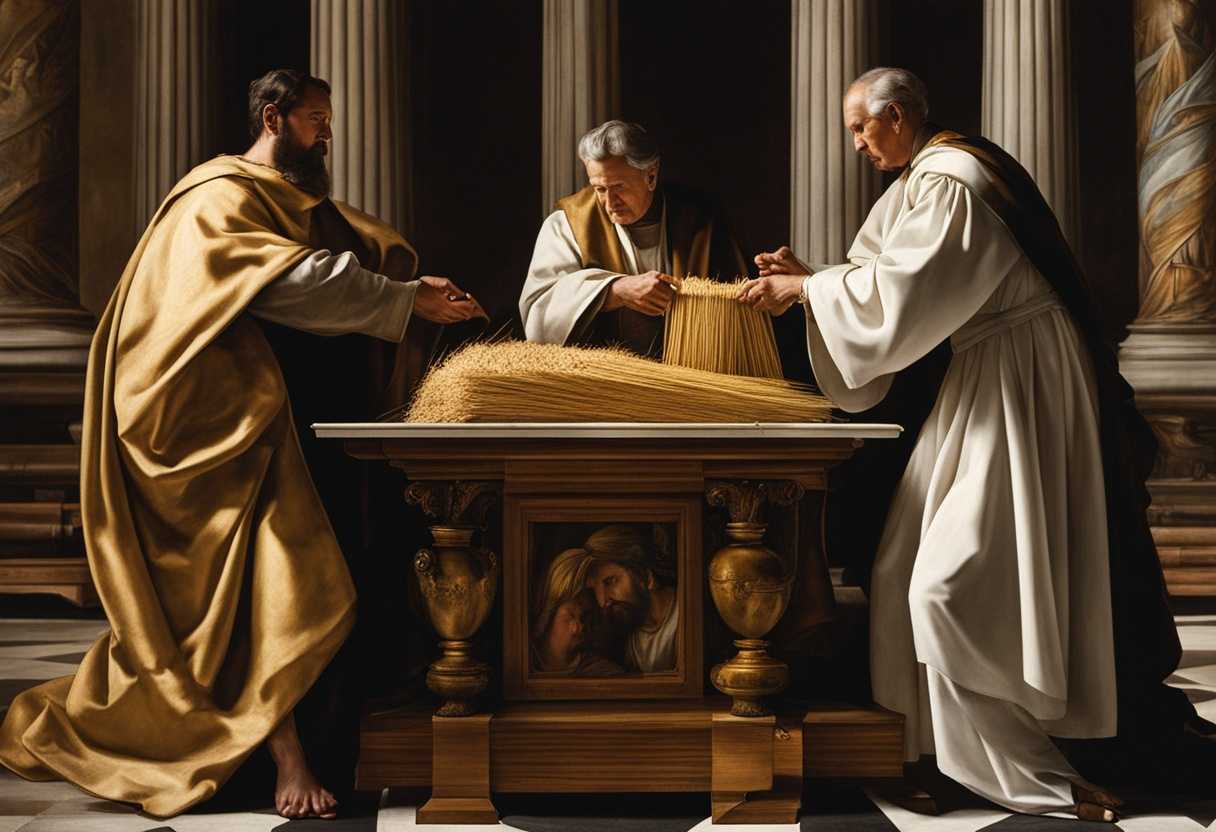
Setting the Scene for Leviticus 2:1-16
In the ancient tabernacle of the Israelites, a scene unfolds as the priests gather to offer sacrifices and offerings to the Lord according to the laws outlined in Leviticus. The air is filled with the scent of burning incense and the sound of prayers being lifted up. The high priest, Aaron, stands at the altar, dressed in his sacred garments, ready to perform the rituals prescribed by God.
Around him, his sons, Nadab, Abihu, Eleazar, and Ithamar, assist in preparing the offerings. They meticulously follow the instructions given in Leviticus 2:1-16, ensuring that each offering is made in the prescribed manner. The scene is one of reverence and devotion as the priests carry out their duties with solemnity and precision.
The tabernacle itself is a sight to behold, with its intricately woven curtains, golden lampstands, and the Ark of the Covenant at its center. The flickering light of the candles casts a warm glow over the sacred space, creating an atmosphere of holiness and awe. As the priests complete the offerings, they bow their heads in prayer, seeking God’s favor and forgiveness for themselves and the people of Israel.
What is Leviticus 2:1-16 about?
The instructions for grain offerings to the Lord in this verse convey deeper meanings related to our relationship with God, not just about the physical act of offering grain. The emphasis on quality signifies the importance of giving our best to the Divine. Just like when we want to show respect or appreciation to someone, we put effort into choosing a valuable gift, offering high-quality grain to the Lord reflects our reverence and gratitude towards Him. Preparation highlights the need for mindfulness and intentionality in our spiritual practices. It reminds us that our offerings are not empty rituals but significant acts of devotion that require careful thought and preparation. We demonstrate our commitment to our spiritual connection with God and our desire to nurture that relationship by dedicating time and effort to prepare the grain offering.
Lastly, the call for dedication in the grain offerings serves as a reminder of the wholeheartedness and sincerity that should accompany our worship. It encourages us to approach our spiritual practices with genuine devotion and passion, rather than just going through the motions. We strengthen our bond with the Divine and cultivate a deeper sense of spiritual fulfillment in our lives by dedicating our offerings with sincerity and commitment.
Understanding what Leviticus 2:1-16 really means
Leviticus 2:1-16 delves into the significance of the grain offering, a form of sacrifice outlined in the Old Testament. This passage meticulously lays out the procedures for presenting a grain offering to God, emphasizing themes of dedication, thanksgiving, and the acknowledgment of God’s provision. When anyone brings a grain offering as an offering to the Lord, it signifies a voluntary act of worship, reflecting a heart inclined towards honoring God with the best of what one possesses. The use of fine flour symbolizes purity and wholehearted dedication, while the act of pouring oil and adding frankincense signifies the presence of the Holy Spirit and the essence of prayer and worship in the offering.
A crucial aspect highlighted in Leviticus 2:1-16 is the concept of a “memorial portion,” which is burnt on the altar as a symbol of remembrance and unwavering dedication to God. Additionally, the instruction to season all grain offerings with salt underscores the idea of preservation and the enduring covenant between God and His people. These symbolic elements within the grain offering ritual carry profound spiritual meanings that transcend mere physical actions, pointing towards deeper spiritual truths and principles.
Drawing connections to other biblical passages enriches our understanding of the grain offering’s significance. The narratives of Cain and Abel in Genesis 4:3-5 emphasize the importance of the heart’s attitude in giving, highlighting the essence of genuine worship and dedication. Jesus’ reference to believers as the “salt of the earth” in Matthew 5:13 underscores the role of Christians in preserving and influencing the world with their faith and actions. Furthermore, Paul’s exhortation in Romans 12:1 urges believers to offer themselves as living sacrifices, embodying a life of worship and dedication to God.
The relevance of the grain offering extends to contemporary believers, urging us to offer our best to God and acknowledge His provision in our lives. This ancient practice serves as a timeless reminder to approach God with hearts filled with gratitude and dedication, prompting us to present our time, talents, and resources as offerings to God’s work. Just as a farmer dedicates the finest grains from his harvest to God in gratitude and trust, modern individuals can symbolically offer their first fruits, whether earnings or talents, as a tangible expression of thanksgiving and commitment to God.
In conclusion, Leviticus 2:1-16 encapsulates enduring principles of dedication, gratitude, and worship that resonate across time and culture. By embracing and applying these foundational truths, we can deepen our relationship with God, express our faith authentically, and live out a life of worship and service that honors Him.
How can we offer our best to God?
God instructs the Israelites on how to offer grain offerings with various ingredients and preparations in Leviticus 2:1-16. Through this passage, God emphasizes the importance of offering the best they have to Him. The Israelites were advised to bring fine flour, oil, and frankincense as their offering, signifying the best quality goods they could offer to God.
To offer our best to God today, we can learn from the principle in this passage by giving God our finest resources, whether they are tangible possessions or intangible qualities like our time, talents, and skills. We can offer God our hearts with sincerity, without any hidden agendas or impure motivations, just as the Israelites were to present their grain offerings without leaven, which symbolized impurity. We demonstrate our love, respect, and devotion to God by giving our best. We can manifest offering our best to God in our daily lives through acts of worship, service, prayer, and obedience. This can include giving generously, serving others wholeheartedly, praying sincerely and regularly, and obeying His commandments faithfully. When we present our best to God with pure hearts and genuine intentions, we honor Him and strengthen our relationship with Him.
Application
Present your offerings to the Lord with reverence and sincerity, just like bringing your A-game to your work or giving your all to your family. Show God your talents and actions with a pure heart. Reflect on your worship practices and commit to offering God nothing less than your whole self. Today, make the choice to give your best to the Lord and watch how it transforms your faith journey. Will you rise to the challenge of honoring God with your utmost?

Reverend Michael Johnson is an experienced Church Minister with a profound expertise in spirituality and guidance. With a serene presence and a compassionate heart, he has faithfully served his congregation for over 20 years, leading them on a spiritual journey towards inner peace and enlightenment. Reverend Johnson’s extensive knowledge of religious philosophies and profound understanding of human nature have made him a trusted confidant and mentor to many, as he seamlessly weaves his profound wisdom into life teachings. Reverend Johnson’s calming demeanor and empathetic nature continue to uplift and heal souls, nurturing a sense of unity and tranquility within his community.