
Leviticus 9:1-4 is about the consecration of Aaron and his sons as priests, symbolizing their purification and setting apart for holy service before the Lord.
1 On the eighth day Moses called Aaron and his sons and the elders of Israel,
2 and he said to Aaron, “Take for yourself a bull calf for a sin offering and a ram for a burnt offering, both without blemish, and offer them before the Lord.
3 Then to the people of Israel you shall speak, saying, ‘Take a male goat for a sin offering, and a calf and a lamb, both a year old without blemish, for a burnt offering,
4 And an ox and a ram for peace offerings, to sacrifice before the Lord, and a grain offering mixed with oil, for today the Lord will appear to you.”
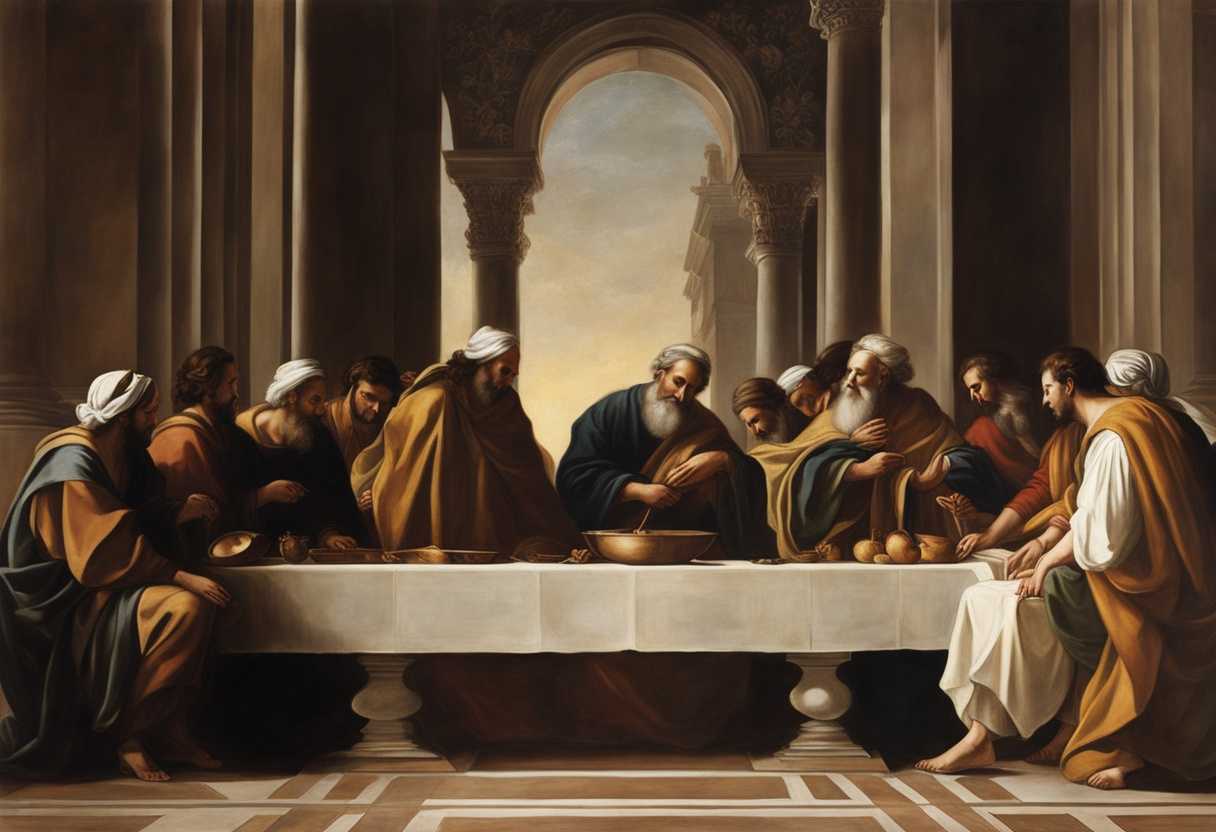
Setting the Scene for Leviticus 9:1-4
The scene described in Leviticus 9:1-4 takes place in the Tabernacle, a sacred tent constructed by the Israelites in the wilderness under the guidance of Moses. The Tabernacle was the central place of worship and sacrifice for the Israelites during their journey from Egypt to the Promised Land.
In this particular passage, Aaron, the high priest, and his sons are present in the Tabernacle. They had been consecrated and prepared for their roles by following the detailed instructions given by God to Moses. The scene is set for the first official offerings to be made on behalf of the people of Israel.
The surroundings are filled with a sense of anticipation and reverence as the people gather outside the Tabernacle to witness this significant moment. The altar is prepared, the sacrificial animals are ready, and the priests are dressed in their sacred garments. The atmosphere is charged with the expectation of God’s presence descending upon the Tabernacle as a sign of His acceptance of the offerings and the consecration of Aaron and his sons for their priestly duties.
What is Leviticus 9:1-4 about?
Aaron, the high priest, and his sons follow the instructions given to them by the Lord to offer sacrifices in this verse. This act symbolizes obedience, reverence, and worship towards God. It demonstrates the importance of following divine commands and carrying out rituals with precision and devotion. Aaron and his sons acknowledge God’s supremacy and sovereignty over their lives by offering sacrifices.
Imagine the scene of Aaron and his sons carrying out the sacrifices with utmost care and reverence. The act of offering sacrifices was not just a mere ritual for them, but a deep expression of their faith and commitment to God. Ancient religious practices considered the significance of sacrifices as a means of atonement and seeking divine favor. Reflect on the discipline and faithfulness required to fulfill such duties as priests serving in the sanctuary of God. The verse serves as a powerful reminder of the importance of obedience, ritual, and worship in maintaining a close relationship with the divine.
Understanding what Leviticus 9:1-4 really means
Introduction
In Leviticus 9:1-4, we delve into a pivotal moment as Aaron embarks on his priestly duties, offering sacrifices to the Lord. This passage signifies the establishment of the priesthood and the sacrificial system in Israel, laying the foundation for their worship practices.
Key Phrases and Their Meanings
The mention of “On the eighth day” symbolizes a new beginning, emphasizing renewal and sanctification in biblical terms. The directive to “Take a bull calf for a sin offering and a ram for a burnt offering” signifies atonement for sin and complete dedication to God. The statement “For today the Lord will appear to you” underscores the significance of God’s presence and the necessity for purification to encounter Him.
Related Passages
Drawing parallels, Exodus 29:35-37 provides insight into Aaron’s consecration and his subsequent priestly responsibilities. Hebrews 10:1-4 elucidates the limitations of Old Testament sacrifices, pointing towards Christ as the ultimate sacrifice. Additionally, 1 Peter 2:9 links believers to a “royal priesthood,” bridging the Old Testament priesthood with New Testament believers.
Relevance to People Today
Just as Aaron and his sons readied themselves to meet God, we are reminded to spiritually prepare to encounter Him. Reflecting on sacrifice and atonement, we recognize Jesus Christ’s ultimate sacrifice for our sins. The promise of God’s presence remains pertinent, urging us to seek and cherish His nearness in our daily lives.
Anecdote
Consider a family preparing for an esteemed guest, meticulously cleaning, cooking a special meal, and dressing in their finest attire. This preparation mirrors their respect and eagerness for the guest’s arrival. Similarly, Aaron and his sons meticulously readied themselves to meet God, showcasing their reverence and readiness. Today, we too should prepare our hearts and lives to welcome God’s presence, acknowledging the significance of His closeness.
Conclusion
Leviticus 9:1-4 imparts valuable lessons on preparation, sacrifice, and the presence of God. It intertwines Old Testament practices with Jesus’ ultimate sacrifice, prompting us to lead lives that honor God’s presence. This passage serves as a timeless reminder of the importance of spiritual readiness and reverence in our relationship with the Lord.
How can we approach God in reverence and obedience?
Approaching God with reverence and obedience involves following His commands and instructions diligently. We must be mindful of His holiness and approach Him with a pure heart and a desire to obey His will. We should also come before God with a spirit of humility and submission, just as the Israelites were instructed to present offerings before the Lord according to His regulations. We must pay attention to the details of His commands and not deviate from them in order to honor God properly. The Israelites were to follow the precise instructions given by God for their offerings, illustrating the importance of obedience in our approach to God. We demonstrate our reverence for His authority and acknowledge His sovereignty over our lives by adhering to His guidelines and instructions.
Approaching God in reverence and obedience requires a deep respect for His holiness and a willingness to submit to His will. We can show our reverence for God by following His commands and seeking to obey Him in all aspects of our lives, just as the Israelites were given specific instructions on how to make offerings to the Lord. This attitude of humility and obedience allows us to draw near to God in a manner that honors Him and acknowledges His rightful place as our Creator and Lord.
Application
Let’s embrace the lesson from Leviticus 9:1-4 about obedience and reverence shown by Aaron and his sons. Like them, let’s faithfully follow God’s commands with diligence and devotion. Just as they atoned for the sins of the people, let’s commit to obeying God’s instructions in our lives. Let this story inspire us to honor and obey God wholeheartedly. Will you join in, following God’s ways with dedication and reverence, like Aaron and his sons did?

Reverend Michael Johnson is an experienced Church Minister with a profound expertise in spirituality and guidance. With a serene presence and a compassionate heart, he has faithfully served his congregation for over 20 years, leading them on a spiritual journey towards inner peace and enlightenment. Reverend Johnson’s extensive knowledge of religious philosophies and profound understanding of human nature have made him a trusted confidant and mentor to many, as he seamlessly weaves his profound wisdom into life teachings. Reverend Johnson’s calming demeanor and empathetic nature continue to uplift and heal souls, nurturing a sense of unity and tranquility within his community.