
1 On the eighth day Moses called Aaron and his sons and the elders of Israel,
2 and he said to Aaron, “Take for yourself a bull calf for a sin offering and a ram for a burnt offering, both without blemish, and offer them before the Lord.
3 Then to the people of Israel you shall speak, saying, ‘Take a male goat for a sin offering, and a calf and a lamb, both a year old without blemish, for a burnt offering,
4 And an ox and a ram for peace offerings, to sacrifice before the Lord, and a grain offering mixed with oil, for today the Lord will appear to you.”
5 And they brought what Moses commanded in front of the tent of meeting, and all the congregation drew near and stood before the Lord.
6 And Moses said, “This is the thing that the Lord commanded you to do, that the glory of the Lord may appear to you.”
7 Then Moses said to Aaron, “Draw near to the altar and offer your sin offering and your burnt offering and make atonement for yourself and for the people, and bring the offering of the people and make atonement for them, as the Lord has commanded.”
8 So Aaron drew near to the altar and killed the calf of the sin offering, which was for himself.
9 And the sons of Aaron presented the blood to him, and he dipped his finger in the blood and put it on the horns of the altar and poured out the blood at the base of the altar.
10 But the fat and the kidneys and the long lobe of the liver from the sin offering he burned on the altar, as the Lord commanded Moses.
11 And the flesh and the skin he burned with fire outside the camp.
12 Then he killed the burnt offering, and Aaron’s sons handed him the blood, and he threw it against the sides of the altar.
13 And they handed the burnt offering to him, piece by piece, and the head, and he burned them on the altar.
14 Then he washed the entrails and the legs and burned them with the burnt offering on the altar.
15 Then he presented the people’s offering and took the goat of the sin offering that was for the people and killed it and offered it as a sin offering, like the first one.
16 And he washed the entrails and the legs and burned them with the burnt offering on the altar.
17 Then he presented the grain offering, took a handful of it, and burned it on the altar, besides the burnt offering of the morning.
18 Then he slaughtered the ox and the ram, the sacrifice of peace offerings for the people. And Aaron’s sons handed him the blood, and he threw it against the sides of the altar.
19 And the fat of the bull and of the ram, the fat tail, and that which covers the entrails and the kidneys and the long lobe of the liver.
20 And they put the fat pieces on the breasts, and he burned the fat pieces on the altar,
21 And the breasts and the right thigh Aaron waved for a wave offering before the Lord, as Moses commanded.
22 Then Aaron lifted up his hands toward the people and blessed them, and he came down from offering the sin offering and the burnt offering and the peace offerings.
23 And Moses and Aaron went into the tent of meeting, and when they came out they blessed the people, and the glory of the Lord appeared to all the people.
24 And fire came out from before the Lord and consumed the burnt offering and the pieces of fat on the altar, and when all the people saw it, they shouted and fell on their faces.
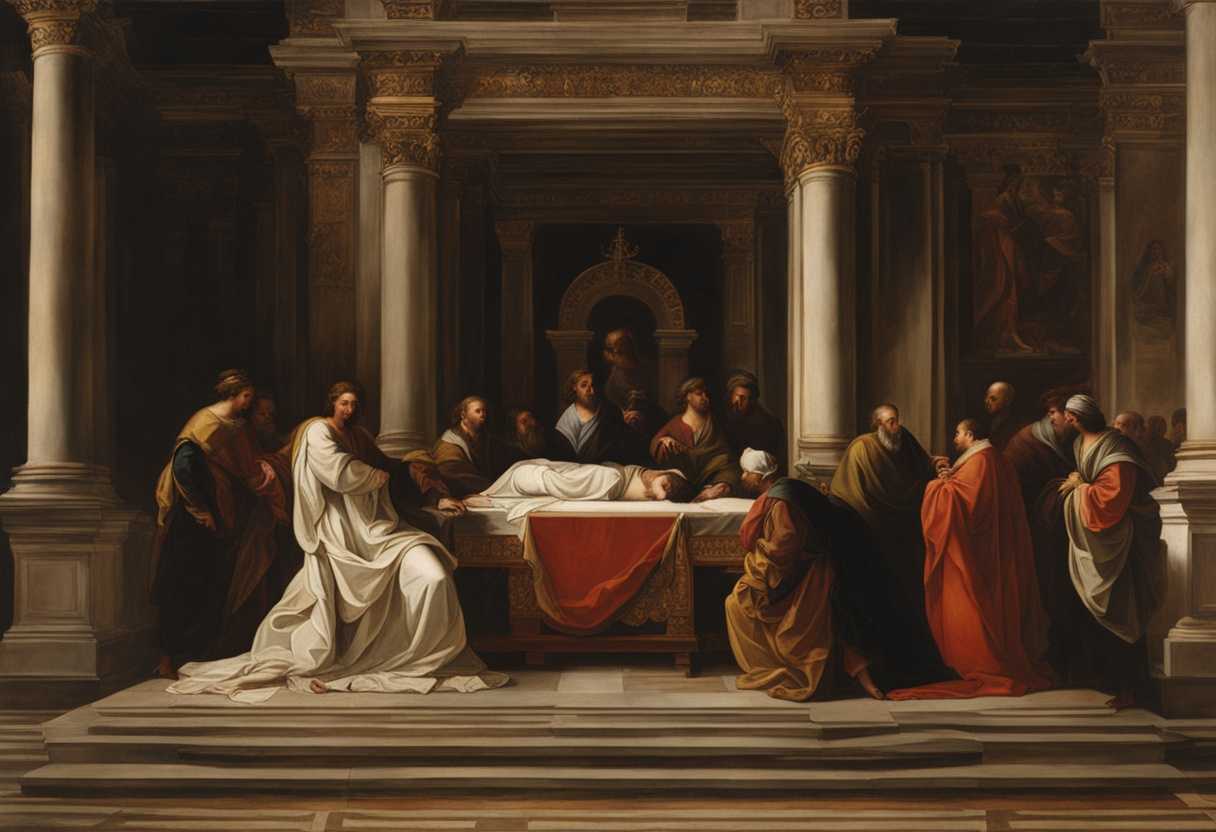
The True Meaning of Leviticus 9
The book of Leviticus was written by Moses, the great prophet and leader of the Israelites. We witness the consecration of Aaron and his sons as the first high priests of the Israelite nation in this chapter. This marks a pivotal moment in the establishment of the Levitical priesthood, which would go on to play a crucial role in the religious life of the people. Aaron and his sons prepare for their sacred duties as we delve into this chapter, and a dramatic display of divine approval manifests the glory of the Lord. This event not only solidifies the authority of the priesthood but also foreshadows the importance of proper worship and obedience to God’s commands, as we’ve seen emphasized throughout the book of Leviticus.
The chapter also provides insights into the intricate rituals and sacrifices that were central to the Israelite faith. These practices, though sometimes complex, were designed to draw the people closer to their Creator and to maintain the holiness of the community. Studying this passage will remind us of the significance of reverence and devotion in our own spiritual lives.
Leviticus 9:1-4
Aaron and his sons, the newly ordained priests, prepared to carry out their first official duties in the tabernacle in Leviticus 9:1-4. Here, the Lord instructs Moses to tell Aaron and his sons to bring offerings to the Lord as a way to make atonement for themselves and the people. This act was essential for their consecration and to establish the consecration rituals for future generations.
This section highlights the significance of atonement before approaching God with offerings. The idea of atonement is foundational in the Bible, emphasizing the need for reconciliation between humanity and God. This concept can be traced back to the story of Adam and Eve’s expulsion from the Garden of Eden due to their disobedience to God’s command. Throughout the Bible, we see various rituals and sacrifices carried out to atone for sins, ultimately pointing towards the sacrificial death of Jesus Christ, who is seen as the ultimate atonement for the sins of humanity.
Aaron and his sons, as priests, were required to carry out these rituals on behalf of the people. The role of the priest was crucial in facilitating communication between God and his people, representing the people before God and vice versa. This foreshadows the role of Jesus Christ as the High Priest who would intercede on behalf of all humanity, offering the ultimate sacrifice for the remission of sins. The book of Hebrews expands on this in chapter 4, verse 14-16, portraying Jesus as the ultimate High Priest who sympathizes with our weaknesses and invites us to approach God’s throne of grace with confidence. Leviticus 9:1-4 sets the stage for the consecration of Aaron and his sons as priests, highlighting the importance of atonement and the priestly role in mediating between God and the people. These rituals and sacrifices in the Old Testament point towards the ultimate sacrifice of Jesus Christ and the redemption he offers to all who believe in him.
Leviticus 9:5-7
The Israelites embark on the process of establishing proper worship practices as commanded by God in Leviticus 9:5-7, marking a pivotal moment in their history. These verses highlight the obedience of Aaron and his sons as they follow the intricate instructions laid out by God through Moses. Aaron, as the high priest, is instructed to offer sacrifices for himself and the people to make atonement for their sins. This act of atonement is crucial in bridging the gap between a holy God and a sinful people, signifying the need for reconciliation and forgiveness.
The detailed instructions for the sacrifices symbolize the seriousness and precision demanded in approaching the Divine. The blood of the animals being sacrificed serves as a powerful symbol of cleansing and purification, illustrating the gravity of sin and the need for a price to be paid for redemption. This concept of blood sacrifice as a means of atonement is a recurring theme throughout the Old Testament, pointing towards the ultimate sacrifice of Jesus Christ on the cross in the New Testament. Hebrews 9:22 underscores the significance of blood in the forgiveness of sins, stating that “without the shedding of blood, there is no forgiveness. The involvement of the common people in this sacrificial ritual reflects the communal aspect of sin and forgiveness. Each individual had a part to play in the atonement process, emphasizing the unity of the community in seeking reconciliation with God. This communal aspect is reminiscent of the collective responsibility of all believers in upholding the tenets of faith and participating in the worship of God together. We are reminded of the importance of obedience, reverence, and humility in our approach to God when examining these verses. We are called to submit ourselves wholeheartedly to God’s will and trust in His plan for redemption and reconciliation, just as Aaron and his sons followed God’s commands meticulously. The sacrificial system outlined in Leviticus points towards the ultimate sacrifice of Jesus Christ, who became the perfect atonement for the sins of humanity. We, as Christians, find fulfillment in Christ’s sacrifice, acknowledging Him as the Lamb of God who takes away the sins of the world (John 1:29).
Leviticus 9:8-11
Aaron, the newly anointed high priest, begins to carry out his duties in the tabernacle in Leviticus 9:8-11. This passage describes Aaron following the instructions given to him by Moses. It’s important to note that this is a significant step in the establishment of the priesthood and the practices of sacrifice in ancient Israelite religion. Aaron’s role as a mediator between the people and God is highlighted in these verses, as he acts on behalf of the community in offering sacrifices.
The act of making atonement for the people and offering sacrifices was a key aspect of the Israelites’ worship. These sacrificial rituals were meant to symbolize the people’s repentance and their desire to be in right standing with God. The blood of the animals was considered an offering for sin, a way to cleanse and purify the people from their wrongdoings.
This event foreshadows the ultimate sacrifice that Jesus Christ would make for humanity’s sins. Jesus in the New Testament is often referred to as the perfect high priest who offered Himself as a sacrifice to atone for the sins of the world once and for all. Hebrews 9:11-14 draws parallels between the sacrifices of the Old Testament and the sacrifice of Christ, highlighting the idea that Jesus’ sacrifice is superior and sufficient for all.
The meticulous details of the sacrificial rituals described in Leviticus emphasize the importance of reverence, obedience, and holiness in worship. The Israelites were given specific instructions on how to approach God and the significance of following these instructions was to maintain a pure relationship with Him. This theme of obedience and reverence towards God runs throughout the Bible, serving as a reminder for believers to approach God with humility and respect. The anointing of Aaron as high priest and the establishment of the sacrificial system in Leviticus foreshadow the work of Christ as the ultimate high priest and sacrificial lamb. Hebrews 4:14-16 describes Jesus as the high priest who can sympathize with our weaknesses and invites believers to approach Him boldly for grace and mercy in times of need. This connection between the Old and New Testaments reinforces the idea of the unity and continuity of God’s redemptive plan throughout the ages.
Leviticus 9:12-14
Aaron, the high priest, presented the burnt offering to the Lord on behalf of the Israelites, as described in Leviticus 9:12-14. This significant act marked the consecration of Aaron and his sons as priests before the Lord. The burnt offering was a common type of sacrifice in ancient Israel, symbolizing surrender and dedication to God.
This ceremony was crucial as it set the tone for the relationship between the priests and the Lord, highlighting their role as mediators between the people and God. The burnt offering was to be completely consumed by fire, signifying total surrender and devotion to the Lord. This act was not only a physical ritual but also carried deep spiritual significance, emphasizing the importance of wholehearted commitment to God.
Aaron’s role as the high priest in performing this offering symbolized his leadership and responsibility in guiding the people in their worship of God. The priests were tasked with upholding the laws and rituals outlined in Leviticus to maintain the holiness of the Israelite community. Through this ceremony, Aaron and his sons were consecrated to serve in the tabernacle, demonstrating their willingness to fulfill their duties with reverence and obedience.
These verses also reflect the meticulous attention to detail required in the worship practices of the Israelites. Every aspect of the offering had to be performed according to God’s instructions to ensure its acceptance. This obedience to the divine commands reinforced the importance of holiness and reverence in their worship. It also served as a reminder to the Israelites of the seriousness of approaching God with the proper intentions and attitudes. The burnt offering and consecration of the priests in Leviticus 9 foreshadowed the ultimate sacrifice of Jesus Christ on the cross in a broader context. Jesus offered himself as the perfect sacrifice for the sins of humanity, reconciling them with God, just as the burnt offering symbolized surrender and dedication. The priesthood of Aaron and his descendants prefigured Christ’s role as the eternal High Priest who intercedes on behalf of believers before God.
These verses in Leviticus serve as a reminder of the significance of worship, obedience, and commitment in the relationship between God and His people. They emphasize the need for sincerity and reverence in approaching God, as well as the importance of spiritual leaders who guide the community in fulfilling their responsibilities towards God. The themes of sacrifice, consecration, and obedience found in these verses continue to resonate throughout the Bible, underscoring the timeless principles of faith and devotion that God desires from His followers.
Leviticus 9:15-17
He presented the people’s offering in Leviticus 9:15-17. He took the goat for the people’s sin offering and slaughtered it and offered it for a sin offering like the first one. He also presented the grain offering, took a handful of it and burned it on the altar in addition to the morning’s burnt offering. He slaughtered the ox and the ram as the fellowship offering for the people. His sons handed him the blood, and he splashed it against the sides of the altar.”
This passage describes the actions of Aaron, the high priest, as he performed various offerings on behalf of the people. One significant aspect is the sin offering, where a goat was sacrificed to atone for the sins of the people. This act of offering a sacrifice for sin was crucial in the Old Testament religious practices as it symbolized the need for reconciliation between God and humanity. The shedding of blood in these rituals was seen as a way to cleanse and purify from sin, pointing towards the ultimate sacrifice of Jesus on the cross in the New Testament.
The grain offering mentioned in these verses was a tribute to God, a way of acknowledging His provision and seeking His favor. It was a voluntary offering that accompanied other sacrifices and was a reflection of the worshipper’s gratitude and devotion. Burning a portion of the grain offering on the altar was believed to be a pleasing aroma to the Lord, signifying the heart of the giver in honoring God.
The fellowship offering, which involved slaughtering an ox and a ram, was a communal meal shared between the offeror, the priests, and God. This offering signified peace and fellowship with God, emphasizing the relationship between the people and their Creator. The splashing of blood against the altar was a symbolic act of atonement and dedication, reinforcing the idea of reconciliation and purification.
These practices outlined in Leviticus 9 point to the importance of rituals and sacrifices in the worship of God in the Old Testament. They highlight the seriousness of sin and the need for atonement, as well as the desire for fellowship and peace with God. We, as Christians, understand these offerings as foreshadowing the ultimate sacrifice of Jesus Christ, who became the perfect atonement for our sins once and for all (Hebrews 10:10). Jesus fulfilled the requirements of the law and inaugurated a new covenant based on grace and faith, where believers are reconciled to God through His sacrifice.
Leviticus 9:18-21
The verses in Leviticus 9:18-21 focus on the actions of Aaron and his sons after offering sacrifices to the Lord. Here is a breakdown of the important sections:
- Aaron and his sons laid their hands on the head of the burnt offering, symbolizing the transfer of their sins onto the animal.
- The burnt offering was slaughtered, and Aaron’s sons presented the blood to him, who then sprinkled it around the altar.
- They presented the burnt offering itself, along with the grain offering, and the fat portions on the altar. When the people saw this, they shouted for joy and fell face down. Aaron and his sons, the priests, carried out their duties before the Lord in a meticulous and reverent way in these verses. The act of laying hands on the sacrifice was symbolic of transferring sin and guilt onto the innocent animal, foreshadowing the ultimate sacrifice of Jesus Christ, who became the sacrificial lamb for the sins of humanity. This ritual highlighted the concept of atonement, where the shedding of blood was necessary for the forgiveness of sins.
The attention to detail in presenting the offerings, sprinkling the blood, and burning the sacrifices signified the importance of obedience and reverence in worship. This process was not to be taken lightly, as it involved following precise instructions given by God to be carried out with utmost care and devotion. This demonstrates the principle of obedience to God’s commands, even in the details, which is a recurring theme in the Bible.
The reaction of the people, shouting for joy and falling facedown when they witnessed the priests carrying out the sacrifices, reflects a response of awe and humility before the holiness of God. This scene emphasizes the significance of worshiping God with reverence and gratitude for His mercy and grace. The people’s physical posture of falling facedown symbolizes humility, submission, and respect before the Almighty God, acknowledging His sovereignty and holiness.
These verses in Leviticus 9 provide a glimpse into the intricate rituals and ceremonies that were part of the Israelites’ worship practices. They serve as a reminder of the importance of approaching God with a pure heart, following His instructions faithfully, and recognizing the need for atonement for sin. This foundational aspect of sacrificial offerings and atonement runs throughout the Bible, culminating in the ultimate sacrifice of Jesus Christ on the cross, who fulfilled the requirements of the Law and became the eternal High Priest offering redemption for all who believe in Him. This passage in Leviticus points towards the redemption and reconciliation that would ultimately be made available through Christ, reinforcing the timeless message of God’s grace and salvation for humanity.
Leviticus 9:22-24
Aaron, the high priest, performs the first offerings for the Israelites after the consecration of the Tabernacle and the priests in Leviticus 9:22-24. The verse reads: “Then Aaron lifted his hands toward the people and blessed them. And having sacrificed the sin offering, the burnt offering, and the peace offerings, he stepped down. Moses and Aaron then went into the tent of meeting. When they came out, they blessed the people; and the glory of the Lord appeared to all the people. Fire came out from the presence of the Lord and consumed the burnt offering and the fat portions on the altar. And when all the people saw it, they shouted for joy and fell facedown.”
Firstly, Aaron’s action of lifting his hands and blessing the people symbolizes his role as a mediator between the people and God. Aaron, as a high priest, was responsible for interceding on behalf of the Israelites and seeking God’s blessings for them. This act of blessing the people reflected the priestly duty of invoking God’s favor upon the congregation.
The sacrifices offered by Aaron – the sin offering, burnt offering, and peace offerings – were essential in the Israelite sacrificial system. The sin offering was for atonement, acknowledging the sins of the people and seeking forgiveness. The burnt offering signified complete devotion and surrender to God. The peace offerings were a symbol of reconciliation and communion with God. Through these offerings, the people were demonstrating their obedience to God and seeking His mercy and favor.
When Moses and Aaron entered the tent of meeting and then came out to bless the people again, it signified the communication between God and His chosen leaders. This act reinforced the authority and blessing that came through the leadership appointed by God. The appearance of the glory of the Lord to all the people was a powerful manifestation of God’s presence and approval of the offerings and the consecration of the Tabernacle and priesthood.
The fire that came out from the presence of the Lord and consumed the burnt offering was a miraculous sign of God’s acceptance and approval of the sacrifices. This fire was not kindled by human hands but was a divine manifestation of God’s power and presence. This event showed the Israelites that their worship was pleasing to God and that He was among them.
The response of the people, shouting for joy and falling facedown, revealed their awe and reverence for the Lord. Witnessing such a miraculous display of God’s power would have instilled in them a deep sense of fear and wonder at the majesty of the Almighty. It also reinforced the importance of obedience, faithfulness, and worship in the lives of God’s people. Leviticus 9:22-24 highlights the significance of proper worship, obedience, and the role of the priesthood in mediating between God and His people. It underscores the need for purity, reverence, and faithfulness in approaching God. The events described in these verses serve as a reminder of God’s holiness, His expectations for His people, and the importance of offering sincere worship from a heart devoted to Him.
After Leviticus 9
The people had witnessed the consecration of Aaron and his sons as priests. Now, on the eighth day, the time had come for Aaron and his sons to make their first offerings to the Lord. The people gathered, holding their breath, waiting to see if the Lord would accept the sacrifices and manifest His presence among them. The chapter ends with a powerful display of God’s approval, a reminder that He is holy and demands reverence from those who approach Him. But this was only the beginning. The true test would come in the days ahead, as the priests sought to faithfully carry out their duties and lead the people in the ways of the Lord. What challenges and triumphs lay in store for them? We shall soon see.

Reverend Michael Johnson is an experienced Church Minister with a profound expertise in spirituality and guidance. With a serene presence and a compassionate heart, he has faithfully served his congregation for over 20 years, leading them on a spiritual journey towards inner peace and enlightenment. Reverend Johnson’s extensive knowledge of religious philosophies and profound understanding of human nature have made him a trusted confidant and mentor to many, as he seamlessly weaves his profound wisdom into life teachings. Reverend Johnson’s calming demeanor and empathetic nature continue to uplift and heal souls, nurturing a sense of unity and tranquility within his community.