
Leviticus 9:22-24 is about Aaron, the high priest, blessing the people after offering sacrifices to God, representing the importance of the priestly blessing and the divine favor bestowed upon the people through obedience and worship.
22 Then Aaron lifted up his hands toward the people and blessed them, and he came down from offering the sin offering and the burnt offering and the peace offerings.
23 And Moses and Aaron went into the tent of meeting, and when they came out they blessed the people, and the glory of the Lord appeared to all the people.
24 And fire came out from before the Lord and consumed the burnt offering and the pieces of fat on the altar, and when all the people saw it, they shouted and fell on their faces.
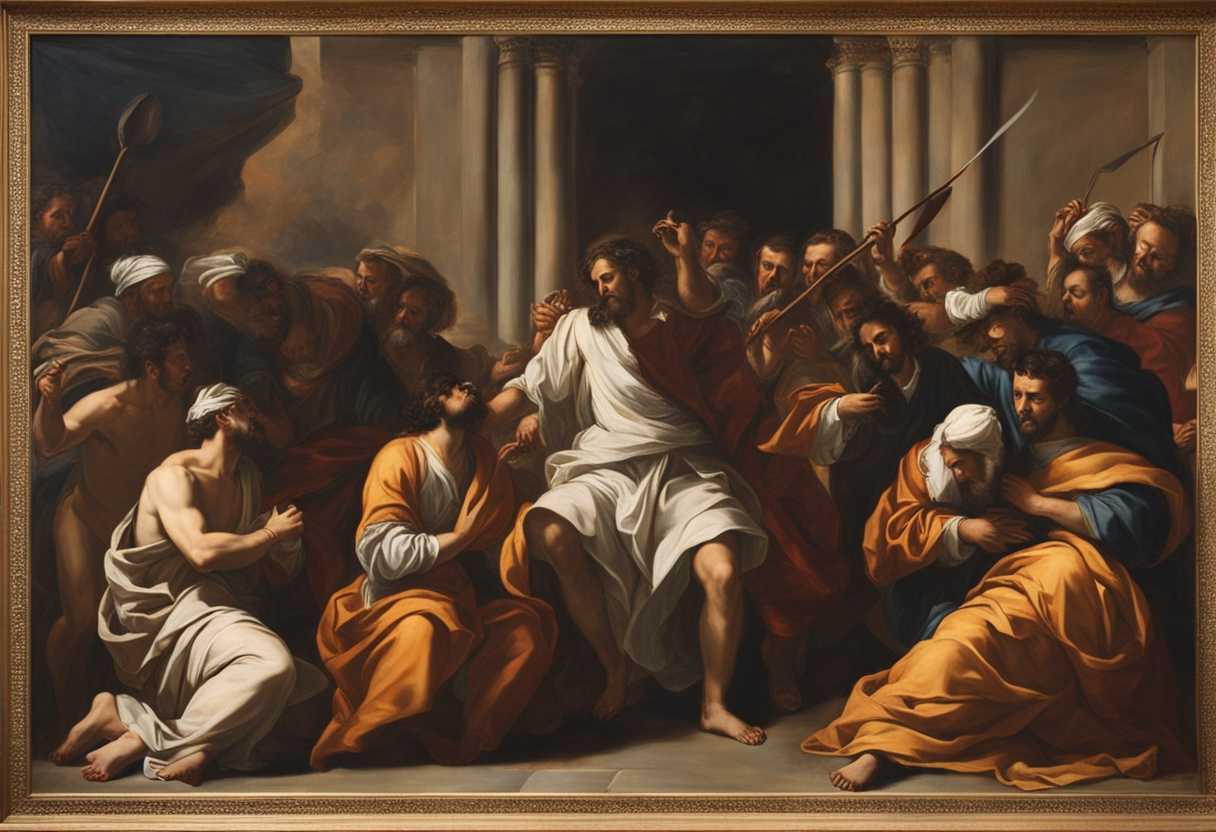
Setting the Scene for Leviticus 9:22-24
The scene described in Leviticus 9:22-24 takes place in the Tabernacle, a sacred tent constructed by the Israelites in the wilderness under the guidance of Moses. The Tabernacle was the central place of worship and sacrifice for the Israelites during their journey from Egypt to the Promised Land.
In this particular scene, Aaron, the high priest, is standing before the altar within the Tabernacle. He is accompanied by his sons, Nadab and Abihu, as well as the rest of the Israelite community. The people have gathered to witness the consecration of the Tabernacle and the ordination of Aaron and his sons as priests.
As the ceremony unfolds, Aaron offers sacrifices on behalf of the people to atone for their sins and seek God’s favor. In a moment of divine approval, fire comes out from the presence of the Lord and consumes the offerings on the altar. The people witness this miraculous display of God’s acceptance of their worship, and they fall on their faces in reverence and awe. This event solidifies Aaron and his sons’ roles as the chosen mediators between God and the Israelites, establishing the sacrificial system that would be central to their worship practices for generations to come.
What is Leviticus 9:22-24 about?
We witness a powerful moment of divine affirmation and celebration in the Old Testament in this verse. Aaron, the high priest, is blessing the people as a representative of God, invoking God’s favor and protection upon them. This act of blessing signifies a spiritual connection between the people and the divine, emphasizing the importance of leadership and intercession in religious contexts. The appearance of fire from the Lord further emphasizes the presence and approval of God, symbolizing purification, guidance, and power.
Imagine the awe and wonder the people must have felt as they witnessed this miraculous display of divine intervention! The fire from the Lord not only physically manifested God’s presence but also served as a symbol of His authority and protection over the people. The people’s joyful shouts reflect their gratitude and reverence for God’s blessings and reaffirm their faith in His providence. This verse serves as a reminder of the significance of spiritual leadership, the power of divine intervention, and the importance of celebrating and acknowledging God’s presence in our lives.
Understanding what Leviticus 9:22-24 really means
Leviticus 9:22-24 captures a pivotal moment in the consecration of Aaron and his sons as priests, marking the culmination of their ordination and the tangible presence of God among the Israelites. The Book of Leviticus delves into the laws and rituals that governed the Israelites’ worship and pursuit of holiness, with chapters 8 and 9 specifically detailing the establishment of the priesthood through Aaron and his sons.
In this passage, the act of Aaron lifting his hands to bless the people symbolizes his role as a mediator, invoking God’s favor and protection on behalf of the community. The visible manifestation of “the glory of the Lord” to all the people signifies God’s acceptance of the sacrifices and the legitimacy of Aaron’s priesthood. Furthermore, the miraculous consumption of the burnt offering by fire from the Lord underscores His power and approval, solidifying the covenant relationship with His people.
Drawing parallels from related biblical passages such as Exodus 40:34-35 and 1 Kings 18:38, we see recurring themes of God’s presence and approval through visible signs like fire and glory. These instances serve as reminders of God’s power and faithfulness in affirming His chosen servants and establishing His covenant with His people. Moreover, Hebrews 9:11-12 points to Christ as the ultimate high priest whose sacrifice fulfills and surpasses the role initiated by Aaron and his sons, highlighting the continuity and fulfillment of God’s redemptive plan.
The relevance of Leviticus 9:22-24 extends to contemporary believers, emphasizing the significance of seeking God’s presence and approval in our lives. Just as the Israelites yearned for assurance of God’s guidance, we too seek His affirmation and leading in our daily walk. The priestly role as a mediator finds its ultimate fulfillment in Jesus Christ, who intercedes on our behalf and reconciles us to God, exemplifying the perfect mediator between humanity and divinity.
Consider a modern-day scenario where a community gathers to dedicate a new church building. The atmosphere is charged with anticipation and reverence as the pastor prays and consecrates the space, akin to Aaron blessing the people and God’s glory appearing. This contemporary experience echoes the ancient event, reminding us of God’s enduring presence and involvement in our lives, urging us to seek His guidance and approval in all we do.
In conclusion, Leviticus 9:22-24 serves as a poignant reminder of God’s desire to dwell among His people and the vital role of faithful leadership in blessing and guiding the community. It prompts us to acknowledge and pursue God’s presence in our lives, trusting in His power and approval as we navigate our faith journey with confidence and assurance.
How can we experience God’s glorious presence today?
We can experience God’s glorious presence today by fully surrendering ourselves to Him in obedience and worship. We can also lift our hands in praise and adoration, just as Aaron lifted his hands and blessed the people before the Lord’s presence descended in fire. We create a space for His glory to manifest in our lives by giving God our full attention and adoration.
Additionally, seeking purity in our hearts and lives allows us to experience God’s glorious presence in a more profound way. We can present our lives as a living sacrifice, holy and pleasing to Him, just as the burnt offering in Leviticus symbolized complete dedication and surrender to God. When we strive for purity and holiness, we position ourselves to encounter God in a deeper and more intimate way.
Finally, we can invite God’s glorious presence into our lives by gathering together with other believers in unity and worship. We too can experience the power of God’s presence when we come together as a community of faith, as the entire congregation of Israel witnessed God’s glory descending upon the tabernacle. During times of corporate worship, prayer, and fellowship, we can sense God’s presence in a tangible and transformational way.
Application
Let’s heed the Lord’s call for reverence and obedience in our lives. Like Aaron blessing the people, may we uplift our hearts in gratitude. Let’s follow his example, living faithfully and in holiness to fulfill God’s will. Will you join me in glorifying the Lord through our actions?

Reverend Michael Johnson is an experienced Church Minister with a profound expertise in spirituality and guidance. With a serene presence and a compassionate heart, he has faithfully served his congregation for over 20 years, leading them on a spiritual journey towards inner peace and enlightenment. Reverend Johnson’s extensive knowledge of religious philosophies and profound understanding of human nature have made him a trusted confidant and mentor to many, as he seamlessly weaves his profound wisdom into life teachings. Reverend Johnson’s calming demeanor and empathetic nature continue to uplift and heal souls, nurturing a sense of unity and tranquility within his community.