
Leviticus 9:9 is about the significance of offering sacrifices in accordance with God’s commands as a symbol of obedience and worship.
9 And the sons of Aaron presented the blood to him, and he dipped his finger in the blood and put it on the horns of the altar and poured out the blood at the base of the altar.
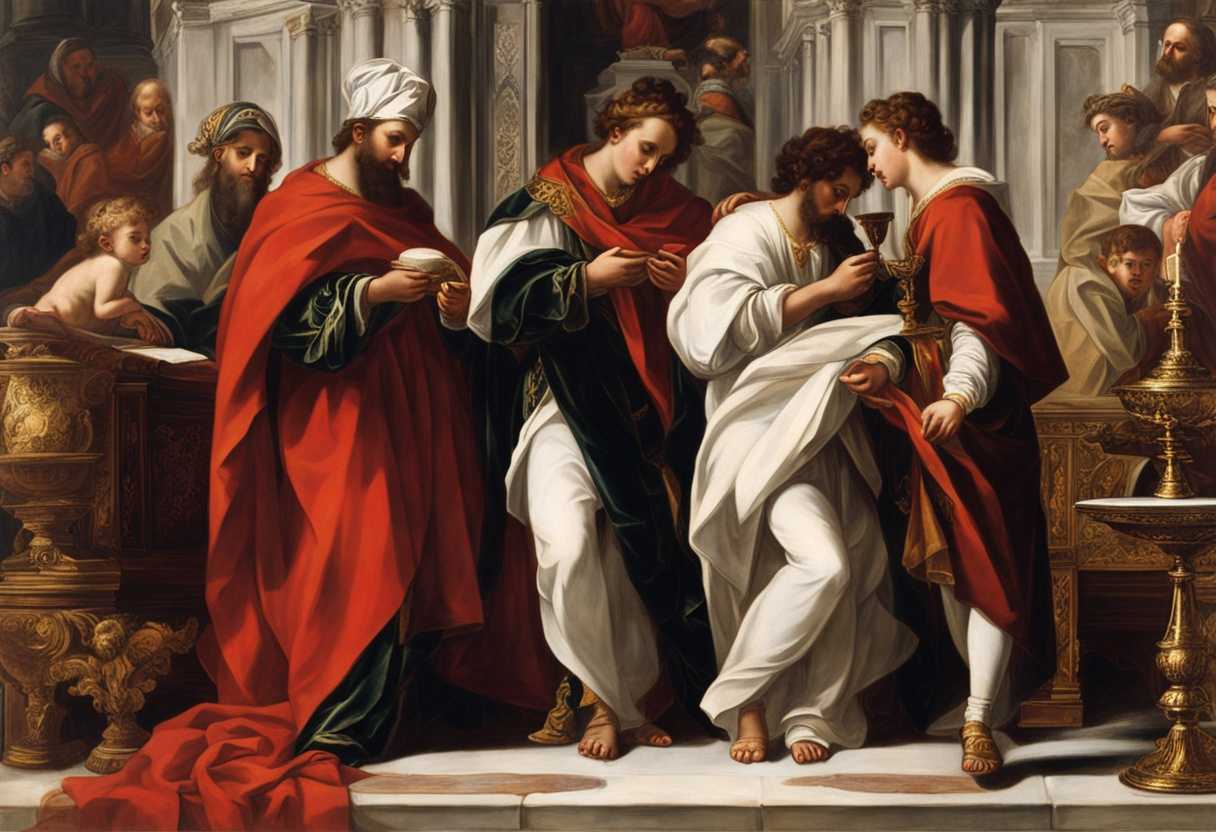
Setting the Scene for Leviticus 9:9
In Leviticus chapter 9, we find ourselves in the Tabernacle in the wilderness, a sacred and elaborate tent constructed by the Israelites as a place of worship and sacrifice. The scene is set on the eighth day after Aaron and his sons were consecrated as priests. Aaron, the high priest, is at the center of the action, dressed in his priestly garments and ready to perform the rituals prescribed by God.
Surrounding Aaron are his sons, Nadab, Abihu, Eleazar, and Ithamar, who are also dressed in their priestly attire. The atmosphere is filled with anticipation and reverence as the Israelites gather to witness the first official offerings and sacrifices being made by the newly ordained priests. The air is heavy with the scent of incense and burning offerings, and the sound of prayers and chants fills the sacred space.
As the ceremony unfolds, Aaron follows the instructions given by Moses and carries out the rituals with precision and devotion. The people watch in awe as the glory of the Lord appears to them in a powerful display, affirming the consecration of Aaron and his sons as the chosen mediators between God and the people of Israel. This moment marks the beginning of a new chapter in the relationship between God and His people, solidifying the role of the priesthood in the worship and service of the Lord.
What is Leviticus 9:9 about?
Aaron, the high priest, and his sons offer sacrifices in Leviticus 9:9 to make atonement for the sins of the people. This act of atonement was essential in the Israelite community as it served to reconcile the people with God and seek forgiveness for their transgressions. Through the sacrifices, the sins of the community were symbolically transferred onto the animal, which was then offered to God as a sign of repentance and seeking forgiveness.
This verse underscores the importance of acknowledging our mistakes and seeking reconciliation with others and with a higher power. It prompts us to reflect on our own actions and consider the impact of our behavior on ourselves and those around us. Aaron and his sons exemplified the principle of taking responsibility for one’s actions and seeking forgiveness by making offerings to atone for their sins, in order to restore harmony and maintain a strong spiritual connection with God.
Do you ever find yourself needing to seek forgiveness or make amends for something you’ve done wrong? How do you approach making things right with those you have wronged? Reflecting on the concept of atonement in Leviticus 9:9 can provide us with valuable insights into the importance of acknowledging our faults, seeking forgiveness, and striving towards reconciliation in our own lives.
Understanding what Leviticus 9:9 really means
Leviticus 9:9, nestled within the pages of the Old Testament, specifically in the book of Leviticus, serves as a poignant reminder of the intricate laws and rituals prescribed for the Israelites. This verse finds its place in the consecration of Aaron and his sons as priests, delineating the precise actions and sacrifices they are to undertake. “The sons of Aaron brought the blood to him,” a simple yet profound phrase, underscores the communal aspect of religious practices, highlighting the collaborative effort within families and communities in carrying out sacred duties.
In the subsequent actions described in Leviticus 9:9, we witness Aaron dipping his finger in the blood and anointing the horns of the altar. This symbolic act of purification and sanctification signifies the holiness imparted through the blood sacrifice, a ritualistic representation of the cleansing power of atonement. Furthermore, the pouring out of the remaining blood at the base of the altar symbolizes the thoroughness and completeness of the sacrifice, ensuring that every aspect of the ritual is meticulously fulfilled in accordance with God’s commands.
Drawing parallels from related biblical passages such as Hebrews 9:22 and Exodus 29:12, we discern a continuity in the significance of blood sacrifice for forgiveness and atonement. The connection between the Old Testament sacrificial system and the ultimate sacrifice of Jesus Christ in the New Testament underscores the foundational importance of blood in the process of reconciliation and redemption. These passages serve as a cohesive thread weaving together the narrative of sacrifice and forgiveness throughout the biblical text.
The enduring relevance of Leviticus 9:9 lies in its portrayal of sacrifice, atonement, and communal participation, resonating with contemporary audiences grappling with the concept of sin and redemption. By delving into the intricacies of these ancient rituals, modern readers can glean insights into the gravity of sin and the profound lengths to which God extends His grace for reconciliation. Just as each individual in a community contributes to the restoration of a neglected park, the meticulous obedience and sacrificial acts outlined in Leviticus emphasize the collective responsibility towards spiritual purity and sanctification.
In conclusion, Leviticus 9:9 encapsulates timeless truths about sacrifice, community, and holiness, transcending its ancient origins to offer profound reflections on the nature of atonement and sanctification. By contemplating the significance of these rituals, we are invited to deepen our understanding of Jesus’ ultimate sacrifice and our role in upholding spiritual purity and fostering community bonds. As we navigate the complexities of faith and obedience, may the lessons embedded in Leviticus 9:9 guide us towards a deeper appreciation of the sacrificial love that underpins our Christian journey.
What significance do consecrated garments have in worship today?
Consecrated garments hold great significance in worship today as they serve as a symbol of a person’s dedication and separation for a holy purpose. Modern-day worshippers may wear special attire during worship to signify their reverence and respect for the sacred space and the act of worship itself, just as Aaron and his sons were instructed to wear specific garments for their roles in the priesthood in Leviticus 9:9.
The act of wearing consecrated garments can also create a sense of unity and identity among worshippers, as they come together in a shared expression of faith and devotion. Individuals are reminded of their commitment to serving a higher purpose and being set apart for God’s work by putting on these special garments, just as Aaron and his sons fulfilled their duties with reverence and obedience. Consecrated garments in worship today continue to hold significance in helping worshippers focus their minds and hearts on the sacredness of the act of worship, symbolizing their separation for a holy purpose and serving as a visible reminder of their dedication to God and their communal identity as people of faith.
Application
Harness the strength of obedience like a skilled professional in your career or a devoted caretaker in your family. Let it fuel your dedication to God’s teachings. Take firm steps each day to showcase your faith through your deeds. Will you bravely embrace the task of embodying your beliefs genuinely and passionately?

Reverend Michael Johnson is an experienced Church Minister with a profound expertise in spirituality and guidance. With a serene presence and a compassionate heart, he has faithfully served his congregation for over 20 years, leading them on a spiritual journey towards inner peace and enlightenment. Reverend Johnson’s extensive knowledge of religious philosophies and profound understanding of human nature have made him a trusted confidant and mentor to many, as he seamlessly weaves his profound wisdom into life teachings. Reverend Johnson’s calming demeanor and empathetic nature continue to uplift and heal souls, nurturing a sense of unity and tranquility within his community.