
Luke 10:31 is about demonstrating compassion and mercy towards others, as exemplified by the Good Samaritan who stopped to help a stranger in need despite societal and religious barriers.
31 Now by chance a priest was going down that road, and when he saw him he passed by on the other side.
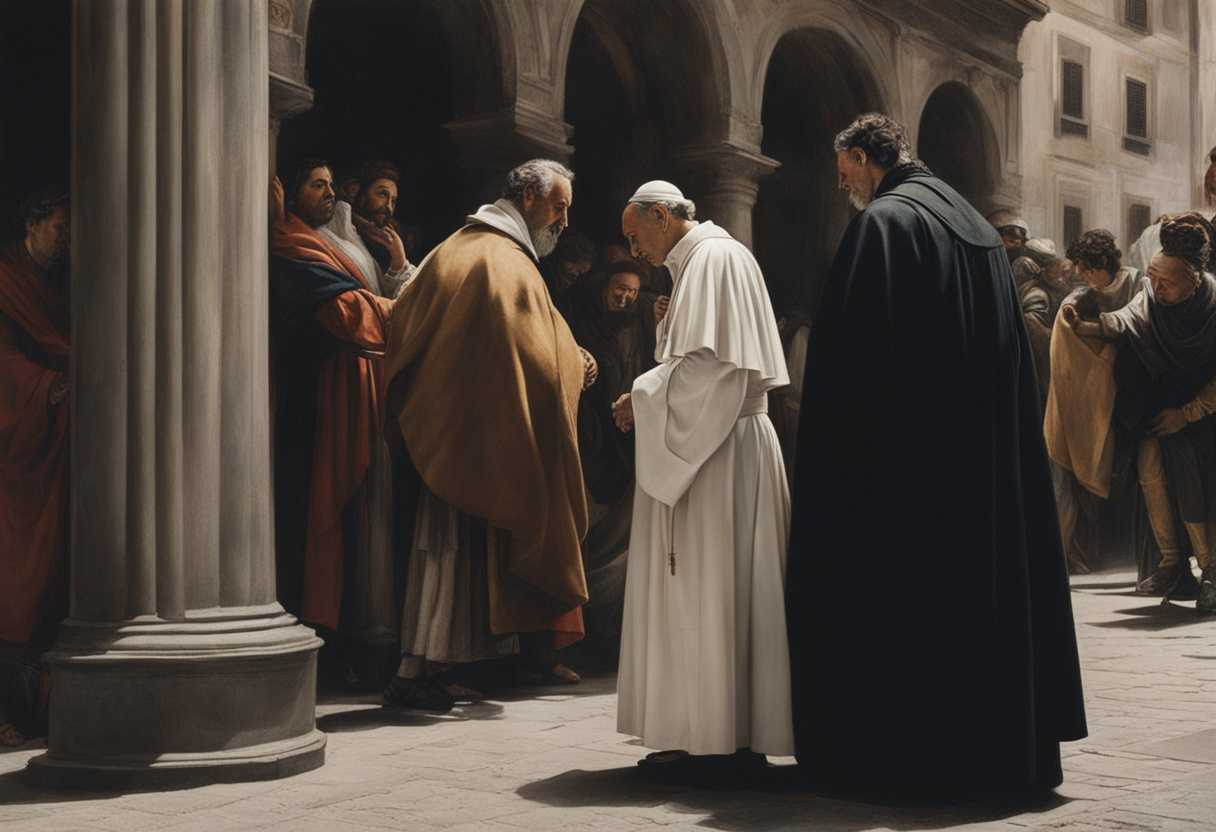
Setting the Scene for Luke 10:31
In Luke chapter 10, Jesus tells the parable of the Good Samaritan to a group of people gathered around him. The scene is set on a dusty road leading from Jerusalem to Jericho, a route known for its dangers and frequent robberies. Jesus is surrounded by a diverse crowd, including his disciples, religious leaders, and curious onlookers who have gathered to hear his teachings.
Among the listeners are a skeptical Pharisee, a humble Samaritan, a wounded traveler, and a compassionate innkeeper. The Samaritan, often despised by the Jews, takes center stage in the parable as the unexpected hero who shows mercy and kindness to the injured man. As Jesus weaves the story, the audience is captivated by the message of love and compassion transcending social boundaries.
The sun beats down on the group as they listen intently to Jesus’ words, the sounds of the bustling road in the background. The parable challenges their preconceived notions and inspires them to reflect on their own attitudes towards those different from themselves. As the story unfolds, hearts are stirred, and minds are opened to the transformative power of selfless love.
What is Luke 10:31 about?
Absolutely! This parable is a profound lesson about showing kindness and empathy to those in need, regardless of their background or circumstances. It challenges us to reflect on our own attitudes towards others and encourages us to break down barriers of prejudice and discrimination. This parable urges us to step out of our comfort zones and extend a helping hand to those who may be marginalized or overlooked in society by highlighting the selfless actions of the Samaritan, who went out of his way to help a stranger in distress. Consider how this parable’s implications apply to your own life. How can you embody the compassion and generosity of the Good Samaritan towards those around you? Are there any prejudices or biases that may be hindering your ability to show love and care to others? Let this parable serve as a reminder that true kindness knows no boundaries and that we all have the capacity to be agents of healing and hope in the world. How can you make a conscious effort to live out the message of the Good Samaritan in your daily interactions with others?
Understanding what Luke 10:31 really means
In the Parable of the Good Samaritan, Jesus responds to a lawyer’s inquiry about who qualifies as a neighbor. The narrative unfolds with a priest encountering a wounded man on the road. The priest’s decision to pass by on the other side symbolizes a missed opportunity for compassion, shedding light on the contrast between religious authority and practical mercy. This deliberate choice to ignore the man prompts reflection on our own responses to those in need.
The key phrases in Luke 10:31, such as the priest’s actions, serve as poignant reminders of the importance of active compassion. They challenge us to move beyond mere religious rituals to tangible expressions of love and care. This verse resonates with related passages like Matthew 25:35-40, where Jesus equates helping the vulnerable with serving Him, emphasizing the interconnectedness of faith and deeds. Similarly, James 2:14-17 underscores the necessity of translating belief into action, highlighting the significance of practical expressions of faith.
Micah 6:8 further reinforces the themes of justice, mercy, and humility found in the Parable of the Good Samaritan. These verses collectively call us to introspection and action, urging us to embody the values of compassion and mercy in our interactions with others. The relevance of this message in contemporary society is undeniable, as it challenges us to reevaluate our attitudes and behaviors towards those in need.
Consider a scenario where a busy professional encounters a homeless individual daily but initially chooses to ignore their plight. However, a simple act of stopping, sharing a meal, and listening to the person’s story transforms both lives. This anecdote illustrates the profound impact of compassion in action and serves as a compelling example of the transformative power of kindness.
Reflect on moments when you may have metaphorically “passed by on the other side” in your own life. Ponder how you can emulate the compassion of the Good Samaritan by actively reaching out to those in need. Challenge yourself to take practical steps, whether through volunteering, offering support, or demonstrating kindness in everyday interactions. By embodying Christ’s love and mercy, we not only fulfill the essence of the law but also become living testimonies to the grace and transformative power of God in the world.
What excuses do we make for not helping others?
We might make excuses for not helping others by focusing on our own needs and priorities, thinking that they are more important than extending a helping hand to those in need. This can lead us to become self-centered and indifferent to the struggles of others. Instead of putting ourselves first, we should remember the importance of showing compassion and love towards our neighbors, even when it inconveniences us or requires us to go out of our way.
Another excuse we may use is feeling that we are too busy or have too much going on in our own lives to spare time and energy to help others. We may convince ourselves that we do not have the resources or capabilities to make a difference, or that someone else will step in and take care of the situation. However, it is vital to recognize that every small act of kindness and generosity can have a significant impact on someone else’s life, and that our contributions, no matter how small, can make a meaningful difference. We might make excuses for not helping others by making judgments or assumptions about their circumstances or worthiness of assistance. These preconceived notions can prevent us from extending help and support to those who may truly need it. It is important to remember that everyone deserves to be treated with kindness and compassion, regardless of their background or situation. We can overcome our excuses and make a positive impact in the lives of others by opening our hearts and minds to those in need.
Application
Let’s embrace the lesson from Luke 10:31 and embody compassion as we navigate the complexities of our modern lives. Just like we show understanding and care in our workplaces and homes, let’s also extend that kindness to those around us. Let’s be the guiding light in a world that sometimes feels dim, by helping those in need and standing united despite our diverse backgrounds. Will you join the journey of spreading love and support today?

Reverend Michael Johnson is an experienced Church Minister with a profound expertise in spirituality and guidance. With a serene presence and a compassionate heart, he has faithfully served his congregation for over 20 years, leading them on a spiritual journey towards inner peace and enlightenment. Reverend Johnson’s extensive knowledge of religious philosophies and profound understanding of human nature have made him a trusted confidant and mentor to many, as he seamlessly weaves his profound wisdom into life teachings. Reverend Johnson’s calming demeanor and empathetic nature continue to uplift and heal souls, nurturing a sense of unity and tranquility within his community.