
Luke 11:37-54 is about Jesus rebuking the Pharisees and legal experts for their hypocrisy and lack of spiritual insight, emphasizing the importance of true righteousness rather than outward appearances or adherence to religious traditions.
37 While Jesus was speaking, a Pharisee asked him to dine with him, so he went in and reclined at table.
38 The Pharisee was astonished to see that he did not first wash before dinner.
39 And the Lord said to him, “Now you Pharisees cleanse the outside of the cup and of the dish, but inside you are full of greed and wickedness.
40 You fools! Did not he who made the outside make the inside also?
41 But give as alms those things that are within, and behold, everything is clean for you.
42 “But woe to you Pharisees! For you tithe mint and rue and every herb, and neglect justice and the love of God. These you ought to have done, without neglecting the others.
43 Woe to you Pharisees! For you love the best seat in the synagogues and greetings in the marketplaces.
44 Woe to you, scribes and Pharisees, hypocrites! For you are like unmarked graves, and people walk over them without knowing it.
45 One of the lawyers answered him, “Teacher, in saying these things you insult us also.”
46 And he said, “Woe to you lawyers also! For you load people with burdens hard to bear, and you yourselves do not touch the burdens with one of your fingers.
47 Woe to you! For you build the tombs of the prophets whom your fathers killed.
48 So you are witnesses and you consent to the deeds of your fathers, for they killed them, and you build their tombs.
49 Therefore also the Wisdom of God said, ‘I will send them prophets and apostles, some of whom they will kill and persecute,’
50 so that the blood of all the prophets, shed from the foundation of the world, may be charged against this generation,
51 from the blood of Abel to the blood of Zechariah, who perished between the altar and the sanctuary. Yes, I tell you, it will be required of this generation.
52 Woe to you lawyers! For you have taken away the key of knowledge. You did not enter yourselves, and you hindered those who were entering.”
53 As he went away from there, the scribes and the Pharisees began to press him hard and to provoke him to speak about many things,
54 lying in wait for him, to catch him in something he might say.
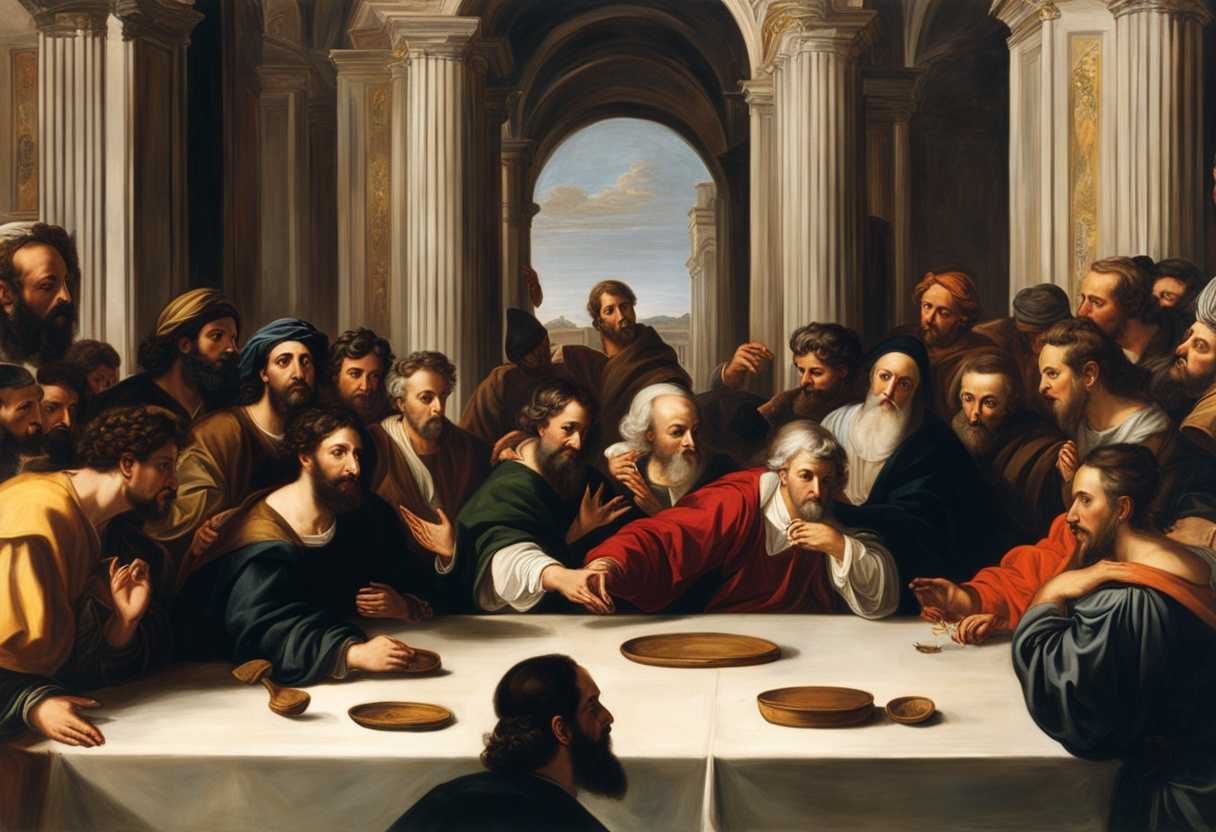
Setting the Scene for Luke 11:37-54
In Luke chapter 11, we find Jesus in the midst of a tense and confrontational scene at a Pharisee’s house. The Pharisees were a group of religious leaders known for their strict adherence to the Jewish law and traditions. They invited Jesus to dine with them, likely with the intention of testing or trapping him in his words.
As Jesus reclines at the table, surrounded by Pharisees and experts in the law, the atmosphere is charged with suspicion and hostility. The Pharisees closely watch Jesus, looking for any opportunity to criticize or accuse him. They are critical of Jesus and his disciples for not following the traditional rituals of handwashing before eating, which they considered essential for ceremonial purity.
In this scene, Jesus does not shy away from addressing the hypocrisy and wickedness of the Pharisees. He rebukes them for their outward show of piety while neglecting justice and the love of God. The tension escalates as Jesus exposes their hypocrisy and pronounces woes upon them for their unrighteousness. The Pharisees become increasingly hostile towards Jesus, plotting to catch him in his words and find a way to accuse him.
What is Luke 11:37-54 about?
Imagine walking alongside Jesus as he confronts the religious leaders of his time. Picture their shock and discomfort as he boldly speaks out against their hypocrisy. These religious leaders were supposed to be guiding and setting an example for the people, yet Jesus saw through their facade and called out their lack of sincerity. We, as teachers and leaders ourselves, must reflect on this verse and examine our own actions. Are we truly practicing what we preach? Are we prioritizing justice and righteousness, or are we allowing our own interests to cloud our judgment and hinder others from experiencing the love and grace of God? Jesus’ rebuke serves as a powerful reminder for us to remain humble, genuine, and focused on the true essence of our teachings. Let us take this verse to heart and strive to be authentic in our actions, always seeking justice and righteousness in everything we do. May we never hinder others from knowing God’s love and may we always lead by example, just as Jesus did during his time on Earth.
Understanding what Luke 11:37-54 really means
In Luke 11:37-54, we find Jesus dining with a Pharisee, setting the stage for a series of teachings and rebukes. The main themes revolve around hypocrisy, true cleanliness, and the significance of inner purity over outward appearances. Jesus confronts the Pharisees, pointing out their tendency to focus on external rituals while neglecting their inner moral state. He uses vivid imagery, such as comparing them to whitewashed tombs, to emphasize the contrast between their outward religious observance and their internal corruption. This challenges us to engage in self-examination and genuine repentance, recognizing the importance of authenticity in our faith.
One key phrase in this passage is when Jesus says, “You Pharisees clean the outside of the cup and dish, but inside you are full of greed and wickedness.” This statement underscores the need for integrity and sincerity in our relationship with God. It urges us to look beyond mere appearances and focus on cultivating a pure heart. Similarly, when Jesus pronounces, “Woe to you, because you are like unmarked graves, which people walk over without knowing it,” He highlights the hidden dangers of hypocrisy and the negative impact it can have on others without their awareness.
Drawing parallels with other biblical passages, we see a consistent message emphasizing the importance of inner authenticity. In Matthew 23:25-28, Jesus rebukes the Pharisees for their hypocrisy, likening them to whitewashed tombs. Isaiah 29:13 reinforces the idea that God values genuine worship from the heart, not just outward displays. 1 Samuel 16:7 further emphasizes God’s focus on the heart, highlighting the significance of inner purity over external appearances.
The relevance of these teachings to modern society is striking. In a world that often prioritizes superficial success and image, this passage challenges us to seek true authenticity and integrity. It prompts personal reflection, urging individuals to evaluate whether they are genuinely living out their values or merely putting on a show for others. An anecdote of a man who appeared kind in public but was harsh at home serves as a poignant reminder that true goodness must permeate all aspects of our lives, both public and private.
In conclusion, this passage calls us to action by prompting us to reflect on our lives and align our inner values with our outward actions. It encourages us to seek a heart that is pure and sincere, recognizing that God values authenticity over mere appearances. As we strive for inner purity and integrity, we can rest in the assurance that God offers grace and transformation to those who earnestly seek it.
Do I focus on outward appearance or inner purity?
The verse in question addresses the criticism Jesus faced from the Pharisees for not adhering to certain rituals related to outward cleanliness before eating. Jesus responds by pointing out the hypocrisy of focusing solely on superficial cleansing rituals while neglecting the more important aspects of internal purity, such as justice and love.
The message conveyed in the verse emphasizes the significance of inner purity over outward appearance. Jesus cautions against placing excessive emphasis on external practices and appearances, as true purity comes from the heart and is reflected in one’s actions and intentions. The verse emphasizes the importance of inner purity, encouraging individuals to focus on cultivating a genuine and sincere relationship with God and others, rather than simply conforming to societal expectations or rituals. The verse ultimately underscores the value of integrity, authenticity, and compassion in one’s spiritual journey. Individuals are encouraged to seek a deeper connection with God and embody His teachings through their thoughts, words, and deeds by prioritizing inner purity over outward appearance. This message serves as a reminder to prioritize the matters of the heart and soul, as they are ultimately what define a person’s character and relationship with the divine.
Application
Hey there, it’s time to dig deep and reflect on our faith journey just like we do with our jobs or family. Are we truly being authentic in our beliefs and actions? Let’s not just go through the motions but strive for a genuine connection with our faith. It’s about honoring God, serving others, and being true to ourselves. Take the leap today to strengthen your faith and follow in the footsteps of love and devotion. Are you ready to live out your faith authentically today?

Reverend Michael Johnson is an experienced Church Minister with a profound expertise in spirituality and guidance. With a serene presence and a compassionate heart, he has faithfully served his congregation for over 20 years, leading them on a spiritual journey towards inner peace and enlightenment. Reverend Johnson’s extensive knowledge of religious philosophies and profound understanding of human nature have made him a trusted confidant and mentor to many, as he seamlessly weaves his profound wisdom into life teachings. Reverend Johnson’s calming demeanor and empathetic nature continue to uplift and heal souls, nurturing a sense of unity and tranquility within his community.