
Luke 11:45-52 is about the criticism Jesus directs towards the Pharisees and experts in the law for their hypocrisy and failure to uphold justice and love, holding them accountable for the blood of the prophets and revealing their rejection of God’s wisdom.
45 One of the lawyers answered him, “Teacher, in saying these things you insult us also.”
46 And he said, “Woe to you lawyers also! For you load people with burdens hard to bear, and you yourselves do not touch the burdens with one of your fingers.
47 Woe to you! For you build the tombs of the prophets whom your fathers killed.
48 So you are witnesses and you consent to the deeds of your fathers, for they killed them, and you build their tombs.
49 Therefore also the Wisdom of God said, ‘I will send them prophets and apostles, some of whom they will kill and persecute,’
50 so that the blood of all the prophets, shed from the foundation of the world, may be charged against this generation,
51 from the blood of Abel to the blood of Zechariah, who perished between the altar and the sanctuary. Yes, I tell you, it will be required of this generation.
52 Woe to you lawyers! For you have taken away the key of knowledge. You did not enter yourselves, and you hindered those who were entering.”
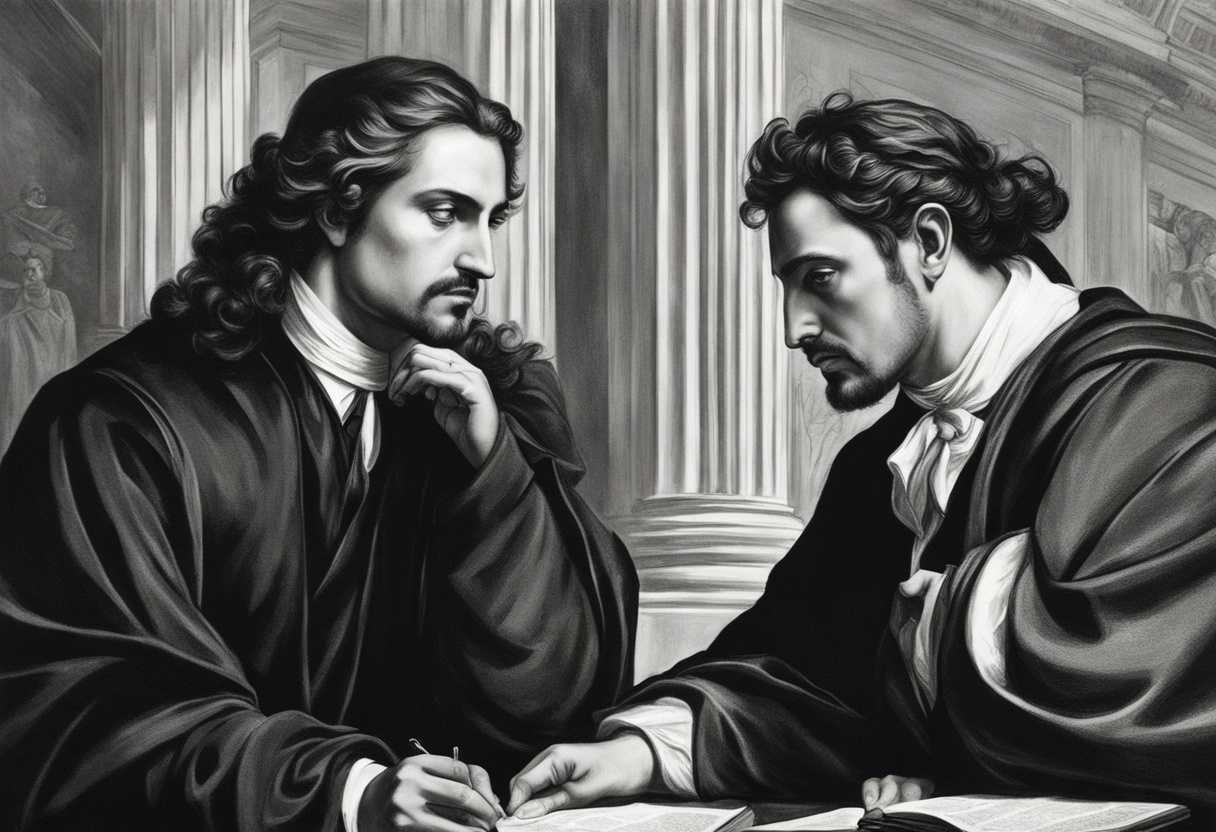
Setting the Scene for Luke 11:45-52
In Luke 11:45-52, Jesus is addressing a group of Pharisees and experts in the law who have gathered around Him. The scene is set in a crowded marketplace in Jerusalem, with vendors selling their goods and people bustling about. The Pharisees and experts in the law have come to challenge Jesus and question His teachings.
The Pharisees, known for their strict adherence to religious laws, are dressed in their traditional robes and phylacteries, standing in a self-righteous manner. The experts in the law, well-versed in the scriptures, are also present, eager to test Jesus with their knowledge. Jesus, in contrast, is surrounded by a diverse group of followers, including fishermen, tax collectors, and other ordinary people who are drawn to His teachings of love and compassion.
As Jesus speaks to the Pharisees and experts in the law, He rebukes them for their hypocrisy and lack of compassion. He exposes their outward piety as a facade, criticizing them for burdening the people with religious rules without showing them the true heart of God’s law. Despite the tension in the air, Jesus remains calm and composed, using this opportunity to challenge the religious leaders to reflect on their own actions and attitudes.
What is Luke 11:45-52 about?
Jesus is condemning the hypocrisy of the religious leaders of his time in this verse. He is highlighting their failure to practice what they preach and their focus on appearing pious rather than truly living out the values they proclaim. Jesus also criticizes the leaders for neglecting justice and instead prioritizing rituals and rules. Jesus emphasizes the importance of genuine faith and living according to the principles of love, compassion, and righteousness by pointing out their hypocrisy and lack of concern for justice.
It makes us reflect on our own actions and intentions. Are we truly living according to the values we claim to uphold? Are we being genuine in our beliefs and actions, or are we more concerned with appearances and following rules for the sake of compliance? Jesus challenges us to prioritize justice, compassion, and authenticity in our spiritual journey, rather than getting caught up in superficial displays of piety. This verse serves as a reminder to examine our hearts and ensure that our actions align with our beliefs, leading us closer to a deeper connection with God and a more fulfilling spiritual life.
Understanding what Luke 11:45-52 really means
In Luke 11:45-52, Jesus delivers a powerful rebuke to the Pharisees and experts in the law, exposing their hypocrisy and the heavy burdens they place on the people. The phrase “Woe to you” used by Jesus signifies a deep sorrow and condemnation for the actions of the religious leaders, highlighting the severity of their wrongdoing. By accusing them of loading people down with burdens they can hardly carry, Jesus points out the oppressive and unrealistic demands imposed by these leaders, hindering the people from truly living out their faith.
Moreover, Jesus’ statement that the religious leaders have taken away the key to knowledge underscores their failure to guide the people in understanding God’s will. Instead of facilitating spiritual growth, they obstruct it. This critique echoes in Matthew 23:4, where the leaders are criticized for burdening others without lifting a finger to help. Hosea 4:6 further emphasizes the detrimental effects of lacking true knowledge of God, a knowledge the religious leaders were supposed to impart but failed to do so.
The relevance of these verses extends to contemporary times, serving as a cautionary tale against religious hypocrisy and the significance of authentic faith and leadership. They prompt us to be vigilant against those who impose burdens without offering support, urging leaders to lead with compassion and by example rather than through rigid rules. Consider a workplace scenario where a manager sets unattainable goals without providing assistance, creating a toxic environment. Similarly, religious leaders who burden their followers without support can foster a spiritually toxic atmosphere.
An anecdote illustrates the transformative power of supportive leadership. A pastor, observing the struggles of church members, initiated a support group instead of adding more rules. This initiative allowed individuals to share their challenges, receive practical help, and find encouragement, alleviating their burdens and fostering spiritual growth. These verses challenge us to evaluate our leadership styles and support mechanisms in guiding others on their spiritual journeys. They urge us to embody compassion, offer assistance, and ensure we do not hinder others’ paths to God. By internalizing and applying these teachings, we can cultivate a nurturing and supportive faith community.
Are we truly practicing justice and mercy?
The verse speaks about the importance of justice and mercy. Justice involves giving each person their due, treating them fairly and without bias. It means standing up for what is right and holding others accountable for their actions. Mercy, on the other hand, involves showing compassion and kindness to those who are in need or have wronged us. It is about extending forgiveness and grace, even when it may not seem deserved. The message of the verse prompts us to examine our own actions and attitudes towards others. Are we truly practicing justice and mercy in our daily lives? Are we quick to judge and condemn others, or do we strive to understand and offer a helping hand? The verse challenges us to go beyond mere words or outward appearances and to truly embody these virtues in our interactions with others. By following in the footsteps of Jesus, we foster a more just and compassionate society where all are valued and respected.
Application
Let’s dive into this powerful message showing the importance of true faith over empty gestures. It’s time to check our own intentions and behaviors, avoiding the trap of appearing devout without genuine belief. Let’s aim for genuine righteousness and fairness, harmonizing our actions with the values of Jesus. Are you willing to embrace this call and authentically follow in the path of our Savior?

Reverend Michael Johnson is an experienced Church Minister with a profound expertise in spirituality and guidance. With a serene presence and a compassionate heart, he has faithfully served his congregation for over 20 years, leading them on a spiritual journey towards inner peace and enlightenment. Reverend Johnson’s extensive knowledge of religious philosophies and profound understanding of human nature have made him a trusted confidant and mentor to many, as he seamlessly weaves his profound wisdom into life teachings. Reverend Johnson’s calming demeanor and empathetic nature continue to uplift and heal souls, nurturing a sense of unity and tranquility within his community.