
Isaiah 16:1-5 is about the call for Moab, represented by the people of a city, to seek refuge and show kindness to the oppressed, emphasizing God’s judgment on arrogance and the importance of showing compassion to those in need.
1 Send the lamb to the ruler of the land, from Sela, by way of the desert, to the mount of the daughter of Zion.
2 Like fleeing birds, like a scattered nest, so are the daughters of Moab at the fords of the Arnon.
3 “Give counsel; grant justice; make your shade like night at the height of noon; shelter the outcasts; do not reveal the fugitive;”
4 Let the outcasts of Moab sojourn among you; be a shelter to them from the destroyer. When the oppressor is no more, and destruction has ceased, and he who tramples underfoot has vanished from the land,
5 then a throne will be established in steadfast love, and on it will sit in faithfulness in the tent of David one who judges and seeks justice and is swift to do righteousness.
Setting the Scene for Isaiah 16:1-5
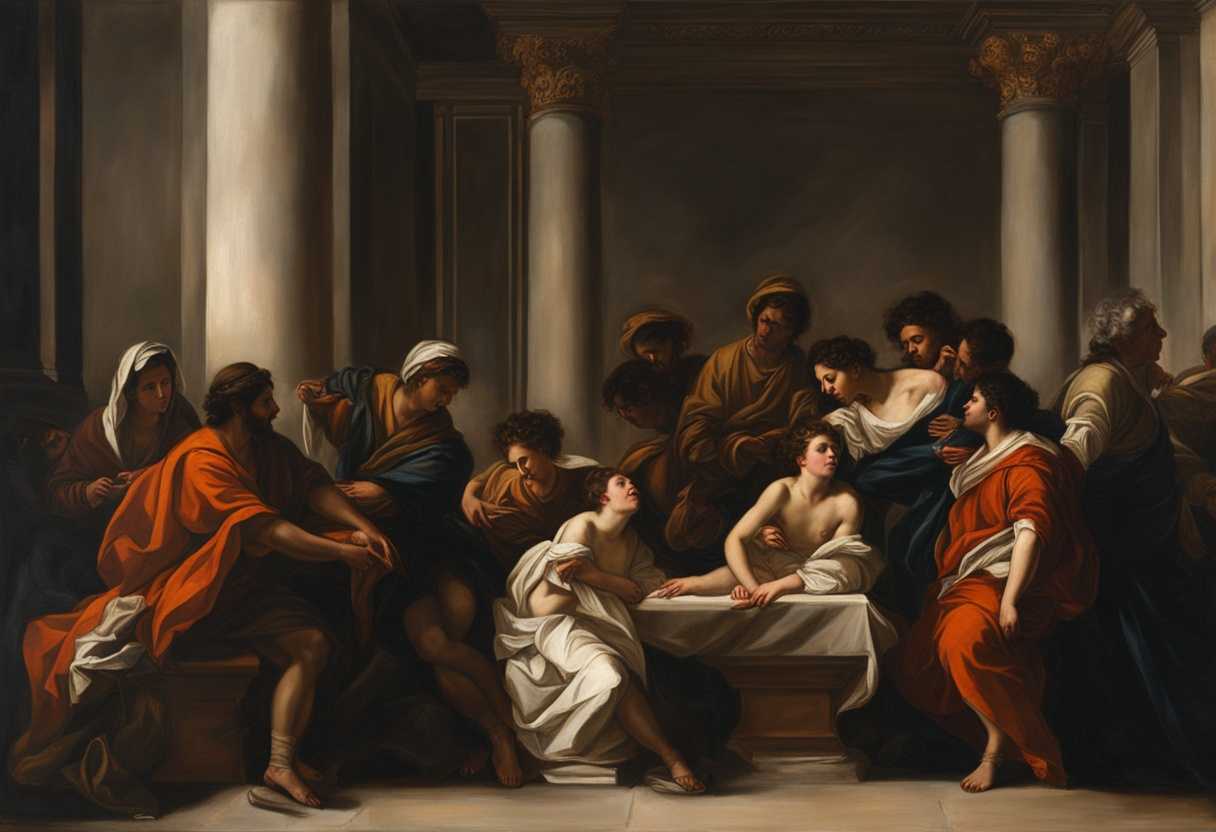
The scene in Isaiah 16:1-5 takes place in the ancient kingdom of Moab, a land located east of the Dead Sea. The passage describes a time of distress and upheaval for the Moabites, who were known for their pride and arrogance. The Moabites were facing a crisis as their land was being invaded and their cities were being destroyed. In this time of need, they were seeking refuge and protection.
The scene includes the Moabite leaders and people gathered together in a place of worship, possibly a temple or a sacred site, seeking guidance and help from their gods. The atmosphere is tense and filled with fear as they realize the gravity of the situation they are in. The leaders are discussing strategies to defend their land and protect their people, while the common folk are praying fervently for deliverance.
Among the prominent figures in the scene are the Moabite king and his advisors, as well as priests and religious leaders leading the prayers and rituals. The surroundings are described as a mix of chaos and desperation, with the sounds of wailing and lamentation filling the air. The scene captures the vulnerability and helplessness of a once proud nation now facing the consequences of their actions.
What is Isaiah 16:1-5 about?
The prophet Isaiah foretells the restoration of Moab after they face judgment for their sins in this verse. Despite the consequences Moab faces, there is hope for a brighter future. The mention of a future king from David’s line signifies a significant restoration and redemption for Moab, as having a king from the line of David symbolizes a connection to God’s promises and a sense of legitimacy and authority.
Imagine the sense of relief and joy Moab would feel knowing that despite their past transgressions, there is a promise of restoration and a new beginning. This verse highlights the mercy and grace of God, showing that even in times of judgment, there is always the possibility of redemption and renewal. It serves as a reminder that no matter how far we may stray, there is always hope for a fresh start and a chance to be reconciled with God.
Understanding what Isaiah 16:1-5 really means
In Isaiah 16:1-5, we delve into a prophecy concerning Moab, a neighboring nation of Israel, foretelling their judgment and the call for seeking refuge in Zion. The passage holds relevance for us today as we seek to understand its deeper meaning and how it resonates with contemporary life.
In verse 1, the instruction for Moab to “send lambs as tribute to the ruler of the land” carries historical significance as a gesture of seeking peace and alliance. This act symbolizes humility and the pursuit of reconciliation, echoing the importance of reconciliation before offering gifts to God as highlighted in Matthew 5:23-24.
Moving to verse 2, the imagery of Moab’s women being “like fluttering birds pushed from the nest” portrays vulnerability and displacement, reflecting the universal human condition of seeking refuge and security. This sentiment is echoed in other passages like Psalm 55:6 and Matthew 23:37, emphasizing the desire for protection and shelter.
Verse 3 urges Moab to “make up your mind” and take decisive action to provide refuge and protection, aligning with the biblical mandate to love the stranger and care for the least of these as seen in Deuteronomy 10:18-19 and Matthew 25:35-40. This call to action underscores the importance of extending compassion and support to those in need.
In verse 4, the plea to “let the Moabite fugitives stay with you” emphasizes the call for Israel to shelter the vulnerable, resonating with the biblical exhortations to show hospitality to strangers (Hebrews 13:2) and care for the marginalized (James 1:27). This verse highlights the timeless principle of compassion and protection for those in distress.
The prophecy in verse 5 of a righteous ruler from the house of David who seeks justice and righteousness points to Jesus Christ as the ultimate fulfillment of these qualities. This Messianic prophecy finds parallels in other scriptures like Isaiah 9:6-7 and Luke 1:32-33, underscoring the hope and promise of a just and righteous leader.
In our contemporary context, we are called to emulate the themes found in these verses by seeking reconciliation in our relationships, providing refuge and compassion to the vulnerable, and placing our hope in righteous leadership. These principles are exemplified in real-life anecdotes of reconciliation, community support for those in need, and individuals inspired by faith to work for justice and well-being.
As we reflect on the meaningful phrases and detailed descriptions within these verses, let us internalize the lessons of humility, compassion, and justice they convey. May we be inspired to embody these virtues in our interactions with others and in our pursuit of a more just and compassionate world.
How can we show kindness and hospitality to others?
One way to show kindness and hospitality to others, as mentioned in the verse, is by offering refuge and shelter to those in need. This can be achieved by providing a safe space for those who are vulnerable or troubled, offering them a place of comfort and security. We can embody the values of kindness and hospitality by extending a helping hand and showing compassion to those in distress.
Another way to demonstrate kindness and hospitality, as highlighted in the verse, is by being generous and charitable towards others. This can involve sharing resources, offering support, or providing for the needs of those who are less fortunate. Showing generosity towards others can create a sense of community and interconnectedness, fostering an environment of care and compassion.
Additionally, practicing empathy and understanding towards others is essential in showing kindness and hospitality in line with the verse. We can create a welcoming and nurturing space for those around us by putting ourselves in the shoes of others, listening to their needs, and offering support without judgment. Through acts of kindness and hospitality, we can cultivate a culture of compassion and inclusivity in our interactions with others.
Application
Friends, in the whirlwind of life’s challenges, let us heed the ancient wisdom of Isaiah 16:1-5 – embracing God’s sanctuary as the Moabite refugees did, finding solace and strength amidst turmoil. Let the divine words guide us to lean on Him, allowing His shield to fortify and lead us through life’s storms. Let’s pause, reflect, and ask ourselves: Are we wholeheartedly seeking God’s refuge in the chaos of our modern journeys?

Reverend Michael Johnson is an experienced Church Minister with a profound expertise in spirituality and guidance. With a serene presence and a compassionate heart, he has faithfully served his congregation for over 20 years, leading them on a spiritual journey towards inner peace and enlightenment. Reverend Johnson’s extensive knowledge of religious philosophies and profound understanding of human nature have made him a trusted confidant and mentor to many, as he seamlessly weaves his profound wisdom into life teachings. Reverend Johnson’s calming demeanor and empathetic nature continue to uplift and heal souls, nurturing a sense of unity and tranquility within his community.