
Luke 14:1-24 is about the invitation of God to all people to partake in the kingdom of heaven, emphasizing the importance of humility, compassion, and inclusivity in accepting His invitation.
1 One Sabbath, when he went to dine at the house of a ruler of the Pharisees, they were watching him carefully.
2 And behold, there was a man before him who had dropsy.
3 And Jesus responded to the lawyers and Pharisees, saying, “Is it lawful to heal on the Sabbath, or not?”
4 But they remained silent. Then he took him and healed him and sent him away.
5 And he said to them, “Which of you, having a son or an ox that has fallen into a well on a Sabbath day, will not immediately pull him out?”
6 And they could not reply to these things.
7 Now he told a parable to those who were invited, when he noticed how they chose the places of honor, saying to them,
8 “When you are invited by someone to a wedding feast, do not sit down in a place of honor, lest someone more distinguished than you be invited by him,”
9 and he who invited you both will come and say to you, ‘Give your place to this person,’ and then you will begin with shame to take the lowest place.
10 But when you are invited, go and sit in the lowest place, so that when your host comes he may say to you, ‘Friend, move up higher.’ Then you will be honored in the presence of all who sit at table with you.
11 For everyone who exalts himself will be humbled, and he who humbles himself will be exalted.
12 He said also to the man who had invited him, “When you give a dinner or a banquet, do not invite your friends or your brothers or your relatives or rich neighbors, lest they also invite you in return and you be repaid.
13 But when you give a feast, invite the poor, the crippled, the lame, the blind,
14 And you will be blessed, because they cannot repay you. For you will be repaid at the resurrection of the just.
15 When one of those who reclined at table with him heard these things, he said to him, “Blessed is everyone who will eat bread in the kingdom of God!”
16 But he said to him, “A man once gave a great banquet and invited many.”
17 And at the time for the banquet he sent his servant to say to those who had been invited, ‘Come, for everything is now ready.’
18 But they all alike began to make excuses. The first said to him, ‘I have bought a field, and I must go out and see it. Please have me excused.’
19 And another said, ‘I have bought five yoke of oxen, and I go to examine them. Please have me excused.’
20 But another said, ‘I have married a wife, and therefore I cannot come.’
21 So the servant came and reported these things to his master. Then the master of the house became angry and said to his servant, ‘Go out quickly to the streets and lanes of the city, and bring in the poor and crippled and blind and lame.’
22 And the servant said, ‘Sir, what you commanded has been done, and still there is room.’
23 And the master said to the servant, ‘Go out to the highways and hedges and compel people to come in, that my house may be filled.
24 For I tell you, none of those men who were invited shall taste my banquet.
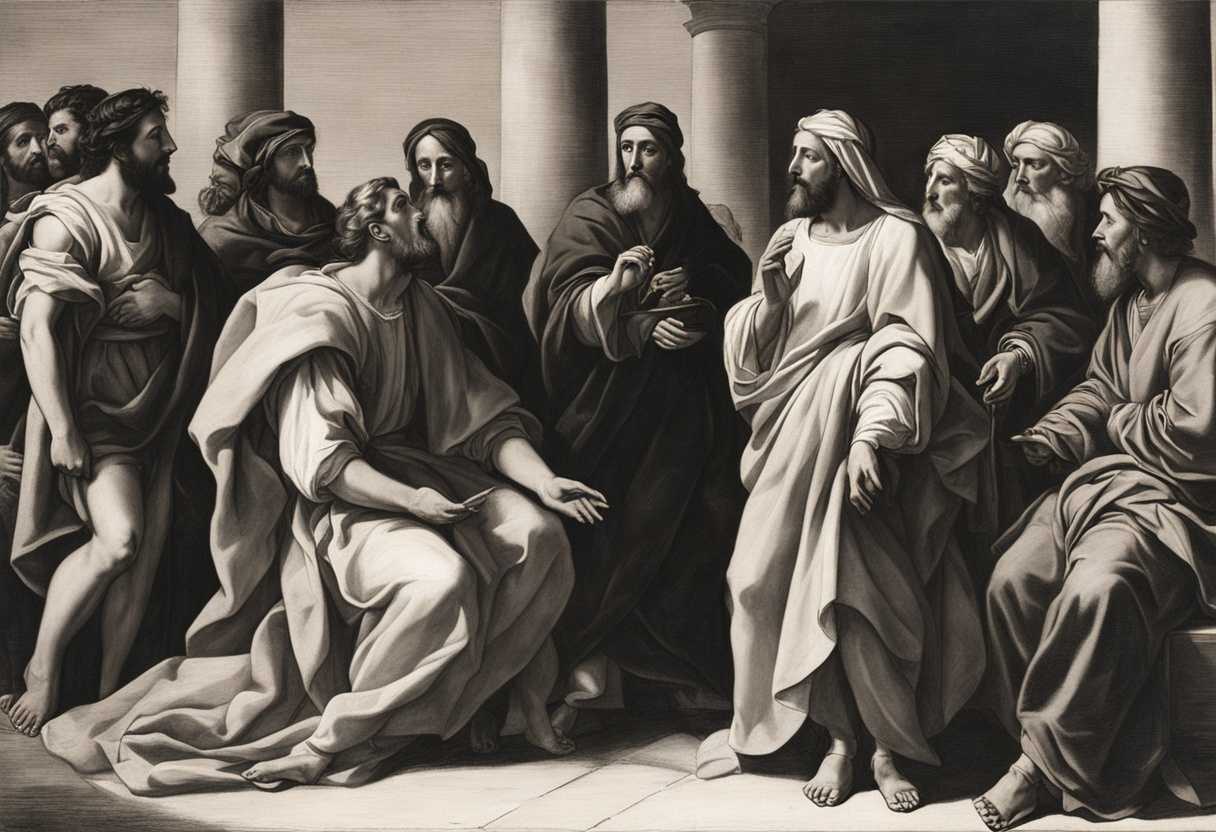
Setting the Scene for Luke 14:1-24
In Luke chapter 14, Jesus is invited to dine at the house of a prominent Pharisee on the Sabbath. As Jesus enters the house, he is closely watched by the Pharisees and experts in the law who are present. They are curious to see if Jesus will heal a man with dropsy on the Sabbath, which would be considered work and a violation of their strict interpretation of the law.
The scene is set in a grand dining hall with a long table adorned with fine linens and an array of sumptuous dishes. The guests are seated around the table, including the Pharisees, the experts in the law, and Jesus and his disciples. The atmosphere is tense as the Pharisees are waiting to see if Jesus will heal the man with dropsy, setting a trap for him to see if he will break their Sabbath laws.
As the events unfold, Jesus takes the opportunity to teach a valuable lesson on humility and the true meaning of hospitality. He observes how the guests at the table are vying for places of honor, and he tells them a parable about a man who hosts a great banquet and invites the poor, the crippled, the lame, and the blind to share in the feast. Jesus emphasizes the importance of showing kindness and generosity to those who cannot repay us, rather than seeking recognition and status from those who can.
What is Luke 14:1-24 about?
This verse conveys a profound lesson about God’s invitation to His kingdom. Just like a grand banquet where everyone is invited to partake in the abundance and joy, God extends His invitation to all of us. His kingdom is a place of grace, love, and eternal blessings awaiting those who choose to accept His call. However, the verse also highlights the reality that some may reject this invitation. Despite the generosity and goodness of God, there will be those who turn away and miss out on the blessings and intimacy of His kingdom.
Reflecting on this parable prompts us to question our own response to God’s invitation. Are we eagerly accepting His call and embracing His love, or are we hesitant and turning away from His presence? It challenges us to consider the reasons behind our actions and to evaluate the priorities and choices we make in our faith journey. The parable of the Great Banquet ultimately serves as a reminder of God’s unwavering invitation to each of us and the importance of responding with open hearts and willingness to partake in His kingdom.
Understanding what Luke 14:1-24 really means
In Luke 14:1-24, we find Jesus dining at the house of a prominent Pharisee on the Sabbath. This setting sets the stage for teachings on humility, compassion, and the inclusivity of God’s Kingdom. The passage begins with Jesus challenging the Pharisees’ legalism by asking, “Is it lawful to heal on the Sabbath or not?” Here, Jesus emphasizes compassion over strict Sabbath observance, highlighting the value of doing good deeds even on sacred days. This challenges us to prioritize human need and compassion over rigid adherence to rules, much like a doctor choosing to work on a holiday to save lives.
Moving on to the Parable of the Wedding Feast in verses 7-11, Jesus teaches about the importance of humility, stating, “For everyone who exalts himself will be humbled, and he who humbles himself will be exalted.” This lesson warns against self-promotion and encourages a humble attitude in all aspects of life. The relevance of this teaching today is evident in social and professional settings, where humility often leads to respect and success. An anecdote of a young professional focusing on serving others rather than seeking recognition illustrates this principle well.
In verses 12-14, Jesus shares the Parable of the Great Banquet, urging inclusivity and generosity towards the marginalized. He instructs, “When you give a banquet, invite the poor, the crippled, the lame, the blind,” emphasizing the importance of caring for those who cannot repay. This call to kindness and hospitality towards the less fortunate resonates with the broader theme of serving “the least of these” as serving Christ, as mentioned in Matthew 25:35-40. An anecdote of a community organizing a meal for the homeless reflects the spirit of this parable in action.
The passage continues in verses 15-24 with the same theme of inclusivity, as Jesus instructs to invite all, especially the overlooked, to the great banquet. This mirrors the inclusive nature of God’s Kingdom, where everyone is welcome, regardless of social status or background. The call to extend grace to all is a powerful reminder of God’s love for every individual, as seen in the invitation to the wedding supper of the Lamb in Revelation 19:9. An anecdote of a church welcoming refugees and immigrants exemplifies this inclusive love in practice.
In conclusion, Luke 14:1-24 challenges us to embody humility, compassion, and inclusivity in our lives. It prompts a reevaluation of priorities, urging us to focus on serving others and extending God’s love to all, mirroring the values of the Kingdom of God. This passage serves as a timeless reminder of the transformative power of humility, the importance of compassion, and the all-encompassing love of God for every individual.
What does it mean to be humble and generous?
To be humble means to have a modest view of oneself, recognizing one’s limitations and imperfections. It involves a willingness to put others before oneself and to not seek recognition or praise for one’s actions. Being humble is about having a sense of meekness, gentleness, and a lack of arrogance or pride.
Generosity, on the other hand, means giving freely and willingly to others without expecting anything in return. It is about sharing our resources, time, and energy with those in need, demonstrating compassion and kindness towards others. Being generous involves a selfless attitude and a desire to help and support others without any ulterior motives.
When we are humble and generous, we embody the teachings of the verse from Luke 14:1-24. We approach others with humility, recognizing their worth and treating them with respect and kindness. We also show generosity by sharing what we have with those who are less fortunate, helping to meet their needs and offering support and assistance without expecting anything in return. We can cultivate a spirit of love, compassion, and service towards others by following these principles of humility and generosity.
Application
Let’s be like the host of the great banquet, welcoming everyone with open arms, including those who are often forgotten by society. Jesus showed us that everyone deserves love and kindness. Are we stepping up to reach out to those in need, just like He did for us? Let’s extend a hand to those who are struggling and make sure no one feels left out. Will you join in spreading compassion and inclusivity today?

Reverend Michael Johnson is an experienced Church Minister with a profound expertise in spirituality and guidance. With a serene presence and a compassionate heart, he has faithfully served his congregation for over 20 years, leading them on a spiritual journey towards inner peace and enlightenment. Reverend Johnson’s extensive knowledge of religious philosophies and profound understanding of human nature have made him a trusted confidant and mentor to many, as he seamlessly weaves his profound wisdom into life teachings. Reverend Johnson’s calming demeanor and empathetic nature continue to uplift and heal souls, nurturing a sense of unity and tranquility within his community.