
Luke 19:46 is about Jesus cleansing the temple and driving out those who were using it for profit, demonstrating his authority and desire for true worship and purity in God’s house.
46 saying to them, “It is written, ‘My house shall be a house of prayer,’ but you have made it a den of robbers.”
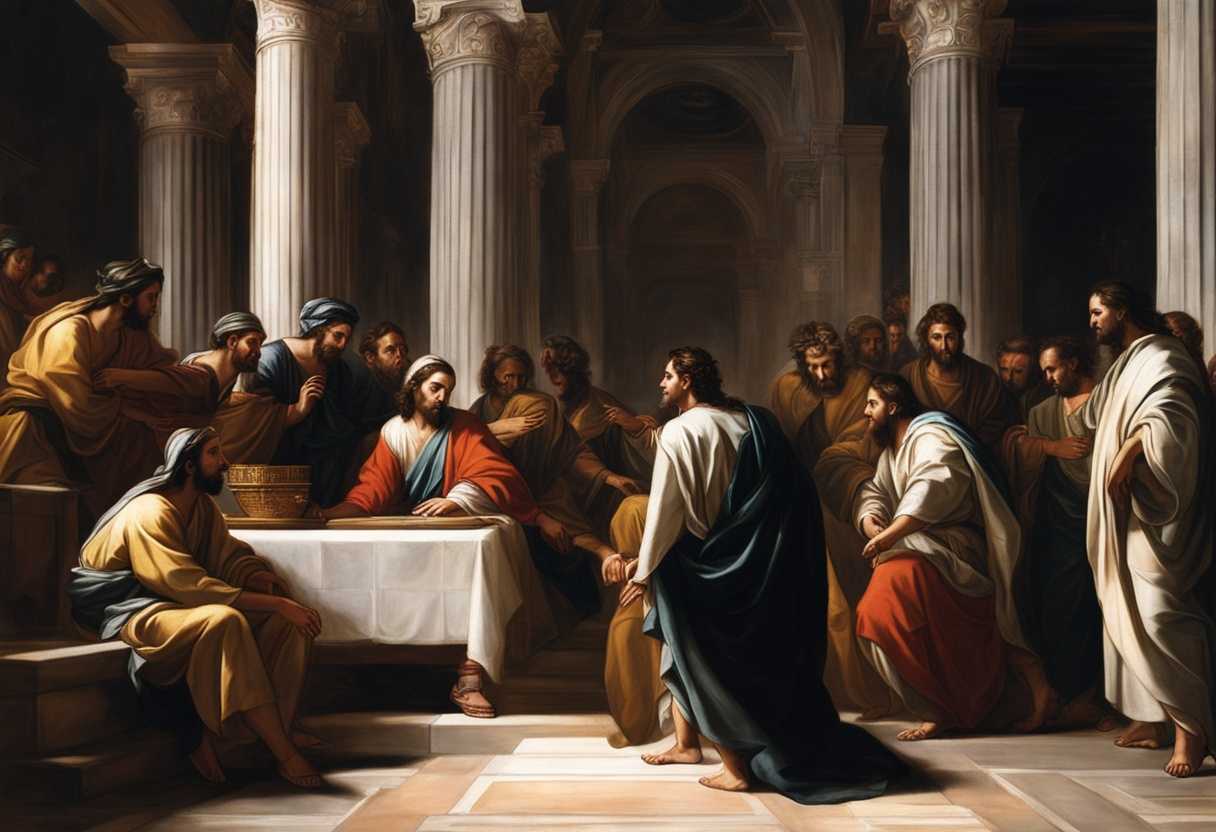
Setting the Scene for Luke 19:46
In Luke chapter 19, we find Jesus entering Jerusalem during the final days of his earthly ministry. The scene takes place in the temple, where Jesus encounters a chaotic and bustling environment. The temple is filled with merchants selling animals for sacrifices and money changers exchanging currency. The air is thick with the sounds of animals, the clinking of coins, and the chatter of the crowd.
Jesus, accompanied by his disciples, enters the temple and is immediately struck by the commercialization and exploitation happening within its sacred walls. Filled with righteous anger, he overturns the tables of the money changers and drives out those who were buying and selling, declaring, “My house shall be a house of prayer, but you have made it a den of robbers.” The religious leaders and merchants are taken aback by Jesus’ actions, but the common people are drawn to him, witnessing his zeal for the purity and sanctity of the temple.
Among the onlookers are also the blind and the lame, who come to Jesus in the temple to be healed. The scene is a powerful display of Jesus’ authority and compassion, as he not only cleanses the temple but also demonstrates his miraculous power to heal and restore.
What is Luke 19:46 about?
Jesus is displaying his righteous anger and taking action against the corruption and greed that had infiltrated the temple in this verse. Jesus is showing his disapproval of the commercial activities that were taking place in a sacred place of worship by driving out those who were buying and selling. His actions convey a powerful message about the importance of treating sacred spaces with reverence and the need to prioritize spiritual values over material gain.
Think about what this verse might be revealing about Jesus’ character and his mission on earth. Why do you think Jesus felt compelled to take such drastic action in the temple? Reflect on how you can apply the lessons from this verse to your own life and practice reverence and respect in all the sacred spaces you encounter. Let Jesus’ example inspire you to stand up against injustice and uphold spiritual values in a world that often prioritizes material wealth and profit.
Understanding what Luke 19:46 really means
In the narrative of Jesus cleansing the temple in Jerusalem, Luke 19:46 captures a pivotal moment where Jesus reacts strongly to the commercialization and corruption within the sacred space. The phrase “House of prayer” underscores the temple’s intended purpose as a place for worship and communion with God, while “Den of robbers” condemns the misuse of the temple for dishonest gain and exploitation. These phrases draw a stark contrast between the sacred nature of the temple and the profane practices that had taken root within its walls.
Drawing from Old Testament scriptures like Isaiah 56:7 and Jeremiah 7:11, the verse in Luke 19:46 resonates with a long-standing tradition of emphasizing the sanctity and inclusivity of places of worship. Isaiah’s prophecy about the temple being a “house of prayer for all nations” highlights the universal nature of worship, while Jeremiah’s rebuke questions the betrayal of the temple’s sacred purpose by turning it into a “den of robbers.” These references provide a rich tapestry of meaning that Jesus invokes in his actions at the temple.
The relevance of this verse extends beyond its historical context, calling on individuals and communities to safeguard the sanctity of sacred spaces and uphold the integrity of worship practices. It prompts reflection on the prioritization of spiritual devotion over material gain and challenges us to ensure that our places of worship remain true centers of faith and community support. In a world where distractions and worldly pursuits can easily cloud our spiritual focus, this verse serves as a poignant reminder to realign our priorities with the essence of true worship.
Consider a scenario where a community church, in its pursuit of financial stability, begins to prioritize commercial events over spiritual gatherings. As the church drifts away from its core mission of fostering prayer and community service, the words of Luke 19:46 would echo as a clarion call to return to the foundational principles of worship and spiritual growth. This anecdote illustrates how easily the noble intentions behind sacred spaces can be overshadowed by worldly concerns if not vigilantly guarded.
As we contemplate the application of Luke 19:46 in our lives, it beckons us to examine our personal and communal practices to ensure they align with the true purpose of worship. Just as Jesus cleansed the temple of impurities, we are called to cleanse our modern-day “temples” – be it physical churches, our homes, or our hearts – of anything that defiles the sacredness of these spaces. Let us heed the message of this verse, striving for authentic worship and rejecting any practices that dilute the sanctity of our spiritual lives.
How do we ensure our places of worship honor God?
To ensure our places of worship honor God, we must remember the original purpose of these sacred spaces. They are meant to be houses of prayer, dedicated to the worship and glorification of God. Therefore, it is essential to maintain reverence, respect, and a spirit of prayerfulness in these places. We should approach our places of worship with humility, recognizing the sacredness of the space and the importance of honoring God through our thoughts, words, and actions while we are there.
Furthermore, caring for our places of worship involves keeping them free from distractions that detract from their purpose. We should strive to create an atmosphere of peace and tranquility within these spaces, fostering an environment conducive to prayer and reflection. We demonstrate our reverence for God and our commitment to honoring Him in all aspects of our lives by upholding the dignity and sanctity of our places of worship.
Application
Just as you strive to keep your work environment professional and your family relationships harmonious, God’s house also deserves that same level of care and respect. Let’s commit to cherishing and preserving the sanctity of our spiritual spaces, treating them with the reverence they deserve. Are we diligent in safeguarding the sacredness of God’s dwelling place in our lives and actions?

Reverend Michael Johnson is an experienced Church Minister with a profound expertise in spirituality and guidance. With a serene presence and a compassionate heart, he has faithfully served his congregation for over 20 years, leading them on a spiritual journey towards inner peace and enlightenment. Reverend Johnson’s extensive knowledge of religious philosophies and profound understanding of human nature have made him a trusted confidant and mentor to many, as he seamlessly weaves his profound wisdom into life teachings. Reverend Johnson’s calming demeanor and empathetic nature continue to uplift and heal souls, nurturing a sense of unity and tranquility within his community.