
Luke 1:10 is about the moment when the angel of the Lord appeared to Zechariah while he was serving in the temple, symbolizing the divine intervention in human affairs and the fulfillment of God’s promises.
10 And the whole multitude of the people were praying outside at the hour of incense.
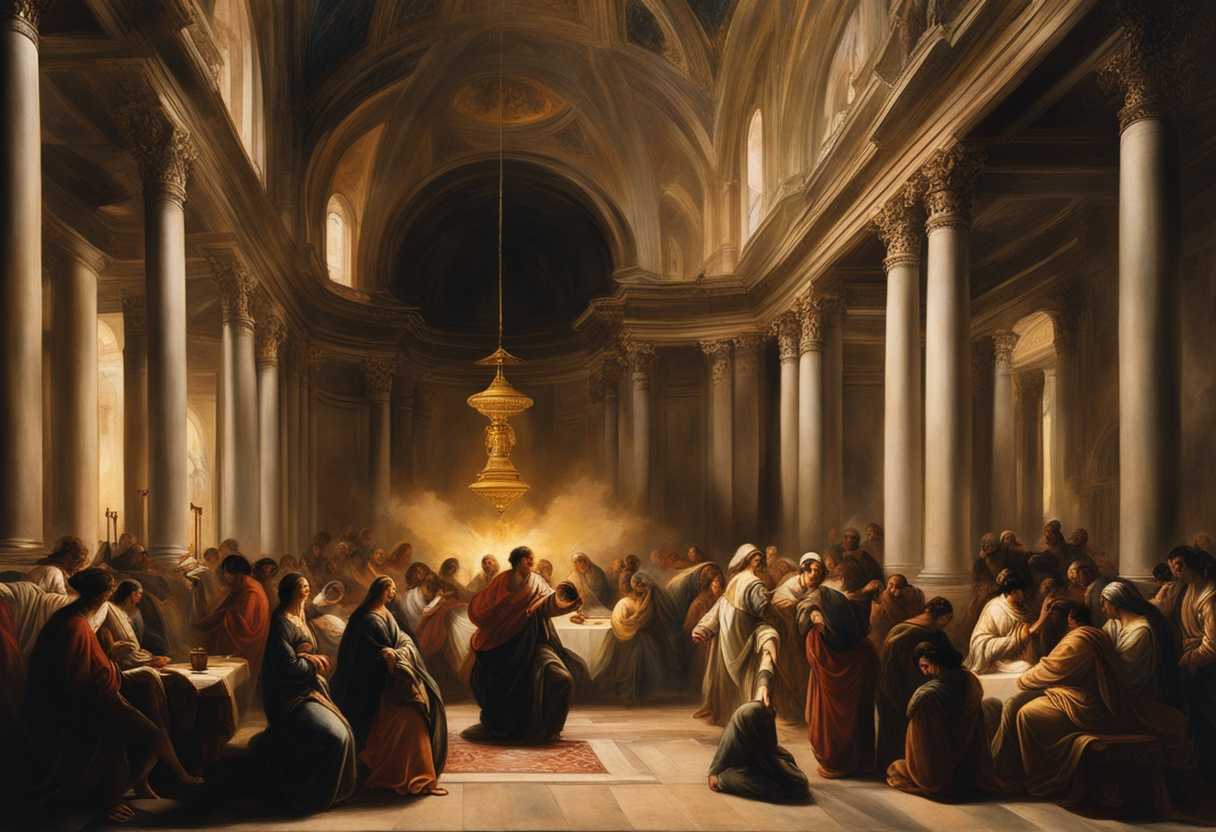
Setting the Scene for Luke 1:10
In Luke chapter 1, we find ourselves in the temple in Jerusalem. The scene is set with a group of priests gathered for the daily offering of incense. Among them is Zechariah, a priest chosen by lot to enter the sanctuary and burn incense before the Lord. The atmosphere is filled with the scent of burning incense, and the sound of prayers and hymns being lifted up to heaven.
Zechariah, a righteous and devout man, had been faithfully serving in the temple when an angel of the Lord appeared to him, standing at the right side of the altar of incense. Startled and afraid, Zechariah listened as the angel delivered the incredible news that his wife Elizabeth, who was barren, would conceive and bear a son who would be named John. This miraculous announcement left Zechariah in disbelief, and as a sign of the truth of the angel’s words, he was struck mute until the day the prophecy would be fulfilled.
Surrounded by the solemn beauty of the temple, Zechariah stood in awe and wonder at the angelic visitation, his heart filled with a mix of doubt and faith as he contemplated the extraordinary future that lay ahead for him and his wife.
What is Luke 1:10 about?
This verse from the Bible carries profound significance as it narrates a divine encounter between Zacharias, a priest entering the temple to perform a religious duty, and an angel who delivers the incredible news of the upcoming birth of John the Baptist. This encounter marks the intersection of the divine and human realms, illustrating how God’s plan unfolds in unexpected ways and through unexpected messengers. One cannot help but be in awe of the moment when Zacharias, a mere mortal, receives a message of such magnitude from an angel, signaling the fulfillment of God’s promise and the unfolding of His divine plan for salvation. Reflecting on this verse prompts us to consider the themes of faith, obedience, and divine intervention. Zacharias’s initial skepticism and doubt serve as a cautionary tale, highlighting the importance of trust and belief in God’s promises even when they seem impossible or improbable. The angel’s proclamation of John’s birth also speaks to the power of God to work through ordinary individuals and circumstances to bring about extraordinary outcomes. Through this verse, we are invited to ponder the ways in which God continues to speak to us in our everyday lives, reminding us that His plans are greater than our own and that His timing is always perfect.
Understanding what Luke 1:10 really means
The verse Luke 1:10 takes us back to a significant moment in the narrative leading to the birth of John the Baptist. Picture this: Zechariah, a priest, is inside the temple, offering incense, while outside, the whole multitude of the people is engaged in prayer. This scene sets the stage for a powerful reflection on the intertwining of individual and communal acts of worship and prayer.
In the broader context of biblical practices, burning incense in the temple holds deep symbolic meaning. Exodus 30:7-8 outlines this practice as a form of worship and prayer. Revelation 8:3-4 further illustrates how prayers ascend to God like incense, symbolizing the connection between prayer and divine presence. Psalm 141:2 beautifully portrays the desire for one’s prayers to be like incense before God, emphasizing the reverence and sincerity in approaching Him.
Today, in a world that often prioritizes individualism, Luke 1:10 serves as a poignant reminder of the strength found in communal prayer. It underscores the significance of unity and collective faith, urging believers to come together in prayer, both in personal devotion and as a community. The image of the people praying outside the temple paints a vivid picture of the power of shared faith and the sense of togetherness it brings.
Consider a small town where the church bells ring each evening, prompting everyone to pause and offer a prayer. This simple yet profound practice not only deepens individual faith but also nurtures a sense of community and shared purpose. Similarly, the act of communal prayer in Luke 1:10 highlights the transformative impact of coming together in faith, supporting one another, and lifting prayers as a unified body.
Key phrases in this verse, such as “the whole multitude of the people,” emphasize the communal aspect of prayer, showcasing the unity of the community in worship. The mention of the people “praying outside” signifies the intentional gathering for a common purpose, stressing the importance of designated times and places for collective worship. Additionally, the reference to the “hour of incense” underscores the discipline and regularity in spiritual practices, urging believers to establish consistent rhythms of prayer and devotion.
As we meditate on Luke 1:10, we are prompted to reflect on the power of prayer, the beauty of community, and the necessity of spiritual discipline. This verse beckons us to unite in faith, uphold one another in prayer, and cultivate a lifestyle of consistent communion with God, both individually and as a faith community. Let us heed the call to gather in prayer, recognizing the strength found in unity and the transformative impact of coming together in faith.
How can we cultivate a heart of prayerfulness?
We can cultivate a heart of prayerfulness by creating a habit of regular communication with God. We can strive to make prayer a central part of our day, setting aside specific times to seek God’s presence and guidance, just as the verse implies. We can deepen our relationship with Him and align our hearts with His will by actively engaging in prayer.
Furthermore, we can foster a heart of prayerfulness by approaching God with humility, gratitude, and faith. Recognizing our dependence on Him and acknowledging His sovereignty can help us maintain a posture of reverence and openness in our prayers. We demonstrate our faith in His goodness and power by expressing gratitude for His blessings and trusting in His provision. Cultivating a heart of prayerfulness ultimately involves being willing to listen as well as speak. We can offer our concerns and desires to God in prayer, but we must also quiet our hearts and minds to listen for His voice. Through this two-way communication, we can experience the transformative power of God’s presence in our lives, shaping us into individuals who are more attuned to His leading and more in tune with His heart.
Application
Imagine facing a daunting task at work or navigating family struggles. Just as Zechariah entered the temple with faith, let that be your example today. Seek God with the same diligence, believing deeply in His power to change circumstances. Approach Him boldly, expecting breakthroughs and answers. Will you step into His presence with unwavering faith right now?

Reverend Michael Johnson is an experienced Church Minister with a profound expertise in spirituality and guidance. With a serene presence and a compassionate heart, he has faithfully served his congregation for over 20 years, leading them on a spiritual journey towards inner peace and enlightenment. Reverend Johnson’s extensive knowledge of religious philosophies and profound understanding of human nature have made him a trusted confidant and mentor to many, as he seamlessly weaves his profound wisdom into life teachings. Reverend Johnson’s calming demeanor and empathetic nature continue to uplift and heal souls, nurturing a sense of unity and tranquility within his community.