
Luke 23:32-33 is about the crucifixion of Jesus Christ, where he was led with two criminals to be crucified at a place called the Skull, symbolizing the fulfillment of his sacrificial mission for the redemption of humanity.
32 Two others, who were criminals, were led away to be put to death with him.
33 And when they came to the place that is called The Skull, there they crucified him, and the criminals, one on his right and one on his left.
Setting the Scene for Luke 23:32-33
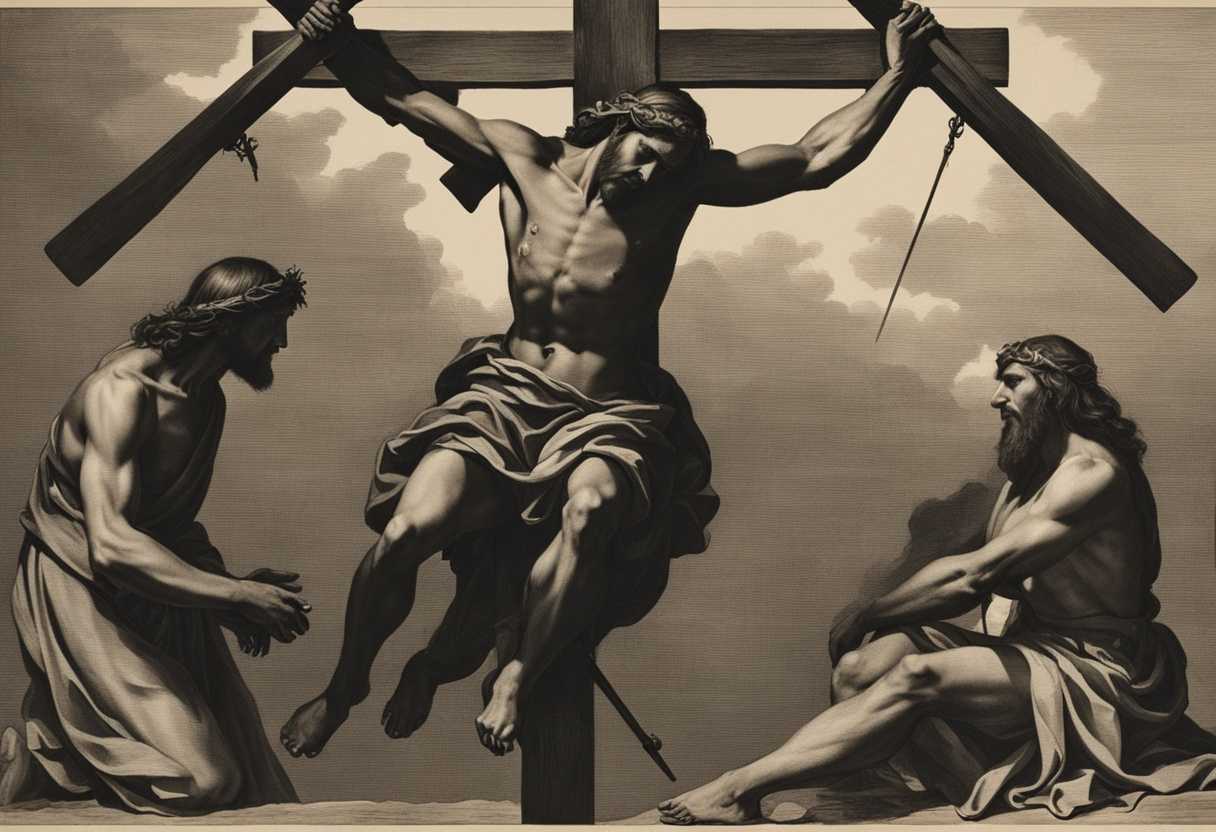
In Luke chapter 23, we find Jesus being led to Golgotha, also known as the Place of the Skull, to be crucified. The scene is chaotic and sorrowful as a large crowd follows Jesus, along with two criminals who are also being led to their crucifixion. The soldiers are rough and forceful, pushing the condemned men forward as they carry their own crosses.
Among the crowd are Mary, the mother of Jesus, and some of his disciples, including John and Mary Magdalene, who are following at a distance, their hearts heavy with grief. The atmosphere is tense, with the sounds of jeering and weeping mixing in the air. The weight of the moment is palpable as Jesus, weakened from the beatings and carrying the heavy burden of the sins of the world, stumbles along the path to his crucifixion.
As they reach Golgotha, the soldiers prepare to crucify Jesus and the two criminals, nailing them to the wooden crosses. The scene is one of agony and despair, yet amidst the darkness, there is also a glimmer of hope and redemption as Jesus willingly sacrifices himself for the salvation of all mankind.
What is Luke 23:32-33 about?
Jesus being crucified between two criminals holds deep significance in this verse. Firstly, it fulfills the prophecy mentioned in Isaiah 53:12, where it was foretold that the Messiah would be numbered with transgressors. This event showcases the fulfillment of ancient prophecies and reinforces the belief in Jesus as the promised Messiah. Jesus shows his solidarity with sinners and his willingness to bear the weight of their sins by being crucified alongside criminals.
Furthermore, the placement of Jesus between two criminals also symbolizes the ultimate act of forgiveness and redemption. Despite the mocking and ridicule Jesus faced during his crucifixion, he still demonstrated compassion and forgiveness by praying for those who persecuted him. This exemplary act of mercy serves as a powerful reminder of the boundless grace and love of God, offering hope and salvation to all, regardless of their past actions. It challenges us to reflect on our capacity to forgive and show compassion to others, following the example set by Jesus on the cross.
Understanding what Luke 23:32-33 really means
The verses in Luke 23:32-33 capture a poignant moment in the Passion narrative, where Jesus is led to be crucified alongside two criminals. This event holds immense significance in Christian theology, symbolizing the ultimate act of love and redemption. The prophecy from Isaiah 53:12, which foretold that the Messiah would be “numbered with the transgressors,” finds fulfillment in these verses, underscoring the divine plan unfolding through Jesus’ sacrifice. The parallel account in Matthew 27:38 further reinforces this fulfillment of prophecy, emphasizing the divine orchestration of events leading to the crucifixion.
In contemplating these verses, we are confronted with the depth of Jesus’ sacrifice and the profound love that underpins it. The image of Jesus crucified between two criminals serves as a powerful reminder of God’s inclusive love and the possibility of redemption for all. In a world marked by suffering and injustice, the crucifixion stands as a beacon of hope, offering solace and redemption to those who feel unworthy or beyond grace. The presence of the two criminals underscores the theme of forgiveness and redemption, extending a message of hope to all, regardless of their past actions.
Consider the scenario of someone burdened by past mistakes, feeling undeserving of forgiveness. These verses offer a comforting reassurance that even in His darkest hour, Jesus was surrounded by sinners, extending His love and sacrifice to all. This narrative resonates with individuals who may feel marginalized or hopeless, illustrating that no one is beyond the reach of God’s grace. Drawing a parallel to modern-day struggles, such as incarceration and societal stigma, the story of Jesus between two criminals serves as a poignant reminder of God’s boundless mercy and the transformative power of redemption.
The specific mention of Jesus being crucified alongside the criminals underscores His identification with humanity’s brokenness and suffering. The location, known as Golgotha or the Skull, holds symbolic weight as the place of ultimate sacrifice. The brutal and degrading nature of crucifixion amplifies the magnitude of Jesus’ suffering, highlighting the lengths to which He went for the sake of humanity. This vivid imagery not only portrays the physical agony endured by Jesus but also conveys the depth of His love and the extent of His redemptive mission.
Reflecting on these verses prompts us to contemplate the profound implications of Jesus’ sacrifice, the fulfillment of ancient prophecies, and the universal offer of redemption. The enduring message of hope and inclusion encapsulated in the crucifixion narrative transcends time, offering solace and inspiration to individuals navigating the complexities of life. As we meditate on the crucifixion scene, we are invited to embrace the transformative power of God’s love, recognizing that no one is beyond the reach of His grace and mercy.
How can we show mercy to those who harm us?
One way to show mercy to those who harm us is to understand that they may be acting out of ignorance or pain. Instead of harboring feelings of anger or seeking revenge, we can choose to have empathy for their situation and offer forgiveness. We can break the cycle of harm and promote healing for both parties involved by showing compassion and understanding.
Another way to show mercy is to pray for the individuals who have wronged us. Through prayer, we can ask for guidance and strength to respond with love and kindness, even in the face of adversity. We can cultivate a spirit of forgiveness and seek reconciliation by lifting up those who have hurt us in prayer, ultimately bringing about a sense of peace and healing in our own hearts.
Finally, showing mercy can also involve setting healthy boundaries and taking steps to protect ourselves from further harm. It is important to prioritize our well-being while still extending compassion towards those who have caused us pain. We can show mercy to ourselves as well as to others by establishing boundaries and practicing self-care, creating a space for healing and growth.
Application
Friends, let the story of Jesus on the cross inspire you to reach out to those in pain and need. Be the helping hand, the comforting presence to those facing struggles in our modern-day world. Will you join in the journey of empathy and love, just as Jesus did so selflessly on the cross?

Reverend Michael Johnson is an experienced Church Minister with a profound expertise in spirituality and guidance. With a serene presence and a compassionate heart, he has faithfully served his congregation for over 20 years, leading them on a spiritual journey towards inner peace and enlightenment. Reverend Johnson’s extensive knowledge of religious philosophies and profound understanding of human nature have made him a trusted confidant and mentor to many, as he seamlessly weaves his profound wisdom into life teachings. Reverend Johnson’s calming demeanor and empathetic nature continue to uplift and heal souls, nurturing a sense of unity and tranquility within his community.