
Luke 23:46-47 is about Jesus expressing his trust in God as he commends his spirit to Him while on the cross, and the Roman centurion witnessing this act and recognizing Jesus as a righteous man.
46 Then Jesus, calling out with a loud voice, said, “Father, into your hands I commit my spirit!” And having said this he breathed his last.
47 Now when the centurion saw what had taken place, he praised God, saying, “Certainly this man was innocent!”
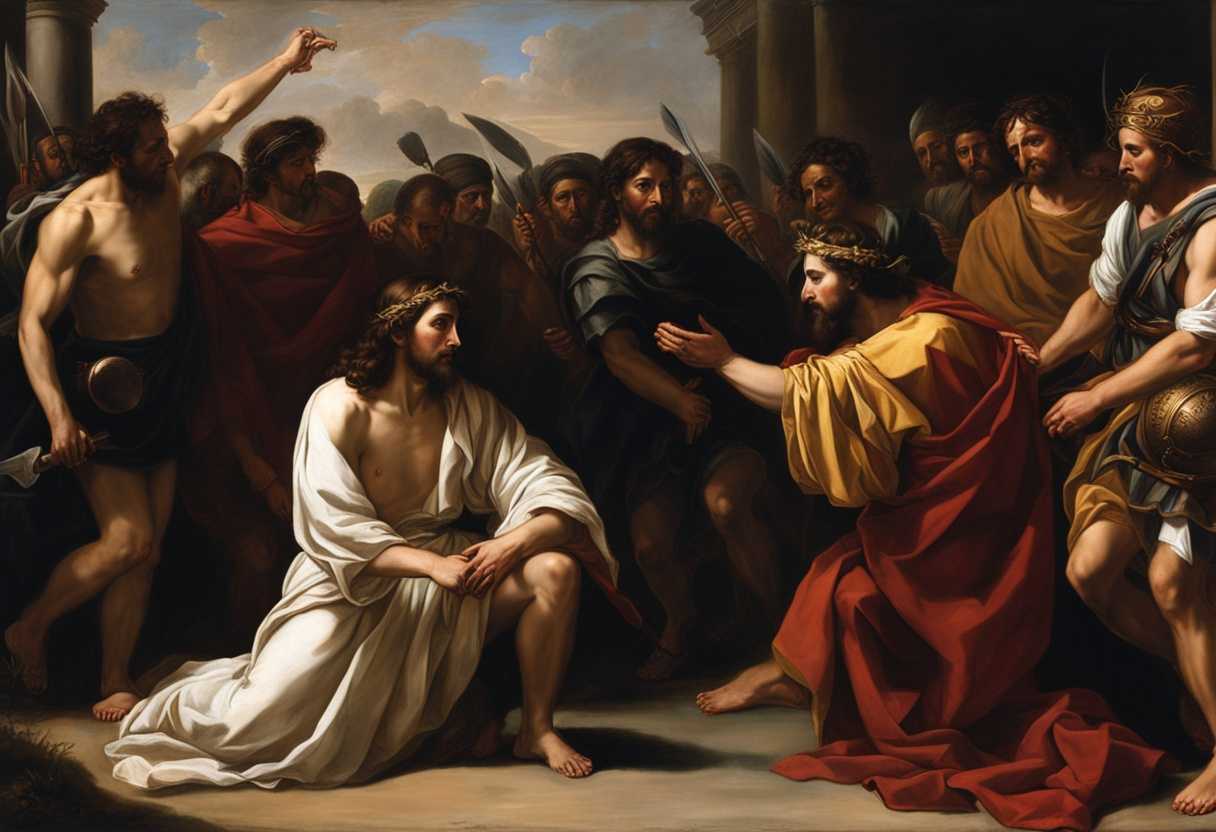
Setting the Scene for Luke 23:46-47
The scene in Luke chapter 23:46-47 takes place at Golgotha, the place of the Skull, where Jesus was crucified alongside two criminals. The sky is darkened as Jesus hangs on the cross, with crowds of people gathered around witnessing the event. The Roman soldiers are present, carrying out their duties, and the religious leaders are also there, mocking Jesus.
Mary, the mother of Jesus, is standing nearby, along with Mary Magdalene and the disciple whom Jesus loved, John. They are weeping and grieving as they watch Jesus suffer. The atmosphere is heavy with sorrow and tension, as some in the crowd continue to taunt Jesus, while others are struck by the gravity of the moment.
As Jesus utters his final words, “Father, into your hands I commit my spirit,” there is a moment of silence as those present take in the significance of his words. The centurion overseeing the crucifixion is moved by what he witnesses and declares, “Surely this man was innocent.” The scene at Golgotha is one of profound emotion, as Jesus willingly gives up his life for the salvation of humanity, surrounded by those who loved him and those who condemned him.
What is Luke 23:46-47 about?
We witness a powerful moment of surrender and recognition in this verse. Jesus, in His final moments on the cross, willingly gives up His spirit, displaying ultimate obedience and trust in God’s plan. His act of surrender is a profound example of selflessness and faith, embodying the ultimate sacrifice for the greater good of all humanity. This moment showcases the depth of Jesus’ love and devotion to fulfilling His purpose on Earth. The response of the centurion adds another layer of significance to this scene. The centurion’s words highlight the transformative impact of witnessing Jesus’ actions and experiencing His presence by praising God and acknowledging the innocence and righteousness of Jesus. It is a moment of revelation and recognition, where even a hardened Roman soldier is touched by the extraordinary nature of Jesus’ sacrifice. Jesus displayed immense courage and faith in His final moments, inviting us to ponder the profound impact His life and death had on those around Him as we reflect on this verse. It challenges us to consider our own surrender to God’s will, the depth of our faith, and the transformative power of encountering the love and sacrifice of Jesus. Let us strive to be like Jesus, surrender our spirits to the divine will, and be open to the transformative power of recognizing His innocence and righteousness in our lives.
Understanding what Luke 23:46-47 really means
During the poignant moment of Jesus’ crucifixion, as captured in Luke 23:46-47, we witness a profound display of faith and recognition. Jesus, in His final breaths, utters the words, “Father, into your hands I commit my spirit,” showcasing His unwavering trust in God even in the face of death. This act not only reveals Jesus’ deep connection with the Father but also fulfills the prophecy found in Psalm 31:5, underscoring the divine orchestration of His sacrifice.
As Jesus breathes His last, the humanity of His experience is emphasized, reminding us that He endured a real, physical death to complete His mission of atonement. The centurion, a Roman soldier overseeing the crucifixion, witnesses these events and is moved to declare, “Surely this was a righteous man,” acknowledging Jesus’ innocence and righteousness. This moment is a powerful testament to the impact of Jesus’ life and death, transcending boundaries and touching even the hearts of those who did not initially believe in Him.
In John 19:30, we see Jesus proclaiming, “It is finished,” signifying the completion of His redemptive work. This declaration echoes through time, reminding us of the ultimate sacrifice made on our behalf. Similarly, in Mark 15:39, another account of the centurion’s reaction portrays the recognition of Jesus as the Son of God, highlighting the profound impact of witnessing Christ’s death.
The relevance of these verses extends to us today, urging us to trust in God during our own trials, just as Jesus did in His darkest hour. The centurion’s acknowledgment of Jesus’ righteousness prompts us to seek truth and recognize goodness, even when it comes from unexpected sources. Moreover, the ripple effect of Jesus’ righteous life serves as a reminder that our actions and faith can influence those around us in significant ways.
Consider a personal anecdote of someone facing adversity with unwavering faith, akin to Jesus’ trust in the Father. For instance, a person battling a terminal illness who radiates hope and faith, inspiring others with their unwavering trust in God. This narrative illustrates how trust in God can bring peace and strength, leaving a lasting impact on those around us, much like Jesus’ death continues to do.
In conclusion, the verses in Luke 23:46-47 encapsulate themes of trust, fulfillment of prophecy, recognition of righteousness, and the enduring impact of a righteous life. Let us reflect on these lessons, examining our own trust in God and the influence our lives have on others, striving to emulate the faith and righteousness exemplified by Jesus.
How can we learn to trust God in death?
Learning to trust God in death requires faith in His ultimate plan and sovereignty over all things. Jesus entrusted His spirit into God’s hands as He faced death, showing us an example in the verse. This act of surrender demonstrates complete trust and submission to the Father’s will, even in the most difficult and trying circumstances. We can remember Jesus’ words and follow His example by placing our trust in God’s faithfulness and care, knowing that He is with us through the process of dying and beyond in moments of fear and uncertainty.
Additionally, understanding the truth of God’s character and promises can strengthen our trust in Him during the final moments of life. Reflecting on His goodness, love, and faithfulness throughout our lives can provide comfort and assurance that He will be present with us, guiding us through the earthly transition into eternal life. We can approach death with a sense of peace and trust in God’s unwavering presence and provision by focusing on the assurance of salvation through Jesus and the hope of resurrection. Meditating on the significance of Jesus’ final words on the cross can deepen our faith and reliance on God’s perfect timing and purposes. Recognizing that our lives are ultimately in His hands and that He has a plan that surpasses our understanding can cultivate a spirit of trust and surrender, even in the face of death. Embracing the truth of God’s sovereignty and His promise of eternal life can give us the courage and confidence to let go of our fears and place our trust fully in Him, knowing that He is faithful to carry us through every trial and into His eternal presence.
Application
Reflect on Jesus’ final moments on the cross and ask yourself: are you truly surrendering to God’s will in your life? Let’s align our actions with His purpose and emulate Christ’s obedience in our daily lives. It’s time to commit to following His example wholeheartedly. Will you rise to the challenge and yield to God’s will for you?

Reverend Michael Johnson is an experienced Church Minister with a profound expertise in spirituality and guidance. With a serene presence and a compassionate heart, he has faithfully served his congregation for over 20 years, leading them on a spiritual journey towards inner peace and enlightenment. Reverend Johnson’s extensive knowledge of religious philosophies and profound understanding of human nature have made him a trusted confidant and mentor to many, as he seamlessly weaves his profound wisdom into life teachings. Reverend Johnson’s calming demeanor and empathetic nature continue to uplift and heal souls, nurturing a sense of unity and tranquility within his community.