
Luke 24:1-4 is about the discovery of the empty tomb by the women, symbolizing the resurrection of Jesus and the beginning of a new era of hope and redemption for humanity.
1 But on the first day of the week, at early dawn, they went to the tomb, taking the spices they had prepared.
2 They found the stone rolled away from the tomb,
3 but when they went in they did not find the body of the Lord Jesus.
4 While they were perplexed about this, behold, two men stood by them in dazzling apparel.
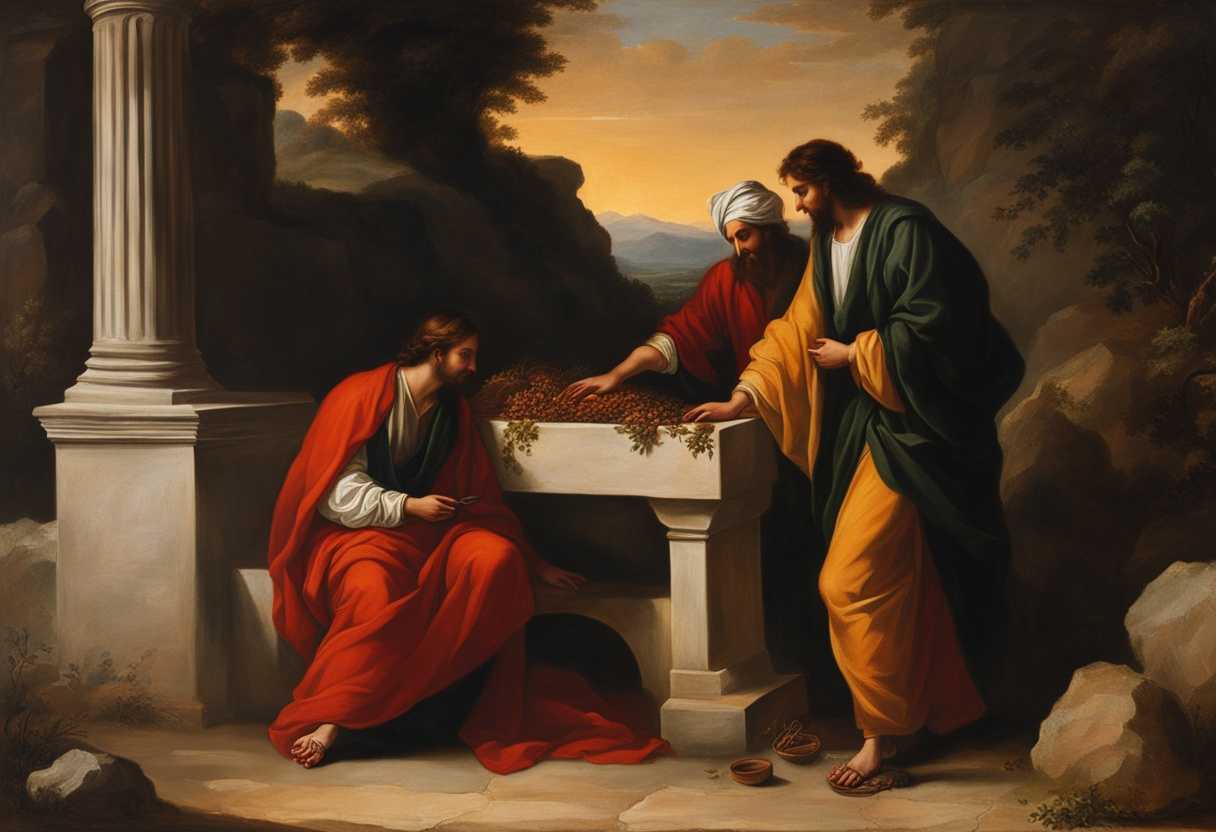
Setting the Scene for Luke 24:1-4
In Luke chapter 24, we find the scene at the tomb of Jesus on the morning of the resurrection. Mary Magdalene, Joanna, Mary the mother of James, and other women had come to the tomb with spices to anoint Jesus’ body. As they approached the tomb, they were discussing among themselves who would roll away the stone for them, not realizing that the stone had already been rolled away by an angel.
The women were filled with grief and sorrow as they had witnessed the crucifixion of Jesus just a few days prior. They had come to the tomb to pay their respects and honor Jesus in death. However, upon arriving, they were met with the astonishing sight of the stone rolled away and the tomb empty. Confusion and fear gripped their hearts as they entered the tomb and found it empty, with only the linen cloths that had wrapped Jesus’ body lying there.
The women were perplexed and unsure of what had happened. Their sorrow turned to amazement and disbelief as they encountered two angels who declared to them the glorious news that Jesus had risen from the dead, just as He had foretold. This moment marked the beginning of the incredible events that would unfold as Jesus appeared to His disciples and followers, proving that He had conquered death and sin, and bringing hope and salvation to all who believe.
What is Luke 24:1-4 about?
Imagine the incredible mix of emotions the women must have felt as they approached the tomb that held the body of Jesus, only to find it empty. Confusion, fear, hope, disbelief – all swirling together in their hearts. And then, to encounter angels declaring that Jesus had risen from the dead! Can you picture the astonishment and wonder that must have filled their souls at that moment? This encounter marked the beginning of a monumental shift in their understanding of who Jesus was and the power He possessed.
This verse is a powerful reminder of the foundational event in Christianity – the resurrection of Jesus Christ. It signifies hope, redemption, and victory over death. The empty tomb symbolizes the defeat of sin and the beginning of a new era of salvation for all who believe. The angels’ announcement serves as a declaration of the fulfillment of prophecy and the undeniable truth of Christ’s divinity. The women’s experience at the empty tomb is a testimony to the transformative power of encountering the risen Lord and the commissioning to share this Good News with the world. May we, like those women, be filled with awe and joy at the miraculous truth of Jesus’ resurrection, and may it inspire us to boldly proclaim His victory in our lives.
Understanding what Luke 24:1-4 really means
The passage in Luke 24:1-4 transports us to a pivotal moment in Christian history, occurring on the first day of the week following Jesus’ crucifixion. Picture the scene: women devoted to Jesus arrive at the tomb with spices, intending to anoint His body. However, their plans are disrupted as they discover the stone rolled away and Jesus’ body missing. This unexpected turn of events leaves them bewildered and amazed, setting the stage for a profound revelation.
“On the first day of the week, very early in the morning” signifies a fresh start, symbolizing hope and renewal. The dawn breaking on that morning also represents the beginning of a new era in Christian faith, where the resurrection of Jesus would change everything. The sight of the stone rolled away from the tomb holds deep significance. It symbolizes the removal of barriers between humanity and God, showcasing the divine power to conquer death and overcome obstacles that seemed insurmountable.
The absence of Jesus’ body underscores the cornerstone of Christian belief – the resurrection. This pivotal moment signifies Jesus’ triumph over death, offering believers the promise of eternal life. As the women grapple with this miraculous discovery, their initial confusion and amazement mirror our own human reactions to encountering the divine in unexpected ways.
In related biblical passages, such as Matthew 28:5-6 and John 20:1-2, we witness the immediate impact of the resurrection on Jesus’ followers. The angel’s proclamation in Matthew reinforces the fulfillment of prophecy, while Mary Magdalene’s reaction in John highlights the urgency of spreading the news. These accounts emphasize the transformative power of the resurrection and its enduring significance for believers.
The relevance of this story extends to our lives today. In a world fraught with uncertainties and challenges, the resurrection narrative offers a beacon of hope and assurance. It reminds us that even in our darkest moments, there is the promise of new beginnings and the certainty of God’s presence and power in our lives.
Imagine someone facing adversity, much like the women at the tomb. Through setbacks and losses, they may feel disoriented and uncertain. Yet, the resurrection story teaches us that from the emptiness of the tomb emerges the possibility of renewal and transformation. Just as the disciples found newfound courage and conviction to spread the message of Jesus’ resurrection, this person may discover hidden strengths and unforeseen opportunities for growth and renewal.
In conclusion, Luke 24:1-4 serves as a poignant reminder of the hope and renewal that spring forth from the resurrection of Jesus. It challenges us to look beyond our immediate circumstances, trusting in God’s power to bring about new beginnings and transformations in our lives. Just as the women at the tomb were met with astonishment and wonder, may we too be open to the miraculous possibilities that arise from encountering the risen Christ.
What does it mean to seek the living among the dead?
Seeking the living among the dead means looking for something or someone who is alive in a place where one would expect to find only death or lifelessness. The women in the context of Luke 24:1-4 went to the tomb to find Jesus, whom they believed was dead. However, they were reminded by the angels that Jesus was alive and no longer among the dead but had risen, as He had foretold. They had come looking for Jesus in a place of death, but they were reminded that He was indeed alive.
This phrase can also have a broader meaning in our lives. Sometimes, we may seek solutions, comfort, or fulfillment in places or things that bring only emptiness or death to our spirits. Seeking the living among the dead could remind us to seek out life-giving sources like faith, love, and hope rather than relying on things that bring us only darkness or despair. It encourages us to look for the vibrant, life-giving aspects in our lives even when surrounded by negativity or hopelessness. Shifting our focus from places or things that bring only death or despair to seeking that which breathes life into us challenges us when we ultimately seek the living among the dead. It calls us to seek out the presence of the living God, who offers hope, renewal, and promises of eternal life, even in the midst of what may seem like lifeless or hopeless situations.
Application
In the hustle and bustle of our daily grind, let’s channel the determination of those women who embarked on a quest to find Christ. Let’s dive into our faith with a burning passion to connect with the resurrected Lord and spread His message of love and redemption. Are we willing to step up and boldly declare the life-changing truth of Jesus to a world yearning for hope and purpose?

Reverend Michael Johnson is an experienced Church Minister with a profound expertise in spirituality and guidance. With a serene presence and a compassionate heart, he has faithfully served his congregation for over 20 years, leading them on a spiritual journey towards inner peace and enlightenment. Reverend Johnson’s extensive knowledge of religious philosophies and profound understanding of human nature have made him a trusted confidant and mentor to many, as he seamlessly weaves his profound wisdom into life teachings. Reverend Johnson’s calming demeanor and empathetic nature continue to uplift and heal souls, nurturing a sense of unity and tranquility within his community.